

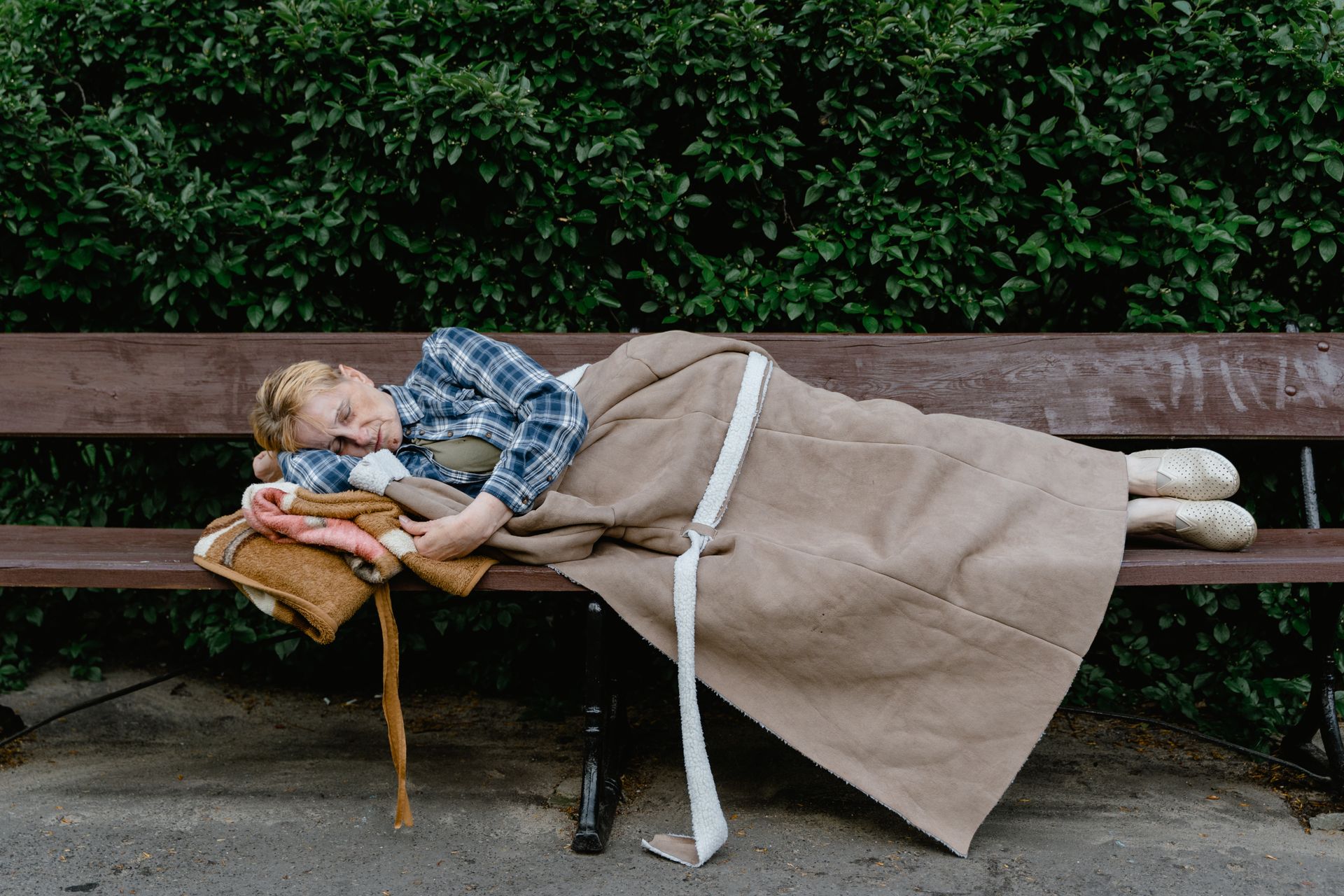
In Britain today, homelessness is on the rise and, barring a significant shift in policy, it will go on doing so.
Behind those statistics is a group whose experiences remain largely out of sight: women experiencing homelessness (WEH). Their lives are shaped not only by the same economic shockwaves hitting everyone at the sharp end of the housing crisis, but by domestic abuse, sexual exploitation, and deep social exclusion. Yet the very systems meant to offer protection frequently ignore, and often reinforce, the harms they face.
People experiencing homelessness (PEH) are in a state of constant crisis. They die younger and live sicker. Rates of acute and long-term illness, severe mental illness, substance misuse, and trauma all run far higher than in the general population. Public health expert Elwell-Sutton has called this ‘tri‑morbidity’: co-occurring physical illness, mental ill‑health and substance misuse.
The human cost of inaction is written in the death toll. The Museum of Homelessness recorded 1,611 people dying while homeless in 2024 - 335 of them women. Many of these deaths were linked to suicidal overdose and cancer. With access to effective health and welfare support, these lives could, and should, have been lived differently.
For women, the risks are even sharper. Research from Homeless Link in early 2026 found that 58% of women experiencing homelessness reported needing more health support. 56% had visited A&E in the previous year, and 42% had been admitted to hospital. Their care needs are both urgent and specific. In spite of this, the way services are currently designed raises a serious question: has social care slipped from being a public good into something closer to a privilege, available only to those who can navigate and endure the system?
The ‘hidden’ homeless
Women’s homelessness looks different. It is often less visible and more dangerous.
Women frequently avoid the streets, and the abuse, exposure to weather and substance misuse that come with them. Instead, women are described as the ‘hidden homeless’, predominantly using informal, unstable networks and sleeping arrangements. They may ‘sofa surf’ with friends, acquaintances, or remain with abusive partners because the alternative feels more frightening.
Hidden, however, does not mean safe. Women in these settings are still highly vulnerable to sexual exploitation, coercion and substance misuse within the very networks they rely on for shelter. This creates compounded risk for WEH: women do not find support, and support cannot find them.
But because WEH are not sleeping in doorways or hostels, they often fall beneath the radar of outreach teams and mainstream homelessness services. They remain invisible to the system until a crisis hits. Most policy and service models are designed around visible homelessness, and so many women are undercounted and their needs sidelined when support is planned and delivered.
Recent studies show that people squatting or sofa surfing face rising mortality and health risks in line with other forms of homelessness. As a result, WEH require more care but are excluded from it the most; left out from outreach projects and without the personal resources to advocate for support.
A system blind to gender and trauma
For many women, homelessness cannot be separated from a history of harm.
McGrath’s 2023 interviews with WEH in northern England reveal how early abuse influences their sense of place in the world and shapes future relationships. Participants could use a pseudonym of their choice:
“And I thought it was how someone showed that they loved you, you know? … I had my nose broken. First, my dad. And then boyfriends.” (Tracy)
“Me mam was a severe alcoholic. I used to get beat up daily. The school didn’t do anything until I was 12 years old, after me nanna died… the trauma of that, I just couldn’t cope with. So, I rebelled at school, and that’s when I got put into a children’s home.” (Rosie)
“I was couch surfing, but there were many a night where I’d have to get out of there because they assume that means sex … Because you owe something. And once you owe something, they can take anything.” (Gillian)
“He used to say, “you’ve got nobody. You’ll never go hungry if you stay with me…” (Sienna)
Women’s homelessness is closely tied to childhood abuse and later intimate partner violence; physical, emotional and psychological. Interviews with women show a grimly familiar pattern of danger and vulnerability in needing to rely on others for housing. Coercive, abusive relationships, the expectation of sex, and the threat of assault are common. The price of survival is often more violence.
McGrath’s study found that a lack of social capital, reliable friends, family or community connections, deepened women’s exposure to harm. Weak and negative social networks were a common denominator in women’s vulnerability to homelessness and critical well-being. Many of those interviewed described predatory or abusive relationships with men, while 88% reported poor health linked to drug use and physical or emotional abuse.
When services focus on a generic, gender‑neutral experience of homelessness, this context disappears. Women with gender-based trauma or who are vulnerable to drug use and coercion frequently avoid services that feel male-dominated. This includes mixed‑sex shelters and canteens, to day centres and rough sleeping sites. Staying away can feel like self‑protection, even when it means sleeping in unsafe, informal spaces.
Motherhood in the margins
Nowhere is this more apparent than in the experiences of homeless mothers.
Theobald’s 2023 research into social work with homeless families highlights how sharply divided housing and health services can be. Pregnancy turns already precarious lives into acute emergencies, with women needing safe housing, stable income, antenatal care, and specialist support. Far too often, they receive none of these.
Homeless women are more likely to be pregnant than their housed peers. That is partly because of reduced access to contraception, and partly because of sexual victimisation. However, maternity and housing systems frequently operate as if these realities do not exist.
The siloed nature of the housing and health service systems compounds the problems of WEH. Fragmented health, housing, and social care systems require repeated disclosure of traumatic personal histories, create referral gaps, and frequently result in care drop-off. Women’s experiences, as demonstrated, are more likely to be interlinked with interpersonal violence and trauma, making services, as they are now, a daunting and unattractive place to seek support before a health crisis.
The consequences are stark. Homeless mothers, for example, report babies born prematurely or with low birth weight. They navigate child protection systems that scrutinise their ‘parenting capacity’ while failing to address the absence of secure housing or accessible healthcare. Fragmented support reproduces the same social exclusion that discouraged women from seeking help in the first place.
Care as a public good – or a private luxury?
Taken together, these stories and statistics raise a fundamental question about what we think care is for, and who we believe deserves it.
If access to safety, healthcare and housing is only made to fit certain people’s needs, is care becoming more like a commodity than a public good? A basic standard of living appears to be a privilege for those with the emotional and material resources to afford it - not a human right.
A different approach, however, is possible. Women-centred care practices and better integrated service systems would provide more effective and sustainable care. Listening to women’s complex personal histories and needs is central to structuring safe outreach and community services. Perhaps this would include excluding men from spaces, free feminine hygiene products, childcare, a space to clean, counselling and legal advice. Responding to traumatic and gendered experiences of homelessness is key to including WEH in formal care.
Moreover, integrating service systems, such as housing, social services, and health care, would reduce women’s repeated disclosure of traumatic histories, referral gaps, and care drop-off. Poor service coordination is detrimental as it exacerbates WEH’s disconnection and often prevents women from seeking timely healthcare or results in further trauma. This harms their well-being, reinforces their long-term exclusion from care and leads women to present to services only during late-term crisis.
These are just examples of how inclusive care can be ensured. Charities such as WomenZone, Together Women, Crisis, the Single Homeless Project and St. Mungo’s are already doing amazing work to respond to gender-based trauma.
Funding for this care should, however, be provided by the central government rather than relying on public generosity or charities. Over the past decade, successive governments’ austerity policies have conflicted with efforts to enhance social protection. Reductions in disability benefits, elimination of adult social care training funds, and cuts to local authority support all portray effective care as a privilege. To make resources like well-being and safety a public good, sustained collective investment is essential. Public goods are not naturally occurring but socially constructed to benefit all beyond market provision. Decision-makers must prioritise social protection and promotion in trade, policymaking, and urban planning. Until profound structural reforms address inequality and systemic poverty, and recognise social protection as a vital resource, more people will need greater care, yet many will not receive it.
WomenZone is a Bradford-based community centre which provides projects and services for local women, such as childcare, coffee mornings, workout sessions, as well as food and clothing. https://womenzone.co.uk
.svg)
.svg)

.svg)
.svg)
.jpg)