

When people outside of the UK think of the United Kingdom, they rarely see beyond the English Language and English culture. Whilst appreciation of the Welsh Language and Scots has increased in recent decades, it’s still a secret that Britain has 8 minority languages, more than most European countries.
Even with the growing acknowledgement of Celtic languages and minority cultures within the UK and beyond, there is one language and area that is forgotten by governments alike; the Cornish language and Cornwall itself.
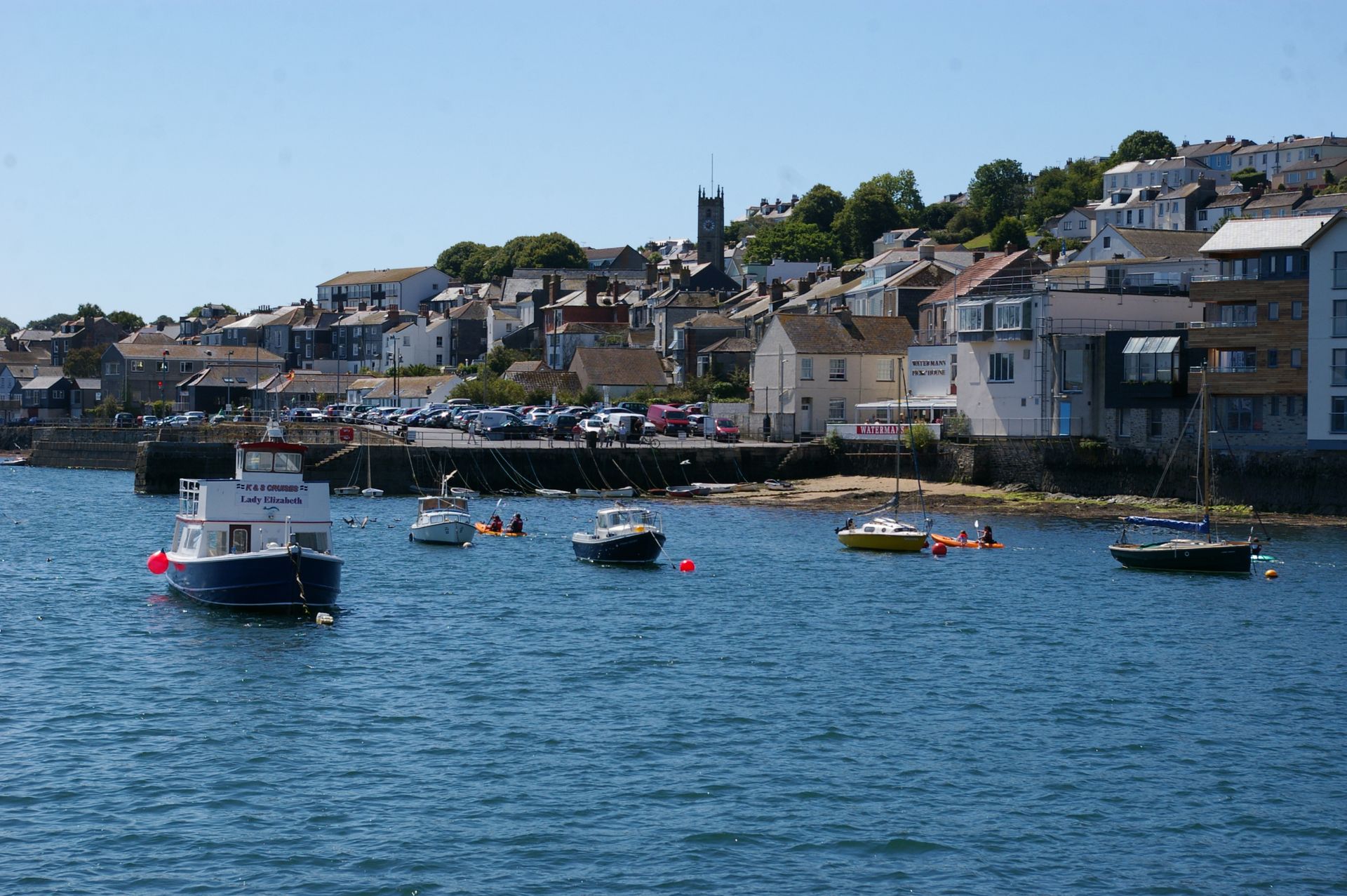
The now English county of Cornwall was once a great kingdom, with its own laws, monarchs, and a full Celtic language. Today, in Truro, the county town, all you will find today is an ordinary local authority, no different to the dozens of other authorities across England.
This, combined with an almost extinct language and an economy that is struggling outside of the tourist hotspots, raises a question: how did this once mighty kingdom, riddled with the stories of King Arthur, become one of England’s poorest counties?
A History of Cornwall
Cornwall is one of England’s most ancient counties, and continuous human occupation began around 10,000 years ago. During the Bronze Age, settlements became well defined and farming replaced hunting as the main provider of food. The Iron Age brought Celtic influence, fortifications, and a structured society. The Romans had limited influence on Cornwall, with Celtic governance largely remaining.
Cornwall was then most famously part of the Celtic kingdom of Dumnonia, maintaining its cultural ties with Brittany and Wales. Wessex’s control over the kingdom expanded gradually over the 8th and 9th century, but the Celtic culture largely remained.
After the Norman Conquest, Cornwall was granted some autonomy under English Rule, keeping some distinctive legal and administrative institutions. Edward III established the Duchy of Cornwall in 1337 as a title for the King’s heir.
During the Industrial Revolution, Cornwall became one of the world’s most important centres of copper and tin mining. Technological advancement allowed miners to dig deeper into the mines and extract more ores. This made the region prosperous but also increased its population drastically, reducing living conditions in the County.
The decline of tin mining after the Industrial Revolution led to widespread emigration. Due to the best deposits being exhausted and global competition that could outprice it, this sent Cornwall into a spiral of underinvestment and low economic growth.
The Devolution Problem
Cornwall’s problems can be partly contributed to a lack of devolution to the area, which has further strengthened the allowed decline of the Cornish Language and a lack of Regional Development.
Cornwall Council is not currently legally able to require schools to teach the Cornish Language because it is a local authority and the National Curriculum is decided by Westminster government. The National Curriculum does allow schools to teach any ‘modern or ancient foreign language’, which presumably could include Cornish but does not mandate its inclusion. That being said, the legal recognition of Cornish is (sort of?) changing; in 2025, the UK Government gave Cornish Part III Status under the European Charter of Regional or Minority Languages. This does offer greater protection of, and encouragmenet to use, the Cornish language.
One can only look towards Wales, with its very successful "Learn Welsh" program which allows adults to learn Welsh online with digital courses at times convenient to them or in lecture style lessons. This combined with the great push to make learning Welsh in schools mandatory, alongside providing GCSE and A-Level examinations in the subjects, has led to an increase in Welsh speakers, peaking at 898,700 speakers in 2017 and now falling slightly to 828,600 speakers in 2025. This decrease can be mainly attributed to fewer young people aged 3-15 speaking Welsh.
This is still far better than Cornwall’s 563 fluent Cornish speakers, and this is after a Cornish ‘revival’ as the language became extinct in the late 18th century in the community. Regional devolution for Cornwall would allow Cornwall to create its own language program and introduce mandatory Cornish education into local schools. The council has worked on plans to expand the language with their Cornish Language programme which creates informal opportunities for ‘people of all ages’ to learn Cornish, but the revival still remains small and non-compulsory.
The Economic Tribulations of Cornwall
Another essential problem with Cornwall is economic development, with Cornwall continually polling as one of the poorest counties in England, suffering significant economic decline for over a century. It has at times received the label of poorest county in Nothern Europe, which though not quite true (Cornwall is 2nd most deprived) is still a title that sparks dismay.
Cornwall’s tourism boom is in reality a gilded cage for the locals, with seasonal employment and empty villages in the winter, meaning Cornwall is economically and socially a ghost town outside of the summer season. This, combined with a stagnant agricultural sector, means that Cornwall is not diversifying economically.
The council is using the power it has to make significant moves with economic development. This can be seen in plans such as the Cornwall Growth Strategy, which seeks to position Cornwall as a nationally significant hub in new and emerging economic sectors, while ensuring local communities benefit from growth. It is very keen on green and inclusive development, aiming for carbon neutrality by 2030. It also supports development of the Marine Economy, digital data industries, and mineral extraction.
This plan is limited by Cornwall’s Council legal competence as a local authority. They cannot decide unlimited amounts of funding as their tax-raising powers are slim, and most of their budget is decided by Westminster. It also cannot force private businesses to move to Cornwall in the same way the government can; it can only incentivise and create the right trading conditions. These limited powers show that without more funding and powers, the likelihood of attracting multinational or large corporations to Cornwall is slim, and the stragy is more likely to just help small businesses and community centers. Whilst this is undoubtedly useful and welcomed, it does not fully address Cornwall's problems.
What does the community want to do about it?
Whilst there is no doubt that Cornwall Council is spearheading economic regeneration and the reintroduction of the Cornish Language, through various strategies such as the Cornwall Growth Strategy and the Cornish Language program, some community groups and parish councils are helping with community projects to reintroduce Celtic culture to the county.
This is namely seen with Speak Cornish, which is a network of voluntary language organisations that organise events and meet-ups to practise the language online as well as locally. They also offer festivals, taster classes, and publications to make the language accessible to all ages. The Cornish Language Society also organises an annual Cornish Language weekend.
Certain Parish Councils promote Cornish language and culture too. For example, Illogan Parish Council make use of bilingual signage to help more people be aware of and understand the language.
This is a snapshot into what community groups and town/parish councils, alongside the work of Cornwall Council, are doing to promote Cornwall’s language and culture and maintain it for future generations.
What does the government want to do?
The government has a unique relationship with Cornwall, from shadow ministers to devolution deals. The government understands that something has to be done with Cornwall, an area that is unique to other counties and combined authorities, but it seems nobody has had the guts to really go the extra mile and acknowledge Cornwall’s unique heritage and situation in England.
The last independent Cornish parliament - the Stannary Parliament, which regulated the tin mining industry - last met in 1752. Cornwall County Council was established in 1889 alongside the other county councils in England. Originally, the region had many boroughs, urban districts, and rural districts until 1974, when the districts were reorganized into 6 areas. In 2009, the authority became a unitary authority, with its remaining 6 districts being abolished. The authority was therefore renamed Cornwall Council, or Konsel Kernow in Cornish.
In 1951, Mebyon Kernow, meaning ‘sons of Cornwall’, was established as a Cornish nationalist party. They want Cornwall to have its own legislative parliament similar to Scotland, Wales, and Northern Ireland. They believe Cornwall, as an area with a distinct identity, has the same right as the devolved countries to determine their own laws. Their other policies include environmental protection and fair funding for Cornwall from the government.
In 2000-2001, a convention was founded: the Cornish Constitutional Convention for a devolved Assembly, with the planned assembly to be named Senedh Kernow. A petition got over 41,000 local signatures and was presented to the Prime Minister. Surveys found that there was majority support for an assembly.
In 2007, Leader of the Opposition David Cameron appointed Mark Prisk as Shadow Minister for Cornwall. Despite there being no government portfolio to shadow, the Conservatives said the move was intended to help place Cornish concerns ‘at the heart of Conservative thinking’. Opposition from Liberal Democrat Matthew Taylor said that the appointment was the Conservatives way to get around the rule which requires MPs to limit the cases they take from another member’s constituency, as the Conservatives had no MPs in Cornwall. No Minister for Cornwall was established in 2010 when the Conservatives came into power with the Liberal Democrats in the coalition. Furthemore, regional ministers for the English Regions established by Gordon Brown were abolished during the coalition, alongside Regional Development Agencies.
This petition for devolution was (kind of?) heard in the 2010s when in 2015 Cornwall received its first devolution deal, giving the council powers over bus services, local investment, and health and social care integration. In 2016, responsibility for the Cornish language was transferred to Cornwall Council.
In 2023, a second devolution deal was signed, giving Cornwall control over adult education, an enhanced role in housing, renewable energy, regeneration, and more funding for the Cornish language. Labour’s proposed mayoral combined authorities faced opposition in Cornwall, as they did not want to merge with Devon and wanted a Cornwall only devolution settlement. On the 3rd of July 2026, Cornwall formally accepted a Foundation Strategic Authority status, giving them more powers without an elected mayor.
Conclusion
Whilst Cornwall has had a difficult century with a declining economy and an almost extinct language and culture, with more devolution from the Government, which is happening - albeit excruciatingly slowly - Cornwall should hopefully have a more prosperous future. The council’s continued efforts to put Cornwall on the map culturally, and stimulate the economy with their growth plan, is certainly a good legacy for the councilors in charge to leave behind for the people of Cornwall.
.svg)

.svg)
.svg)