
.svg)

If you’re sat with family around the dinner table this Christmas, mentioning the word ‘devolution’ might be unlikely to light up your family conversation, nor help you break the ice with that distant cousin you rarely see. Yet, if you discuss a lack of accountability in Westminster or the sharp rise of populism in Britain, it’s likely you’ll end up in bed much later than expected. Incoming devolution efforts, however, may open up local and regional politics as a frontline battle within these divisive debates.
The Government’s flagship Devolution Bill, which will be titled: The English Devolution and Community Empowerment Act, has finished its third reading in Parliament and is currently undergoing further scrutiny and amendments in the House of Lords. The Bill will extend considerable new fiscal and administrative powers across England, promising to reshape the landscape of local governance and service provision for millions of people.
The Bill is remarkably extensive, creating new ‘strategic authorities’, which will act as ‘half-way houses’ between central government and local authorities on issues such as transport, adult skills, planning and public services. Below this, local councils will similarly begin a process of reorganisation, creating single authorities where possible to replace many existing two-tier council systems - a measure many will see as long overdue since their gradual decline in the early 1990s.
Perhaps the most exciting element of the Bill, however, is the commitment for multi-year funding settlements for ‘established’ Mayoral Strategic Authorities. Put simply, these are areas which are now legally recognised and protected from successive governments with an alternative agenda.
Key regions such as Manchester, Liverpool, the West Midlands and the North-East are now oncourse to see billions of pounds granted to authorities to expand their agency on regional issues and make long-term funding commitments independent of central government. The Chancellor confirmed this commitment in her speech to the Commons on Wednesday 26th November, allocating a staggering £13 billion in flexible devolved funding across England, signalling the government’s intention to place devolution as a key lever of economic growth throughout this parliament.
Undeniably, the current centralised political system of the UK exerts an extraordinary pressure upon the prime minister and central government to be responsible and accountable for all delivery, often fanning the flames of populist sentiment towards the top for issues which can be traced closer to the bottom. Recent YouGov polling of government approval ratings has drifted between a dismal 13 and 11% in the second half of this year, just 3% higher than the aftermath of the disastrous Truss-Kwarteng mini-budget, which sent financial markets into turmoil and public finances into disarray, despite the absence of a comparable economic or political wildfire.
Some recent research data may also provide the government with further incentives to widen devolution. Research from Ipsos in July 2025 found that regional leaders such as Andy Burnham net a formidable 59% favourability rating, complemented by surveying from Labour Together, which found that those who lived in areas with the most advanced devolution settlements were the most likely to agree that their mayor was ‘doing well’. A key report from the Centre for Cities and Focal data in 2024, also found that 74% of those surveyed were able to identify their regional mayor, compared to just 43% with their local MP. Taken together, it’s fair to highlight genuine connections between broader accountability, better citizen engagement with regional authorities and closer decision-making.
The desire for greater devolution is not uniform across England, however. Some MPs, associations and citizens in rural and shire England have frequently expressed concerns the government’s mayoral devolution model, which is a partial reflection of the Greater London Authority power structure, will disregard rural needs and concerns in preference for urban bureaucrats with metropolitan leanings. This threatens the prospect of fighting populism nationally, deepening the decades-long narrative that Labour is the party of the urban - not the rural - and will only truncate certain regional inequalities.
MPs from the Liberal Democrats and Conservatives reflected many of these concerns in the third reading in the Commons on Monday 24th and Tuesday 25th of November. A key moment came from Conservative shadow minister David Simmonds, who boldly stated that the bill abolishes 90% of the representation of rural England ‘at the stroke of a pen’, turning council leaders into ‘hosts of talking shops’ and not genuine decision makers.
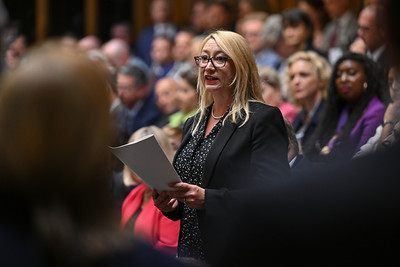
Additional concerns were raised by Liberal Democrat spokesperson for local government, Zöe Franklin, who argued that the bill transferred duties without the proper financial support, stating that the government risked ‘the delegation of responsibility without the means to deliver’.
For the government, this should highlight two things for a successful devolution strategy that holds the potential to fight populism nationally.
It must firstly understand the visibility of metro mayors as paramount to unifying rural and urban areas under one umbrella, particularly mayoral authorities with wide geographical differences. This must be tied with improving its perception of local government reorganisation efforts, which could otherwise worsen the narrative of disconnect between the visions of central government and the everyday realities across Britain.
Secondly, it must recognise that devolving accountability and duties is not a silver bullet in itself. Whilst British populism thrives on disconnection, if local authorities and mayors are not given the sufficient resources to tackle issues which they are now accountable for, the government risks only increasing who voters blame, rather than those they can trust.
If delivered correctly, the English Devolution and Community Empowerment Bill could provide a legislative vehicle to disperse not just greater power, but true accountability, to regional leaders throughout England. Local leaders who resonate with communities, given the agency and authority to command multi-year funding settlements, may provide just the respite that the government needs in a time of deep central government dissatisfaction. If British populism, at its core, tells a story of a self-serving Westminster elite, deeply rooted regional inequalities and unaccountable representatives in London, then greater place-based power and decision making may be the greatest tool to dispel these notions.
To capitalise effectively, the government must expedite its devolution delivery, ensuring people genuinely feel its impact across England throughout this Parliament. Developments this week have already concerned hopeful spectators, as the government delayed the elections of 6 new mayoral authorities until 2028. This has further fuelled opposition arguments that the government is ‘running scared’ of the ballot box, and weakened the government’s position to provide more established cases of mayoral devolution come the next election.
Whilst the Labour government have so far proved that they want to share more of the power, now their principal challenge will be to deliver it in time for people across England to truly see it.
.svg)



.svg)
.svg)