
.svg)
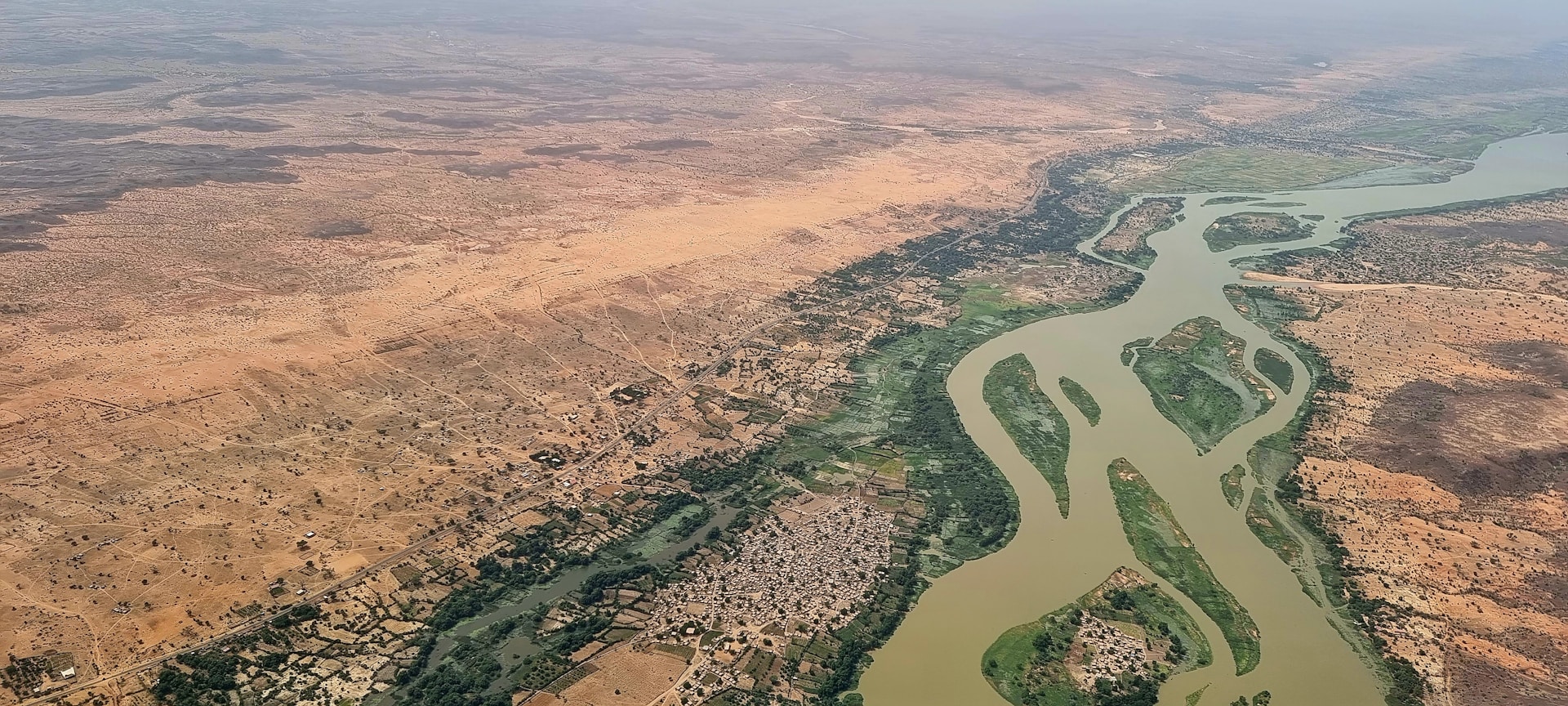
Image - Michel Isamuna
It is easy for events worldwide to fall short of the news cycle, podcasts or social media algorithms - the rapidly deteriorating security situation in the Sahel is one of these events. It should not. It has been over a decade since the Sahel region saw the first outbreaks of radical Islamist insurgency, but in 2025 the twelve years of regional counterinsurgency have seen their gains almost entirely reversed.
The capital of Mali, Bamako, is currently under blockade by local factions of Al-Qaeda and the bordering states of Burkina Faso and Niger find themselves under strain from similar forces. Swathes of the Sahel are no longer under government control, seized by Islamists, ethnic militias and political paramilitaries rivalling the military juntas which have taken the reins from the failing civilian governments. So, why has the situation grown so dire and why is now the time to intervene?
Islamist extremism has been a threat to regional security for decades - conflicts in Algeria and Nigeria led to a gradual spread of militant cells across the Sahel. However, the growth of Al-Qaeda and the Islamic State has turned a spillover conflict into one of Africa’s deadliest conflict zones and one of the regions worst-hit by terrorism globally.
The inability of the Sahel governments to suppress the growth of these Islamist groups throughout the 2010s, even with the assistance of the United States and the region’s former colonial master France, led to the region undergoing a total redefining of geopolitical ties as a wave of military-led coups struck the region, with Mali, Burkina Faso and Niger (amongst others) falling under military rule.
These coups, while launched in a bid to restore order and organise a more effective response to these groups, have failed to produce any positive change in regional security and have cut the three states off from both regional alliances and Western support. This has driven the establishment of a tri-state security alliance - the Alliance of Sahel States (AES, Alliance des États du Sahel) - and has seen American and French forces replaced with those of the Russian Federation.
The situation in the Sahel (especially in Mali and Burkina Faso) has deteriorated drastically over the past year. The region has seen a sharp escalation in attacks from JNIM (Jama'at Nusrat ul-Islam wa al-Muslimin), the regional branch of Al Qaeda, alongside those of the Islamic State’s West Africa and Sahel Provinces - although it is important to make clear that the two groups very rarely collaborate and in fact often act as each other’s most serious rivals. The two groups recently fought a bloody battle over control of Lake Chad - resulting in dozens of fatalities.
The situation in Bamako is particularly bleak, with the city being subjected to a JNIM blockade, with truck convoys used by the government to supply fuel to the capital being captured and destroyed in insurgent ambushes. With many establishments still relying on diesel generators (including critical services like healthcare and education) the draining of fuel reserves is not simply impeding road transport but the way of life for the entire city’s population. The international community appears skeptical of the government’s ability to recover the situation - with the American and French Embassies advising their citizens to evacuate Mali.
Russia has continued to station limited forces after the downfall of the now-disgraced Wagner across the Sahel in the form of the novel, distastefully-named ‘Africa Corps’, but the ever-growing burden of Russia’s own local conflicts makes the prospects of significant reinforcement or support unlikely. With the AES left isolated by the West and ignored by the East the states of the Sahel have little hope of long-term survival in the current security climate.
JNIM has in the past weeks hinted to their goals beyond the confines of the Sahel by striking into Nigeria - killing a number of soldiers and crossing over into the territory of Boko Haram (JAS, Jama'at Ahl al-Sunna li al-Da'wa wa al-Jihad), the infamous West African branch of Al Qaeda and the perpetrator behind continual atrocities against Nigeria’s Christian populations (much to the ire of US President Donald J. Trump - who has begun to openly discuss military intervention on social media).
With Islamist insurgent groups now operating across much of West Africa and threatening the very existence of multiple states in the region the window to prevent global catastrophe is starting to close. Permitting the forceful overthrow of the AES - despite their hostility to their West African neighbours and the Western world - would serve as a humiliating and crippling failure for national and international security.
The nations of the world - West, East or neutral alike - must agree to take immediate action if the AES is unable to resolve the crisis in short order. Terrorism is a threat to all states of the world and every major state, irrespective of their affiliations, ideologies and stances, have suffered at the hand of radical Islamism and any attempt to resurrect the movements that have caused such global suffering must be promptly quashed.
As the world grows increasingly polarised and international cooperation grows rarer by the week it is important for the nations of the world to remember their collective responsibilities and recognise that there are threats that do transcend borders and require a response that can do the same.
While the states of the AES very much represent a security concern for the region, and a time will likely come when the West will find itself at odds with the alliance as it continues to support the basing of Russian combatants on its soil, the juntas of the Sahel still represent an internationally-recognised government and represent the lesser of two evils for the world. There is a time and a place to air out ideological conflict - but that time is not now.
.svg)
.svg)
.svg)
.jpg)