
Image - Pixabay
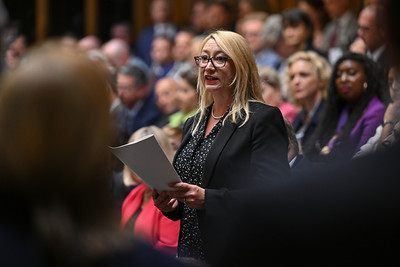
The recent Gorton and Denton by-election saw a 26.4% swing from Labour to the Greens, delivering Green Party candidate Hannah Spencer a vote share of 40.7% and a job in Westminster. Reform candidate Matt Goodwin's strategy of positioning the contest as a referendum on Starmer’s leadership ultimately failed to flip the seat blue; instead, he secured second place with 28.7% of the total vote share. With its National Executive Committee blocking Manchester Mayor Andy Burnham’s attempt to stand, despite his favourability and name recognition among voters, Labour found itself relegated to third place, with 25.4% of the total share.
For the government, the loss seemingly echoes that of the Caerphilly by-election held late last year, where progressive voters united around an alternative party to Labour to ward off a potential Reform victory. This time, however, things appear to be more electorally threatening, with polling indicating that large numbers of current Labour voters are considering voting Green following the result.
While Polanski’s party had enjoyed national polling surges leading up to the contest, he had yet to have a chance to demonstrate its real-world electability under his leadership. In the lead up to election day, Labour capitalised on this, communicating to voters that polling demonstrated only they were capable of commanding a voter majority capable of seeing off Reform. The Greens' prevailing over Labour by such a considerable margin in Greater Manchester disproves the repeated argument that the latter is the only viable option in resisting Farage’s Reform on the national stage.
From an inter-party perspective, the absence of a Workers Party of Britain candidate suggests a growing sympathy between George Galloway and Polanski’s parties on the subject of Palestine. Should Galloway continue to refrain from standing candidates in contested seats, Green MPs would likely benefit from the entirety of pro-Palestine voter support, as this voter constituency continues to criticise the government’s role in the Gaza conflict.
For Farage and Reform, the result is undeniably disappointing. Despite enjoying a narrow lead in early polling, the party achieved only a marginal lead over Labour, falling considerably short of challenging the Green party’s victory. Goodwin’s attempt to present himself as a local candidate based on his limited time living in and around central Manchester failed to meaningfully match Spencer’s depth of local connection.
His still relative success in increasing Reform vote share by over 15% when compared to 2024 results, however, demonstrates that Reform voters are potentially less phased by locality, and more interested in shared understanding. While Goodwin might not have spoken in the same dialect as his voters, his intellectual background as a chronicler and proponent of the UK far-right appears to have adequately proved his credentials to many Reform-curious voters. Should this trend prove similar throughout the UK, Reform could overcome the often unanimous challenge of identifying suitably local candidates for constituency elections, allowing them to ‘parachute’ in contenders by appealing to the shared values and beliefs of their voters.
Despite Labour candidate Angeliki Stogia coming third, the result did not prove terminal for Starmer. The PM reacted to the loss by reaffirming his commitment to delivering change and denouncing the Greens’ chances at winning a majority in a national election.
While Starmer attempts to calm the waters among his backbenchers, their worries are understandable. The scale of Labour’s victory in 2024, despite its narrow vote share, means that many of its MPs are entirely new to Westminster and occupying seats hotly contested by Reform. Should Polanski prove successful in leveraging the result to position the Greens as the UK’s preeminent progressive party, these backbenchers will be facing electoral pressures from both sides. Having already survived one coup attempt from senior Labour figures this year, Starmer could face a leadership challenge from below if he remains unable to deliver electoral success in May’s upcoming local elections. Should Labour lose a large proportion of its council seats in England, or worse, its historic hold in Wales, the PM will almost certainly face renewed questions surrounding the viability of his leadership.
Gorton and Denton serves as an exemplar for the rapidly evolving nature of UK politics. The two-party system, which has seen Labour and the Conservatives dominate national governance for over a century, seems to be coming to an end. Reform’s impact and the scale of the Greens' victory suggest that insurgent parties are here to stay.
While the extent to which any by-election is a true representation of a future general election remains debatable, the resources Farage’s and Polanski’s parties poured into the contest is less so. Labour’s historic majority was regarded by critics as a “loveless landslide” in 2024, and it appears rightly so. As voting intentions become more fragmented and party loyalties wane, the results of the next general election could seriously challenge the ability of first past the post to provide the country with a suitably representative government. Though some may think the end of two-party politics is a good thing, without an electoral system capable of managing the transition, it may also spell the end of governmental efficacy and authority.
.svg)
Mark graduated from Newcastle University at the end of 2025 with a Master's in Urban Planning. He's interested in rising inequality and the politics of populism. Alongside politics, he enjoys hiking and travelling.
.svg)




.svg)
.svg)