

.svg)

Image - Freestocks.org
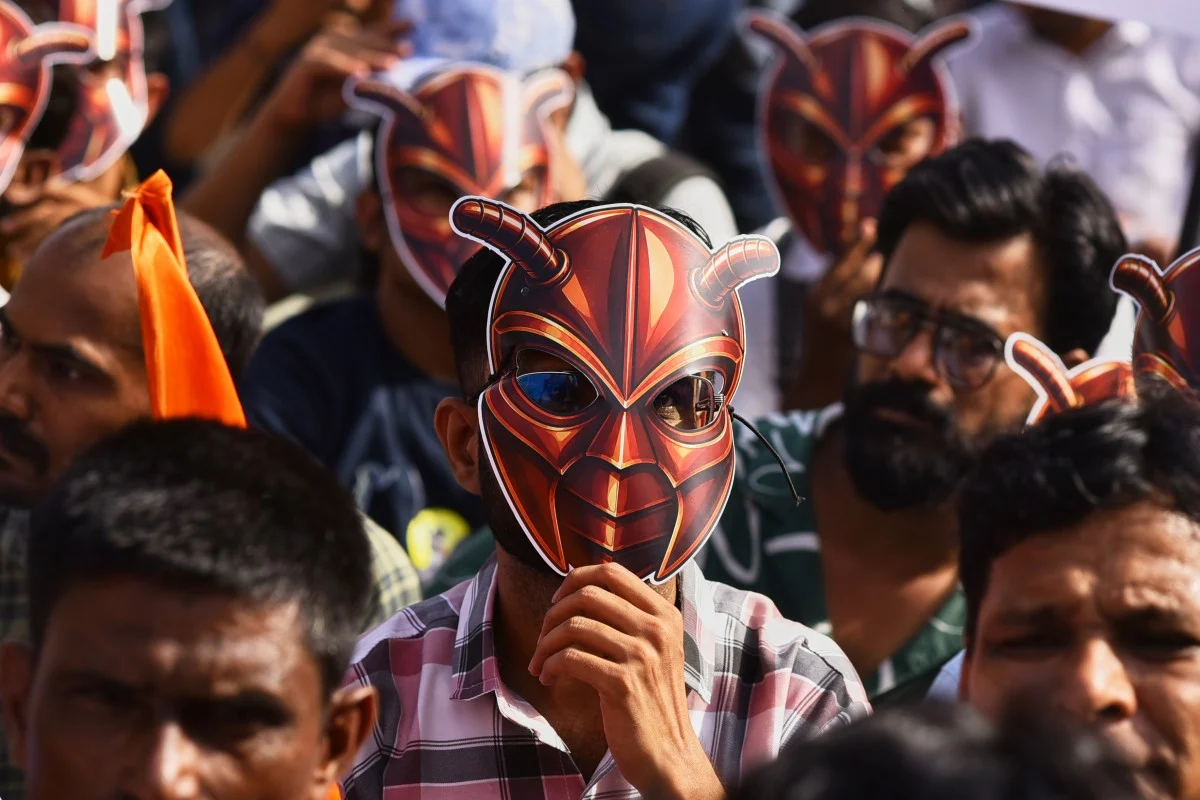
Anger has become one of the most powerful forces in modern politics. As historian Richard Hofstadter once observed, American politics has long been ‘an arena for angry minds.’ In the digital age this tendency has become intensified and systematised. In a media environment driven by clicks, shares, and constant reaction, outrage spreads faster than facts. It is no coincidence that ‘rage bait’ was named Oxford Dictionary’s Word of the Year in 2025, highlighting how emotionally charged content now dominates online discourse. This dynamic underpins what might be described as the ‘rage economy,’ an online environment where anger and outrage are rewarded with attention, engagement, and influence, which encourages political actors and content creators to produce misleading and emotionally provocative content.
This economy exists because social media algorithms promote attention-grabbing content, studies show that platforms push provocative posts to wider audiences even when they do not align with users’ values or broader societal ones. It has also been reported that social media companies tolerate harmful content because it drives engagement. An engineer at Meta told the BBC that senior management encouraged the inclusion of more ‘borderline’ harmful content, such as misogyny and conspiracy theories, in users’ feeds in order to compete with platforms like TikTok. As a result, anger is no longer a mere feature of political discourse, but a resource that is actively amplified, monetised, and impossible for audiences to avoid.
On social media, anger has become a business model. Users on platforms such as X and Facebook can earn money from posts, but only if they generate enough engagement. This has driven the rise of monetised political accounts centred on right-wing politicians and ideologies, many of them built around the rhetoric of Donald Trump. However, in November 2025, X’s new location feature revealed that many monetised pro-Trump accounts were not based in the United States, many were based in South Asia, Africa, and Eastern Europe. While some may be genuine international fans, it is likely that many are financially motivated and they are cashing in on division. As Jason Koebler at 404 Media argues, America’s political polarisation has become ‘the world’s side hustle,’ with viral political content increasingly produced by monetised networks of accounts operating globally.
Beyond individual actors, this rage-driven environment also enables more organised forms of interference. While individuals can build profit-driven networks that exploit political division, the same system can be manipulated by more coordinated operations. Ahead of the 2024 presidential election, a Department of Justice indictment revealed that domestic right-wing influencers were implicated in a Russian scheme to influence voters and inflame political divisions. According to the indictment, one influencer was offered $400,000 per month plus bonuses to produce weekly content, while another received $100,000 per video. The case has since stalled, and several right-wing influencers such as Benny Johnson, Dave Rubin, and Tim Pool have claimed they were unknowingly involved. This is not the first time America has seen coordinated efforts to influence election outcomes, in 2019 the Mueller report found that Russian state actors sought to influence the 2016 presidential election through a coordinated online disinformation campaign, and by hacking emails from the Clinton campaign.
Worryingly, social media owners are not doing enough to tackle these dynamics that are coded deep within their algorithms. In January 2025, Meta scrapped its use of independent fact checkers in favour of a ‘Community Notes’ system. Mark Zuckerberg defended the move by arguing fact checkers were ‘biased’ and emphasised that it was ‘time to get back to our roots around free expression.’ This decision, made just weeks before Trump’s inauguration, was widely interpreted as politically motivated. Trump has long attacked Silicon Valley tech firms, vowing to dismantle what he described as a ‘censorship cartel’ and accusing platforms of supressing conservative voices. However, Trump welcomed Facebook’s decision to scale back factchecking, stating ‘they’ve came a long way.’ These efforts also contribute directly to Trump’s political ambitions, one of his first executive orders condemned government censorship of speech ‘under the guise of combatting “misinformation,” “disinformation,” and “malinformation”.’
The debate over factchecking is shaped by concerns about free speech. This issue was highly influential in Zuckerburg’s decision to remove fact checkers and Elon Musk’s takeover of Twitter in 2022, which he framed as a campaign to defend free speech. Nevertheless, X has turned into a right-wing echo chamber in which conservative voices are amplified. Under Musk’s ownership, pro-Trump narratives and right-leaning content have been amplified, and Musk himself has used the platform to promote Trump. As a result, X does not operate as a neutral space for open debate, but as a key component of the ‘rage economy’, where outrage-driven, partisan content is amplified, rewarded, and politically consequential. This discourse begs the question whether it is possible to strike a balance between free speech and regulation.
How can this system be challenged?
The dynamics of the rage economy are likely to continue throughout Trump’s presidency because his grievance-driven political style is perfectly suited to a media system that rewards outrage over veracity. This creates space for not only Trump, but for bad actors who profit from division. Social media platforms have shown little interest towards tackling the problem, arguably because the same algorithms that spread inflammatory content also drive engagement and revenue.
The effects of the ‘rage economy’ on audiences are worrying. Exposure to outrage-driven content has been found to increase susceptibility to misinformation, as the amplification of anger makes individuals more likely to believe false claims, less likely to check facts, and more likely to stick to views they already agree with. Over time, this reinforces echo chambers, distorts perceptions of reality, and undermines the ability of citizens to engage with politics deliberatively.
So how can commentators on the left respond to this disinformation crisis? One approach is to adapt to the realities of the digital media landscape rather than resist them. Ben Meiselas, co-founder of the pro-democracy YouTube channel MeidasTouch, argues that conservatives gained an early advantage by embracing the dynamics of social media, producing short, shareable content, and consistently amplifying grievance-driven narratives. In response, MeidasTouch has begun to mirror aspects of this strategy, combining sharp, fast-paced messaging with a more direct and emotionally engaging tone to reach wider audiences. This suggests that the left must adapt to the dynamics created by the rage economy by packaging its arguments in ways that are emotionally resonant and easily shared.
At an individual level, steps must be taken to limit exposure, such as curating feeds, avoiding engagement with inflammatory content, and seeking out a wider range of sources. Improving media literacy is also crucial, being able to critically assess sources, identify bias, and understand how algorithms shape what users see can help reduce the impact of misleading or emotionally manipulative content.
Ultimately, the problem is structural. If platforms continue to reward outrage with visibility and profit, the incentives driving the rage economy will remain. Unless the incentives driving the rage economy are addressed, outrage will continue to dominate political discourse at the expense of truth.
.svg)

.svg)
.svg)
.jpg)