
.svg)
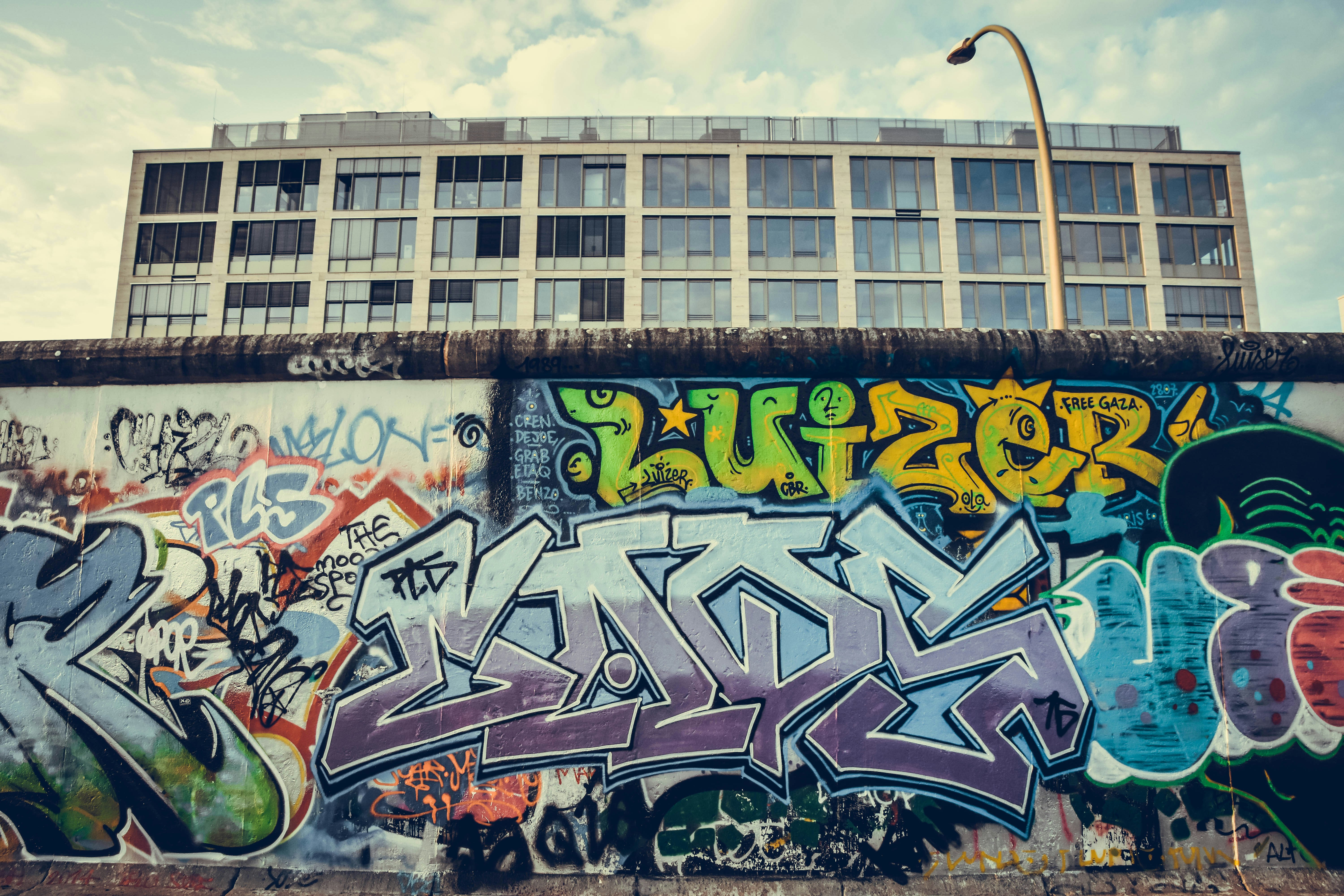
From 1949 to 1989, Germany was divided along two opposing ideological lines. The Berlin Wall and the Cold War constructed a Germany in which the East and West were pitted against each other, and thus two vastly different German political cultures were created.
West Germany prided itself on liberal democracy, a market economy, political pluralism, and integration with the West. On the other hand, East Germany was a one-party socialist dictatorship characterised by central planning, limited freedoms, high levels of state welfare, closed borders, and state surveillance. After the fall of the Berlin Wall in November 1989, German unification thrust these two colliding ideologies together. In West Germany, unification was presented as a win over communism and a victory of democracy. However, for many East Germans, although it provided unprecedented freedoms, it also signalled the end of their country, feelings of displacement, and the loss of extensive state welfare provisions. Two-thirds of East Germans in 2025 stated that they felt nostalgia for the German Democratic Republic (the East German state under the Berlin Wall), revealing the lingering disconnect that many East Germans still feel with reunified Germany.
As well as the psychological impacts of not belonging in reunified Germany, the fall of the Berlin Wall also had a negative economic effect on East Germany. Many East German industries collapsed under new pressure from Western industries, and as many businesses were non-profit, they were deemed unproductive and were closed, leading to higher unemployment and lower wages for East Germans who struggled to adjust to the Western economy. These Eastern disadvantages prevail today as Eastern Germany is still economically behind Western Germany, with East German areas experiencing higher levels of deprivation and former East Germans still struggling to find their place in reunified Germany. As of August 2024, the unemployment rate in the East was 7.2% compared to only 5% in the West, and the number of people employed in the low-wage sector is still higher in the East.
These disparities are also seen politically as the Western political system was largely imposed on East Germans, not co-created. Some East Germans viewed reunification as the start of their control by Western elites and subjugation to a capitalism that they did not relate to. East Germans were, and still are, underrepresented in leadership roles. A 2023 study found that East Germans hold only 6.8% of the top positions in federal authorities and only 4 to 5% of senior administration jobs. This created a feeling amongst East Germans that they were lesser citizens; as of 2025, 37% of East Germans state that they feel perceived as second-class citizens. This discontent has manifested in the development of anti-government and anti-establishment sentiment amongst East Germans.
Feeling excluded and politically lost, and with newfound political freedoms but no parties that they felt stood for them, East Germans were vulnerable to radicalisation. Thus, East Germans’ identity crises and their feelings of exclusion created a unique opportunity for right-wing movements, like the Alternative für Deutschland (AfD) party, to exploit this and offer a different choice to mainstream parties like the Christian Democratic Union (CDU) and Social Democratic Party (SPD). The AfD focused on nationalism, anti-immigration, and created an anti-elite rhetoric that appealed to East Germans’ feelings of being left behind by the government, which many perceived to be run by Western elites. 44% of AfD voters said they made their decision because of dissatisfaction with the old-school parties, demonstrating the AfD’s success in positioning itself as another option to the mainstream parties that most East Germans don’t feel supported or represented by. While many East Germans feel more hope in the AfD’s political outlook, the party has exploited East German identity insecurity and their exclusion from political power to lure them into these populist policies.
As well as the discontent that East Germans felt with reunification, the Socialist Unity Party’s (SED) authoritarian rule in East Germany also contributed to the vulnerability of East Germans to radicalisation. The one-party rule of the SED meant that East Germans had very little experience with pluralism, and politics was regarded as something that was done to people, not by people. The way in which protest was treated in the GDR – that it made you an enemy of the state –meant that for many East Germans, politics was broken into simplified binaries, such as loyalty or resistance, the people and the elite, or truth and lies. This kind of mindset is akin to modern populist rhetoric, meaning that right-wing populist parties, such as the AfD, benefit from East Germans’ political outlooks.
In addition, with its closed borders, East Germany had experienced little immigration, meaning that cultural change felt more dramatic and threatening, especially after most East Germans already felt as though they had experienced significant changes with the fall of the Berlin Wall. These factors have made East Germans easy targets for AfD populist policies, such as their condemnation of immigrants as non-German and unwelcome, as the AfD can worsen fears of migrants and play into specific political binaries, creating an us-versus-them mindset. The migration crisis of 2015 exacerbated this trend and aided the AfD’s aims to gain more support from East Germans. While Angela Merkel and the CDU/SPD coalition welcomed many refugees, the AfD used this to worsen fears of immigration and blame Germany’s problems on the increasing migrant population. East Germans’ lack of experience of immigration made them vulnerable to this fear-mongering, which was worsened by their already existing economic insecurity, leading to many siding with the AfD’s anti-immigration stance. As of 2015, the AfD made anti-migration its focus, causing its popularity to skyrocket in East Germany.
The Berlin Wall not only laid the foundations for the rising popularity of the AfD, but also polarisation in the Bundestag. The differences in East and West German political mindsets and the tensions that developed after reunification have caused political polarisation in modern Germany. Voting patterns remain sharply different in East and West Germany, and political debates are no longer purely ideological and based on left vs right rhetoric but are either implicitly or explicitly East-West debates. For example, energy and climate policy is tied up in East-West ideological conflicts. While the Greens’ pressure for rapid decarbonisation is supported among many in West Germany, Eastern regions generally oppose it and demand greater regional autonomy, longer timelines for coal phase-outs and more compensation. Coal mining industries were big in East Germany, providing jobs and forming part of East German identity, meaning coal phase-outs have hit Eastern regions hard. Right-wing movements have portrayed climate measures like these as elite-driven attacks on ordinary people. This narrative is heavily exploited by the AfD because they know that the notion of Western policies being forced on them is a particular insecurity for East Germans, and the elite versus the people rhetoric is an easy way to gain popularity with many East Germans. Additionally, German parties now often have region-specific policies, for example, the CDU is generally culturally conservative in the East and centrist in the West, the SPD focuses on social justice and redistribution in the East, and the Greens focus on sustainability and modernisation has a clear Western-focused appeal with weaker Eastern penetration.
This has led to a more fragmented Bundestag, making forming coalitions and policy-making much harder. Parties struggle to appeal to both East and West, leading to parties that target specific areas (such as The Greens focus on Western Germany and the AfD’s targeting of Eastern Germany), or policy compromises that do not satisfy either side. The recent growth in popularity of the AfD is a symptom and a further cause of this polarisation and has exemplified the existing impacts of the Berlin Wall, with East and West Germans having vastly opposing views of the AfD. Many East Germans see the AfD as a refreshing party that they feel stands for them and will work to further help East Germans and protect them against perceived issues like Western elites and immigration. The AfD is now the most popular party in most East German states, and surveys in late 2025 put the AfD at as high as 39% in Saxony-Anhalt and 38% in Mecklenburg-Vorpommern.
However, the AfD is heavily condemned by many in the West. Most politicians, except for the further right members of the CDU, criticise the AfD and would not be willing to form a coalition with them or work with them in the Bundestag. Many find the rise of the AfD alarming, and many Western Germans are pushing for stronger surveillance and prevention of right-wing extremism and hate crime, and a renewed focus on political education. There has also been debate overbanning the AfD, with a group of over 100 MPs signing a petition to get it banned, arguing that it is a threat to democracy and citing Germany’s Nazi party as a warning of the dangers of far-rightism. Alarm over the intentions of the AfD and threats to democracy were especially raised when one AfD politician was fined for using a banned Nazi slogan. Despite this, the AfD has gained some popularity in the West, especially among young people, and the AfD is now the second-biggest party in Germany, gaining 20.8% of votes in the 2025 local elections. While for now, the AfD is blocked from taking part in government because of a ‘firewall’ run by the SDP and CDU, resistance to cooperating with the AfD is thinning for some as the AfD gains more support. In January 2025, the government passed a resolution pushing for tougher restrictions on immigration, evoking controversy because it was backed by the AfD, breaking the trend of no party cooperating with the AfD. Many politicians worry that the firewall is not strong enough to stop the AfD and are scared of the possibility of the AfD growing further. The normalisation of extremist ideology in the AfD is dangerous and presents worrying possibilities for Germany’s future if nothing is done to stop its rise. However, the rise of the AfD is not a problem caused by uneducated East Germans, as some West German supposedly ‘left-wing’ media asserts, but a wider German issue of reunification being incomplete and East Germans feeling left behind.
Verity is a final year history student at the University of Manchester. She is most interested in geopolitics, particularly European politics, including a particular interest in the rise of the far-right in Europe, US neocolonialism, and the politics of democracy and extremism. Outside of studying and writing, she loves running.
.svg)

.svg)
.svg)