
Image - mostafa meraji
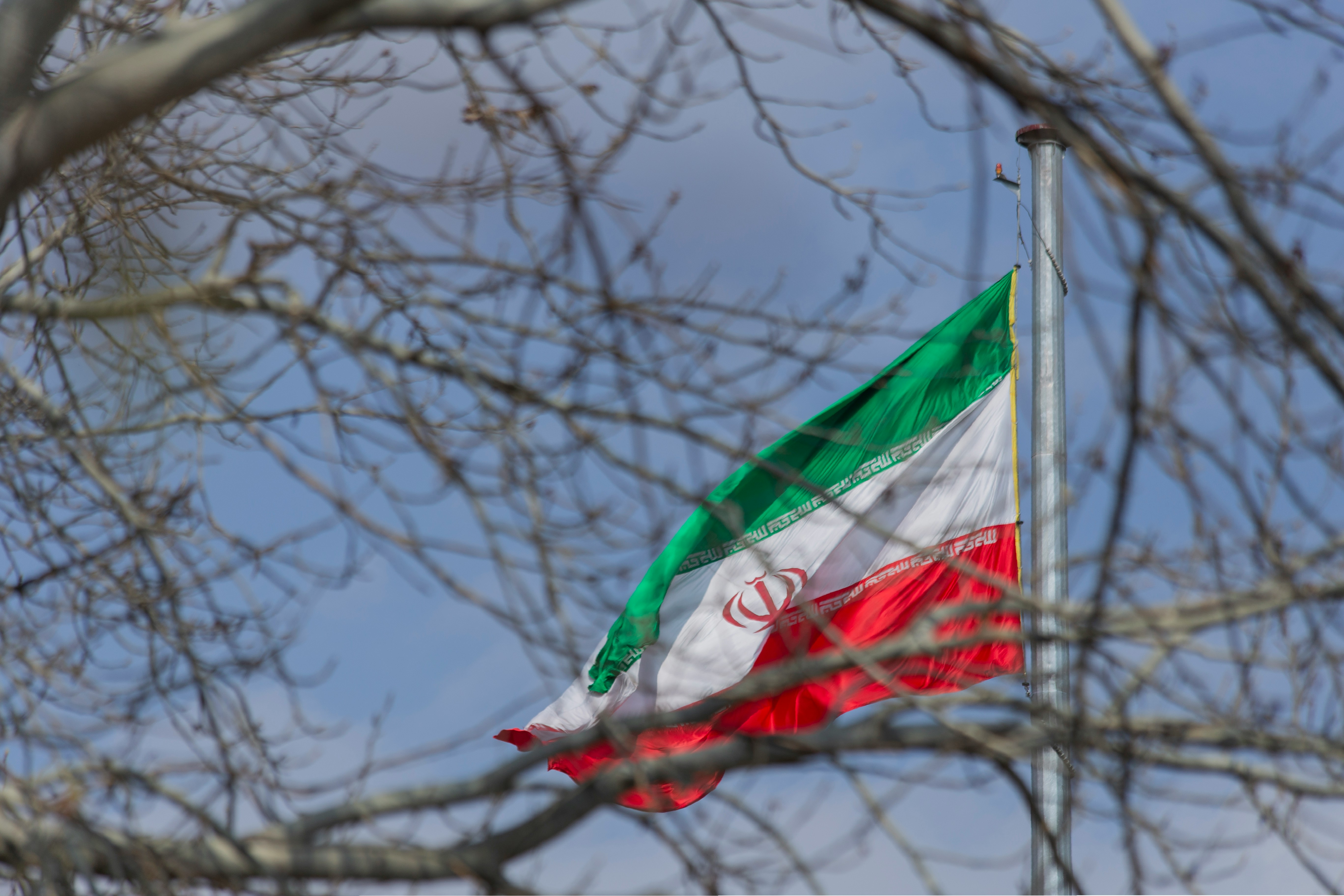
When the International Atomic Energy Agency (IAEA) passed a resolution demanding that Iran grant full access to its nuclear facilities and provide “precise information” on its enriched uranium stockpile, Tehran reacted with immediate hostility, rejecting the resolution outright and warning of unspecified retaliatory actions. The foreign ministry dismissed the move as “anti-Iranian” and accused the United States, the United Kingdom, France, and Germany of driving the agency’s pressure campaign.
At first glance, this looks like standard Iranian resistance to international scrutiny. But Iran’s aggressive posture toward the IAEA increasingly reflects a deeper strategic anxiety: its regional network of proxies, which for decades formed the backbone of Iranian influence in the Middle East, is weakening. And as that leverage erodes, nuclear opacity becomes one of Tehran’s last remaining bargaining chips.
The IAEA’s latest resolution was adopted with 19 votes in favour, three against, and 12 abstentions, calling on Tehran to provide inspectors with access to nuclear sites and clarity on nuclear material accounting. Iran responded by declaring that cooperation with the agency “regarding the bombed sites” would not resume and threatened “other actions” beyond suspending an earlier agreement reached in Cairo.
Iran had originally halted all IAEA cooperation following Israel’s strikes on its nuclear facilities in June, which killed nearly 1,100 people including scientists and military commanders. Inspectors have since been denied entry to key facilities such as Fordo and Natanz, even though the IAEA has stressed that visits to these sites are part of Iran’s commitments.
A temporary deal struck in Cairo in September briefly reopened the door to inspections, but its significance evaporated when the UK, France and Germany activated the UN snapback mechanism to reimpose sanctions. Tehran responded by halting implementation of the agreement altogether, with Foreign Minister Abbas Araghchi accusing Western powers of having deliberately “killed” the Cairo deal through a campaign of hostile measures.
Iran’s decision to walk away from the Cairo agreement risks backfiring. By shutting down inspections and reducing transparency, Tehran may end up encouraging the very outcome it wants to avoid: tougher US-led sanctions and renewed talk in Washington of pushing for regime change. The situation draws uncomfortable parallels with Iraq in the early 2000s. Saddam Hussein’s government also faced intense pressure over weapons of mass destruction and resisted international demands, even though years of United Nations inspections ultimately found no evidence of active chemical or biological weapons or a revived nuclear programme. Despite that, the US still led an invasion in 2003 that collapsed the Iraqi state.
Today’s nuclear landscape is also very different and far more crowded. There are currently nine countries with nuclear weapons: the United States, Russia, China, France, the United Kingdom, India, Pakistan, Israel, and North Korea, with only the first five officially recognised under the Nuclear Non-Proliferation Treaty. In this context, Iran’s choice to limit cooperation with inspectors puts it in a particularly risky position: caught between being a non-nuclear state on paper and a country viewed with deep suspicion in practice. By halting the Cairo deal, Tehran may be strengthening the case inside the US for harsher economic and political pressure at a moment when Iran is already under serious strain across the region.
In that sense, Iran’s nuclear defiance looks less like confidence and more like a gamble being taken at a very vulnerable moment.
Iran’s so-called “Axis of Resistance,” once the backbone of its regional power, is now badly weakened after nearly two years of continuous conflict with Israel and the United States. Many of Iran’s proxy groups appear either unable or unwilling to respond meaningfully when Iran itself came under direct attack, exposing how exhausted and overstretched the network has become.
Hamas, which launched the October 7, 2023 attack on Israel, has since been devastated by Israeli military operations and is no longer able to threaten Israel in any serious way. Hezbollah, once Iran’s strongest and most valuable proxy, suffered heavy losses after months of Israeli airstrikes, the elimination of senior commanders, and Israel’s ground operation in southern Lebanon in October 2024, which forced the group into a ceasefire and effectively removed it as a frontline deterrent.
In Syria, Iran’s position collapsed even further with the fall of Bashar al-Assad’s regime in December 2024, cutting off Tehran’s main land route used for years to move weapons and funds to Hezbollah. Before Assad’s fall, an IRGC member could drive from Tehran to Baghdad, then west through Syria to Lebanon, connecting to Hezbollah’s headquarters, while a maritime route could reach Yemen. With Assad gone, this strategic corridor no longer exists, dramatically reducing Iran’s freedom to project power in the region. Since then, Iran has been reduced to using limited air and cash transfers, while the Lebanese state has begun taking steps to halt these flows.
The Houthis in Yemen and Iranian-backed militias in Iraq remain active but have shown major limits. The Houthis continue to fire missiles and drones toward Israel, but most are intercepted before causing serious damage due to the long distances involved and Israel’s air defenses. Iraqi militias attempted similar attacks, but none hit major Israeli targets and only one caused serious casualties. These groups are also preoccupied with reshaping their influence after Iraq’s November 2025 elections, making them even less willing to be pulled directly into an Iran-Israel confrontation.
Despite these limitations, Tehran had reason for cautious optimism during Iraq’s recent parliamentary elections. Shiite-majority coalitions aligned with Iran performed strongly, and Prime Minister Mohammed Shia al-Sudani’s bloc emerged as the frontrunner. Pro-Iran blocs such as the Coordination Framework, the State of Law Coalition, and the Fatah Alliance now command more than 170 parliamentary seats, embedding PMF-aligned forces deeply into any governing coalition.
But beneath this political success lies growing concern. Baghdad is pushing to integrate parts of the PMF into the Iraqi military or curb their autonomy – moves that Tehran fears could weaken its most dependable proxy at precisely the moment the rest of its regional network is under strain. In a recent example, Iraq briefly included Hezbollah and the Houthis on an asset-freeze list before quickly reversing the decision after backlash from Iran-aligned factions, highlighting Baghdad’s delicate balancing act between US pressure and domestic politics. Middle East analyst Ali Mousavi Khalkhali noted that any harm to the PMF is viewed by Tehran as “a direct blow” because it remains the last robust buffer constraining both Israel and the 2,500 US troops still stationed in Iraq.
This explains why Iran has continued transferring drones and missiles to PMF factions, according to assessments by the US Treasury and the Centre for Strategic and International Studies. Mr. Khalkhali said evidence shows drones and missiles of various ranges are in PMF hands and that Tehran sees the group as essential to its deterrence strategy. Yet Baghdad appears to be tilting subtly toward Washington in an effort to “keep America satisfied,” increasing Tehran’s fear that PMF autonomy could be eroded from within.
This leaves the PMF as Iran’s last major, intact proxy in the region. If the PMF were to be weakened, disarmed, or politically sidelined, Iran would be left with no meaningful regional buffer at all. Tehran would lose its final tool for projecting power abroad and become far more exposed at home. With Israeli intelligence already having demonstrated deep reach inside Iran through assassinations and strikes on sensitive targets, the collapse of the PMF would remove one of Tehran’s final defensive layers. Without that shield, Iran’s leadership could face growing pressure not just from abroad but from within – raising the real possibility that regional collapse could accelerate internal instability and threaten the survival of the current regime.
With the collapse of much of its proxy network, Iran appears to be increasingly turning to nuclear development and opacity as a way to sustain influence and leverage in the Middle East. For decades, Tehran relied on armed groups such as Hezbollah in Lebanon, multiple militia axes in Iraq under the Popular Mobilisation Forces (PMF), and other allied groups to project influence, deter adversaries, and avoid direct exposure. But today, many of those tools are politically constrained.
The fall of Bashar al-Assad’s regime in Syria in late 2024 severed a critical land corridor used by Iran to supply arms and support to Hezbollah, dramatically undermining Tehran’s logistical backbone and ability to maintain its “Axis of Resistance”. Hezbollah itself has been degraded through Israeli airstrikes, ground operations, and the elimination of senior commanders, removing it as a frontline deterrent.
In Iraq, the PMF remains Tehran’s last major proxy, but its autonomy is under pressure from Baghdad’s political maneuvers, subtle shifts toward Washington, and post-election restructuring. Iran has continued transferring drones and missiles to PMF factions, viewing the group as essential to its deterrence strategy, but if the PMF is weakened or sidelined, Tehran would lose its final regional buffer.
If the PMF falls, Iran would lose almost its entire regional buffer. In that scenario, Tehran may increasingly rely on its nuclear program as a “Plan B” to sustain influence, using ambiguity and potential deterrence to project power even while isolated, in a manner somewhat analogous to North Korea. Nuclear capabilities could allow Iran to signal that it remains a force to be reckoned with, limiting direct attacks from regional adversaries and deterring intervention by external powers. Yet this strategy is highly risky. Internally, the Islamic Republic faces significant pressure from widespread public discontent, human rights violations, and systemic abuse, particularly against women, which has fueled protests and unrest. Combined with Israel’s demonstrated intelligence reach and covert operations inside Iran, this domestic vulnerability means that nuclear defiance alone may not shield the regime. Instead, it could provide temporary leverage while opening pathways for both internal instability and potential regime change if external pressures escalate.
In short, Iran’s nuclear defiance is less about showing off power through its proxies. It is more about making up for the loss of its traditional influence. The standoff with the IAEA, stopping inspections, and keeping its nuclear program secret are all part of a calculated gamble. Tehran is trying to hold on to some bargaining power, maintain a deterrent, and avoid being completely isolated. But the risks are high. Its proxies are weaker, protests and unrest are growing at home, and international pressure is mounting. For Iran, the nuclear “Plan B” may be one of the few tools left to stay relevant in the Middle East.
.svg)
Hekmat is a trainee journalist, documentary filmmaker, and researcher specialising in artificial intelligence in defence and security. He is the Founder & Editor-in-Chief of Coded Wars, an independent platform investigating how AI and emerging technologies are reshaping modern warfare and security policy. He is currently completing a BA (Hons) in Broadcast & Digital Journalism at the University of West London.
.svg)
.svg)
.svg)
.jpg)