

.jpg)
Following Labour’s recent asylum system proposals, both the Conservatives and Reform have claimed that any attempt to curb immigration will fail whilst the UK remains a signatory of the European Convention of Human Rights (ECHR). But what is the ECHR, why are there calls to leave it, and do we really need it in order to have effective immigration policy?
In November 1950 following the atrocities and devastation of WWII, the ECHR was signed by the newly formed Council of Europe, enshrining human rights and fundamental freedoms within the initial 12 signatory member states (separate to the EU). In 1998, the Human Rights Act passed through Parliament, making the ECHR statute UK law meaning cases could go through UK courts rather than the European Court of Human Rights (ECtHR) – most notably it split these rights into absolute, limited, and qualified rights.
Absolute rights, such as ‘Article 7: No punishment without law’, can never be restricted under any circumstances. Limited rights, such as ‘Article 5: Right to liberty and security’, can only be restricted under certain circumstances, including when an individual commits a crime. Lastly, qualified rights, such as ‘Article 8: Respect for your private and family life, home and correspondence’, may take into consideration the rights of another individual, or the rights of a wider community.
The calls that claim that leaving the ECHR wouldn’t change anything cite that fewer than 1% of those appealing against deportation have won due to human rights – however this statistic fails to cover how immigrants have entered the UK in the first place, how the ECHR has restricted the government to do more, and how the ECHR has required the UK to accommodate immigrants, making it an extremely attractive destination.
Despite Sir Winston Churchill’s leading contribution in the founding of the Council of Europe and to the contents of the ECHR, created primarily by Brits, there’ve been calls that the convention undermines Parliamentary sovereignty; it was only in April of 2024 that the ECHR ruled that the Swiss government was in breach of the ECHR by failing to address climate change, ruling that Switzerland had violated individuals right to ‘family life’. Many, including Nigel Farage, think the ECHR has overstayed its welcome.
The Prime Minister has said he intends to change how international law is interpreted, without ‘tearing down’ human right legislation – is this really possible?
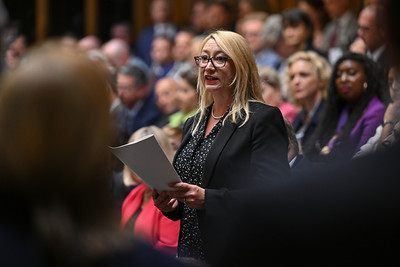
In her sweeping new asylum system reforms, the Home Secretary, Shabana Mahmood, set out that Article 8 rights are stopping the removal of those living here illegally. She stated that from January to September of 2022, out of those who made applications raising their individual rights whilst in detention, 86% were released. Being a qualified right, Mahmood said she’ll ‘ensure’ that the balance between the public interest and individual rights will be ‘fundamentally reset’ to ensure a smaller migrant intake.
On the absolute right of Article 3, prohibiting torture and inhuman or degrading treatment or punishment, Mahmood explains how the area this right covers has been expanded over time to the benefit of foreign nationals ‘committing serious criminal offences’ in the UK. She intends to change the scope of Article 3 to limit the overuse of this within the UK.
Much of Mahmood’s policy reflects that of Denmark, a signatory of the ECHR. Their policies have been working in reducing its attractiveness to those seeking asylum, with asylum claims down by a third. The UK government has taken on many of their policies, including making Refugee status ‘temporary’, and housing immigrants in repurposed buildings such as prisons, hospitals, and military basis. Following Mahmood’s commitment to have all migrant hotels exited by the end of the Parliament, they intend to do the same.
Concerns over leaving the ECHR have also been made due to the 1998 Good Friday Agreement and the UK post-Brexit EU deal, which both have human rights at centre; however the ECHR is not necessarily the only means in achieving this.
Ultimately, Denmark has seen a real improvement following the ‘zero asylum seekers’ approach adopted in 2019 – but the UK exists in entirely different circumstances; it’s already home to large immigrant communities, and is attractive as an English speaking country in Europe. The governments new approach and decision to move to an ‘updated’ ECHR is yet to be proven a success, and only time will show if it’s effective enough, or if more reformative (pun intended) action is needed.
Jake is a final year student studying Politics and International Relations at the University of Nottingham. His main areas of interest are Identity Politics, Populist Sentiment, the Middle East, and Global Security.
.svg)




.svg)
.svg)