
.svg)
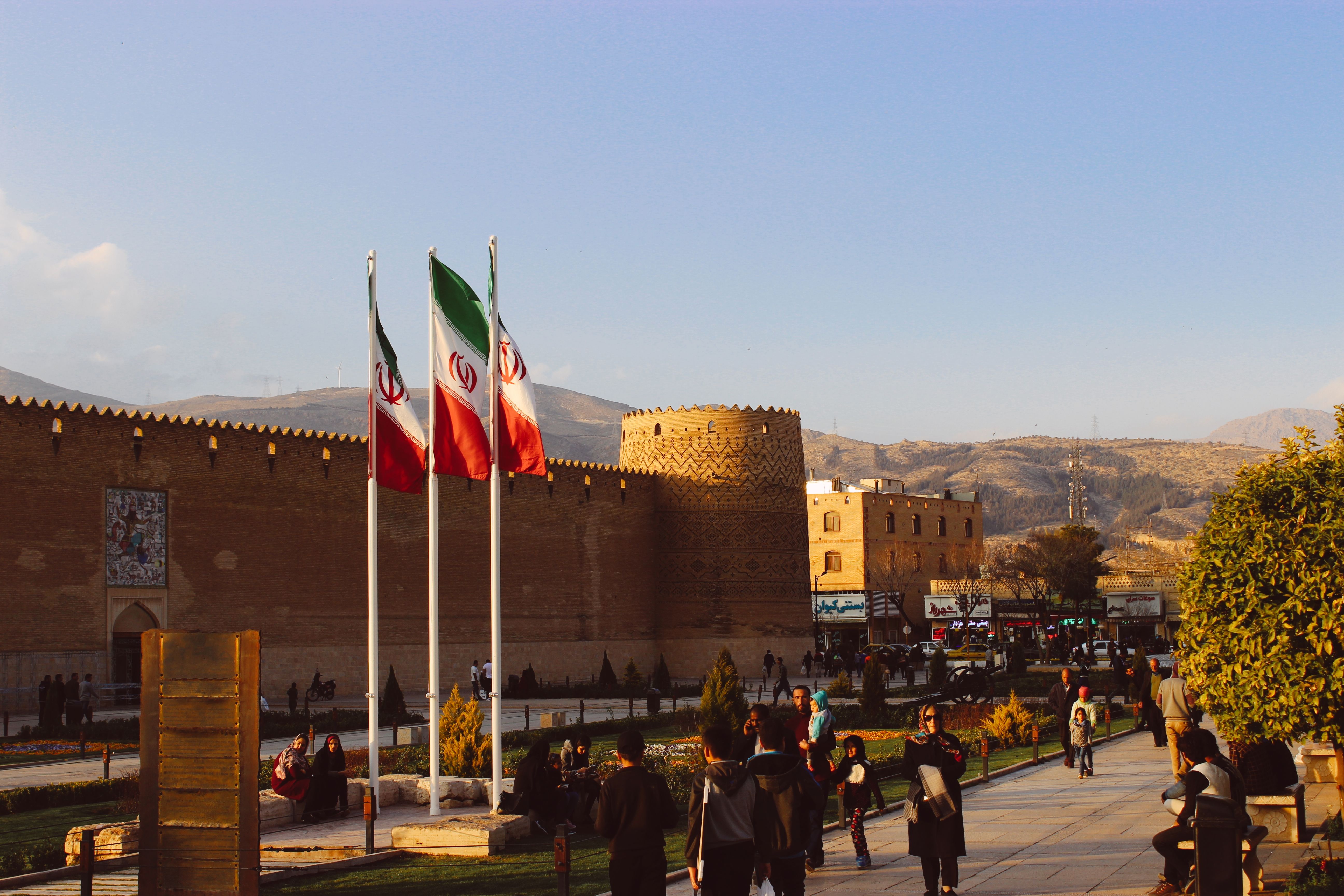
The boiling pot that is the relations between the US and Iran started simmering in March 2025, after a US-sent proposal for a new nuclear deal was rejected by the Iranian supreme leader, Ali Khamenei. In response, the US began targeting nuclear facilities in the area. Boiling point was reached on the 28th of February 2026, just less than a year after the nuclear deal proposal was rejected, when the US assassinated the Ayatollah. Tensions and violence have accelerated and spread since. It is believed that over 7,000 people from a range of countries have been killed as a result of the fighting.
The United States and Iran have a long varied history of alliance and hostility. Since the 1979 Islamic Revolution, Iran has been branded the ‘biggest adversary of the US in the Middle East. The Islamic Revolution was an abandonment of a previous pro-Western agenda. Over the past few decades, points of sensitivity include Iranian nuclear activity, frequent US interference in the region, and most considerably, oil. Oil-related tensions date back to 1953, where the US supported British efforts to prevent Iranian nationalisation of the Anglo-Iranian Oil Company, which is now BP.
This conflict came with a major global impact - most notably through oil prices due to the Strait of Hormuz being closed by Iran. The Strait is a focal point for peace negotiations. The Strait of Hormuz is used to transport around 20% of the world’s oil resources out from the Middle East, with estimates that nearly $600bn worth of energy passes through the corridor for trade per year. On the other hand, it also provides vital access for humanitarian imports to the region. Due to the narrow nature of the Strait, a large portion of it falls under Iranian control by the UN’s standards - in response to threat from the US, Iran has been able to occupy and threaten any uncoordinated vessels that attempt to go through the Strait. This has resulted in a global fuel crisis.
Around four months into the war, peace talks commenced, resulting in an extensively negotiated draft of a 14-point plan. A plan that has ultimately been rejected.
Throughout the conflict, the US and Israel have essentially been operating as a single entity. According to a US Department of State publication, there is no greater friend to Israel than the US and the two nations' relationship has ‘never been stronger’. However, could we be seeing cracks beginning to form in this ‘unbreakable bond’?
The complex relations between Iran and Israel follow a similar pattern to that of Iran and the US. The 1979 Islamic Revolution isolated Iran from its former allies, leaving tensions fluctuating ever since. The geographical proximity of Israel means attacks are more frequent and more deadly - even extending to attacking Lebanon, who have a strong connection to Iran through the Hezbollah group. The US themselves have not launched any attacks on Lebanon as of now. This is where a potential splintering in the Israeli-US relations is beginning to show. Just mere hours after the ceasefire agreement was announced, Israel carried out its largest attack on Lebanon, killing over 250 people. Due to the close allegiances between the four states, Israel’s violent determination creates a considerable hitch in the peace agreement plans.
During the negotiation period, Israeli attacks on Lebanon continued and sparked condemnation from President Trump. It was reported, and partially confirmed by Trump himself, that during a tense phone call the US president called Netanyahu ‘f*cking crazy’ and claimed Netanyahu would ‘be in prison if it wasn’t for Trump. The US-Israeli alliance is arguably one of the greatest contemporary threats to the Middle East; two strong characters, with equally strong drives for violence, working alongside one another with evidently opposing long term outcomes in mind. The interconnected nature of Iran and Lebanon, and the US and Israel, proves to be one of the greatest obstacles in the way of a peace agreement.
What was the, now rejected, Memorandum of Understanding?
*Paraphrased summaries of major points*
1: Immediate and permanent end of military operations, including those in Lebanon.
4: Upon signing, immediate removal of the US naval blockade and impediments against Iran, completed within 30 days.
5: Safe passage for commercial vessels through the Strait of Hormuz.
6: The US and regional partners to develop a plan for the reconstruction and economic development for the Islamic Republic of Iran.
8: Iran reaffirms it shall not develop nuclear weapons .
14: The final deal with be bound by a United Nations Security Council resolution.
The announcement of this plan initially was accompanied with a sense of hope. The announcement of a prospective peace deal alone was enough to send a decline in the oil prices that had risen as a result of the conflict. A former advisor to Trump's predecessor, Joe Biden, has described the ceasefire agreement as being handled ‘amateurishly’.
President Trump's crude announcement that there would be no peace deal, at least in the form of the 14-point plan, has crushed that sense of hope.
The end of the ceasefire was announced by President Trump, while at the NATO summit in Turkey, on the 8th of July 2026. In his usual colloquial fashion, Trump announced plainly that he ‘doesn’t want to do it anymore’ and followed with labelling the Iranian leadership as ‘scum’. This comes in response to Iran launching attacks on vessels in the Strait attempting to pass without permission, on the evening of the 7th July. . Due to the width of the Strait, Iran does not have full control, sharing the channel with Oman. Another route through Omanian territory has been endorsed by the US, meaning Iran has been unable to monitor ships passing through. Consequently, tensions rose. As previously mentioned, point five in the Memorandum of Understanding agrees that vessels will be allowed to pass freely, the violation of the agreement sparking retaliation attacks from the US. Back and forth of strikes continue.
But should this period of negotiations really be considered as a ceasefire? While there were no attacks between Iran and the US, it is undeniable that Israel and Lebanon are also heavily involved in the conflict. At best, it was half an attempt at ending the conflict, one that was arguably doomed by the continued violence between the aforementioned states. Furthermore, attacks on the US still have the greatest impact on countries in the region, not on the United States itself. Military bases owned by the US in Bahrain and Kuwait have been attacked. The US is being attacked at the expense of the infrastructure and environment of Middle Eastern countries - civilians whose countries have no direct involvement in the conflict are suffering. Not a single strand of grass in North America has been touched.
What does this mean for the future?
The invisible hand that manipulates the global market is ultimately fear. A company that monitors daily oil prices highlights that prices increased by 5% by Wednesday evening, and claims that the markets were ‘too relaxed’ about the MoU. It is clear that any hopes in oil prices returning to pre-conflict rates were misplaced. Simultaneously, stock markets fell at the risk of higher inflation and therefore higher bank interest rates. Market analysts believe Trump has a desire to end the war in response to this fall and the announcement of another ceasefire will come soon.
Iran and the US have wildly differing approaches to the conflict. The US’s history in the Middle East, particularly Iraq and Afghanistan, is a dark shadow looming over. The loss of military personnel, of family members, is a not so distant memory of US citizens. Physical deployment in Iran is unlikely to obtain popular approval and would not be in the best interests of the state. On the contrary, Iran is determined to prove the survival of the regime. The grand funeral of the Ayatollah was an undeniable display of this, taking place in the midst of this chaos. This conflict is an opportunity for the Iranian leadership to display its strength and dedication to the country’s autonomy. But all roads lead back to the Strait of Hormuz. While the US is militarily stronger, Iran still holds significant power in its ability to close the channel. Both countries have thoroughly felt the impact of the blockade and will be eager to put a stop on their economic struggles. Following this logic, it is unlikely that the conflict will reach the scale it was previously at. However, the ceasefire proved unsuccessful in its current form. It is likely that strikes will continue on a smaller scale while negotiations have to be taken from a different angle.
Natasha is a second year student at Uni of Sheffield studying Politics and IR with a focus on politics in the Middle East and Asia. She spends most of her spare time in the Peak District.
.svg)



.svg)
.svg)