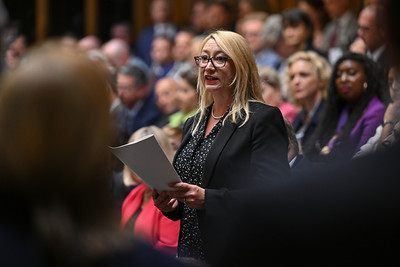

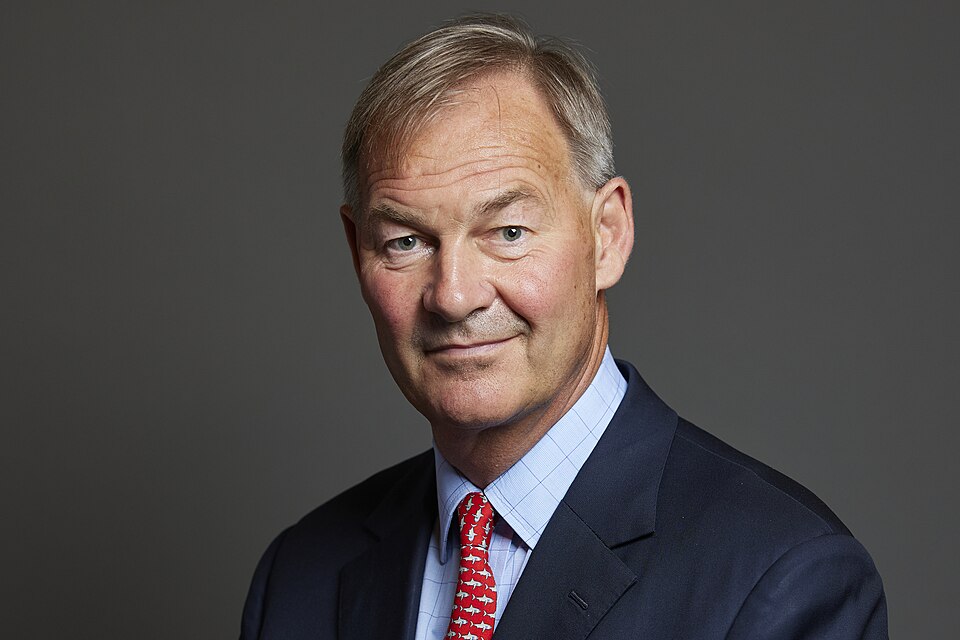
The birth pangs of seismic realignment in British left-wing politics began eight months ago. It culminated in February 2026 with a resounding win for the Green Party in the Gorton and Denton by-election, a feat that seemed impossible last July. The realignment from Jeremy Corbyn as the major force left of Keir Starmer has been finalised with the self-titled ‘Eco-populist’ Zak Polanski taking the mantle. Polanski undeniably placed the Green Party of England & Wales on the political map, with polls conducted this March by YouGov and FindOutNow both citing second-place finishes with support at 21%. Politically, the Greens have captured the YourParty vote, with a holistic, leftist economic message, not concerned with just the environment.
The Greens manoeuvring has all-but relegated the short YourParty project to the history books. Something similar happened with Change UK in 2019; what was meant to be the future home for centrists was soon engulfed, ‘ruthlessly’, by the Liberal Democrats who occupied the same political pasture. By my reckoning, on the polar opposite aisle of YourParty, newly launched Restore Britain may have the same fate; or could conceivably, avoid this reoccurring motif and be a political force to stay in the medium-term.
While Polanski commanded 84.1% of the Green membership on his election, YourParty emphatically tore itself apart during its own launch. Bad headlines were immediately grabbed when MP Zarah Sultana boycotted the opening day of YourParty’s already belated conference. What was meant to be an opening event with a 13,000-member capacity was, in reality, scarred by fractional attendance and disunity. As the Greens in 2026 have shown, potential was there, but the execution, organisation and timing was terrible. Most perceive Corbyn and Sultana’s organised opposition to Labour as dead in the water, and though YourParty never officially dissolved, it has gone out with a whimper.
Fast-forward to February 2026, I reinstalled Twitter. The platform is in ill shape, and while I considered uninstalling as quickly as I got on, something caught my eye. Among the greetings and bombardment of right-wing bots and content, was the launch of a political party: former Reform MP Rupert Lowe’s Restore Britain.
YourParty and Restore do not have boundless similarities, though there is enough to intrigue anyone that digs deep. An immediate convergence is in their shared application of direct democracy. By a whisker, YourParty elected a collective leadership model at last Autumn's inaugural party conference. The party has a totally decentralised structure. Much like YourParty, Restore Britain is not streamlined. Indeed, it is an umbrella brand for smaller branch parties like Great Yarmouth First. This direct democracy extends to policy, Lowe has made clear his intention to settle national issues with referenda, this includes national issues settled generations ago, such as the death penalty.
Sultana unprompted, stated her uncompromising approach to nationalise the entire economy, she sparred no sector, and reaffirmed nationalisation even for the high-street. Restore Britain’s dogma is self-evident, and the name reflects their supporters' nativist ideology and intention to rally-around-the-flag. Returning to a ‘golden age’, this apes populist right movements elsewhere, namely MAGA.
Radicalism is integral to YourParty and Restore Britain’s inherent challenger DNA, fringe ideas are the solutions against the mainstream. This positioning enables both parties to tap-into a disgruntled, anti-establishment vote. Reform UK previously was a model template for this, but their polling has accordingly plateaued since their recruitment of high-profile, ex-Conservative Party ministers, as Farage seeks to win power by 2029.
Personal tensions are a key similarity. Corbyn and Sultana squabble endlessly, while Lowe only created Restore Britain because of an earlier dispute with Reform UK leader Nigel Farage. Both Sultana and Lowe were verbose speakers on social media who used their platform in Parliament and online to curry-favour with their bases and simultaneously challenge the authority of their closest-rivals.
To expand, the longstanding political friendship fractured soon after Lowe became an MP, as he whistle-stop-toured conservative podcasts, including Peter McCormack and Winston Marshall shows, to expand his own audience. Things then sped up. In January 2025, tech-baron and Twitter owner, Elon Musk, called on Farage to resign and implicitly backed Lowe. Months later, Lowe referred to Farage’s leadership of Reform as a “protest party led by the Messiah”. In a matter of days, Lowe was suspended, Reform cited allegations of harassment towards staff and their new Chairman, Zia Yusef. The whip was never returned, even after allegations were not pursued.
Farage has since indicated it was over policy, “[On] mass deportations of entire communities... I realised we just had to get rid of him… as quickly as we could.” The Farage-Lowe divide primarily spurred from either conduct or policy, and a general fallout between personalities. This is ultimately the reason for Restore’s existence.
Success for Restore, like that for YourParty or Greens, has to be the disruption of the British political climate by pushing parties closer to their policy goals, rather than actual Downing Street occupancy. For Restore, this means a farther and farther right Reform party, as they creep closer to government.
At the time of Lowe’s suspension under a third of Reform voters- let alone the British public - recognised the Great Yarmouth MP. Restore Britain recognition then is somewhere between a political blind-spot for traditional media and a real, mainstream threat. At the time of writing, we are 55 days away from national Local Elections, so the true reach and ground-game of Restore may soon be tested. My own anecdotal inkling suggests Restore is closer to a social media craze, as I personally would have never discovered Restore without reinstalling Twitter, though since I have passed mentions of them.
As tempting as any quick judgment is, glaring, uncomfortable facts need to be duly considered. Restore’s flagship video accumulated 42 million views on Twitter and counting. Musk’s personal endorsement has benefited the upstart, and indisputably amplified Restore Britain’s reach. Restore has ample finances as the party’s membership rivals the old Conservative Party at 110,000+ per self-reports. This translates to £2.2 million in small donations for Restore this year, given the £20.00 annual membership fee.
Then the offline reality, already in local government, Restore has 15 councillors, including seven on Kent County Council. Five-short from being the official opposition to Reform in the coastal county. Two reputable polls in late February, conducted by FindOutNow, gave Restore a national voting intention between 7-10%, though these were funded by Lowe. Other pollsters implied far lower ratings. In truth, real macro support is impossible to gauge since pollsters either are financed by Restore Britain or do not prompt them.
Circling back, rather than a poll, success for YourParty, Restore or any radical outfit should be measured by longevity and their ability to nudge mainstream parties toward their own ideological ends. A single-poll in the short-term or indeed participation on the government benches in the long-term is irrelevant. It is irrefutable UKIP succeeded, despite disintegrating post-Brexit referendum. In this respect, Restore could find success through emulating 2010s UKIP.
UKIP rode a wave of Euroscepticism that pushed then Conservative prime minister David Cameron into the infamous 2016 referendum. Vote Leave won, thereafter ending UKIP as a political force. There is evidence Restore have successfully adopted a UKIP-strategy. As discussed, Farage insists Lowe’s suspension came over extremism, but since the launch of Restore, a flurry of Reform UK commitments have shifted even further to the right, for example involving the RAF in deportations. Reform now supposedly plan the deportation of 300,000 undocumented migrants a year, this amounts to five- flights daily, and an end to leave to remain. For comparison, in a country of 341 million people, President Trump has deported between 300,000-600,000 immigrants since January 2025. Thus, Reform seemingly advocate immigration enforcement on a large-scale than Trump's America. Together, the ramping up of all these migration controls by Reform UK, has suspiciously coincided with the creation of Restore Britain to its right.
Though anti-climactic, my sincere opinion is that it is truly too early to call Restore Britain’s place in UK politics. Though before a General Election, we should know. I am more likely to wager the party dissipates under its own radicalism than doesn’t, but politics, especially in the 21st century, is full of uncomfortable surprises. Before sound judgment is reached, we require more data: considerable polling and tangible election results. Not just for Restore but on Lowe’s own recognition and favourability. As discussed, success for Restore Britain would be the UKIP model: longevity on the fringe, and an unpopular rightist government that Lowe could nudge further toward his party’s small state and mass deportation goals. Currently, Restore is just as likely to be a right-wing styled YourParty car-crash, characterised by stubbed momentum, than the second-coming of UKIP. Perhaps, like YourParty, we may only have to wait until a messy conference season, to truly know Restore Britain’s fate.
.svg)
.svg)




.svg)
.svg)