

.svg)
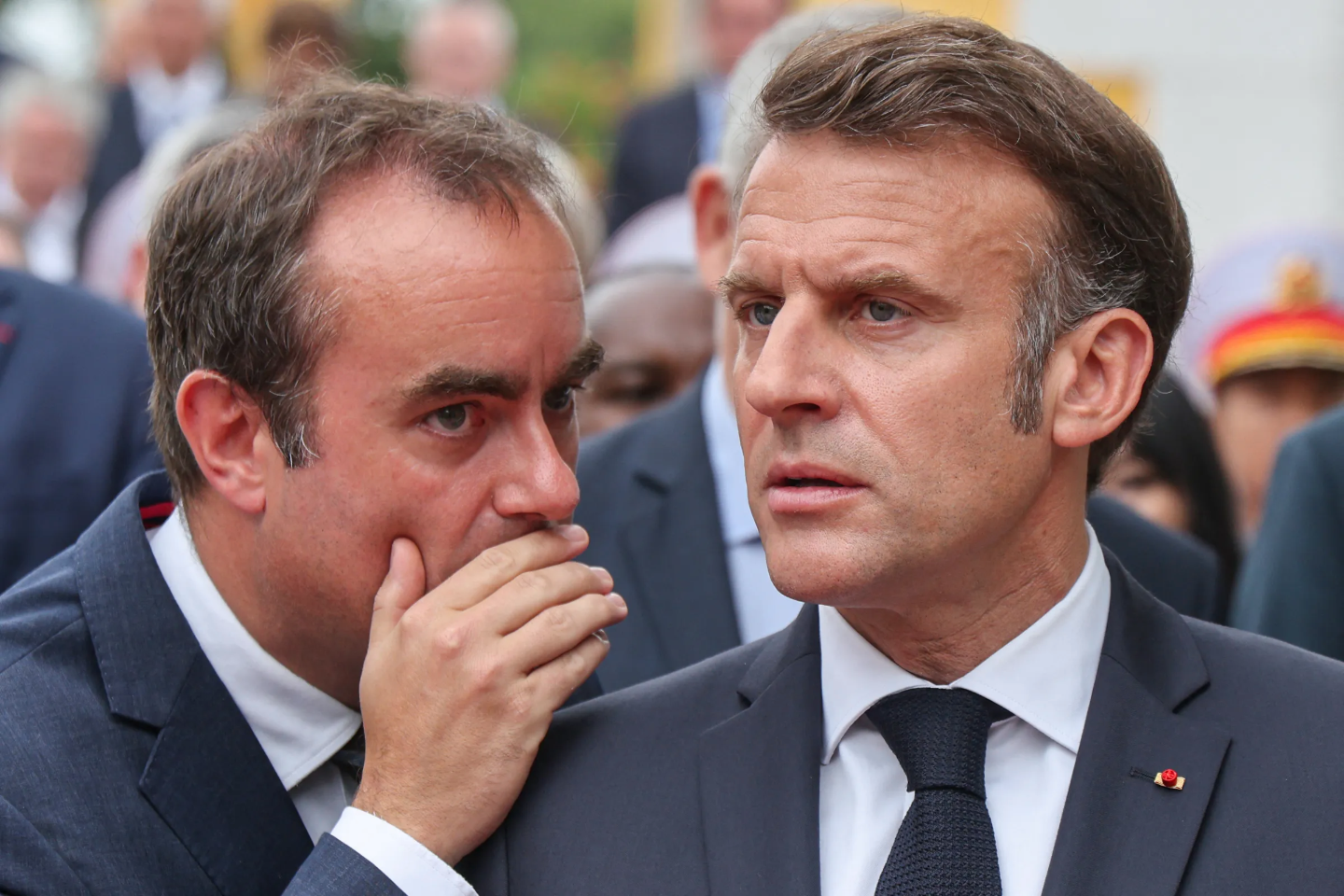
On the 10th of October 2025, Sébastien Lecornu was reappointed as Prime Minister of Emmanuel Macron’s government.
His return is a bitter pill for many young French voters who interpreted the reappointment as evidence of political stagnation rather than reform.
Sébastien Lecornu, a loyal Macronist, left the centre-right Republican Party in 2017 to join Macron’s centrist movement, Renaissance. As France’s youngest national party, Renaissance represented a liberal and centrist vision that became a symbol of hope for a new era of politics, national pride and economic growth. It attracted many young voters eager for change at a time when France was reeling from a dark year marked by domestic terrorism, including the Bastille Day attack in Nice and the rise of right-wing voices promoting anti-immigration policies as a solution. But the optimism that once surrounded Macron’s centrist project has faded.
Nine years on, Macron is struggling to show growth or speak of optimism. Lecornu’s reappointment four days after resigning as Prime Minister highlights the instability of political leadership and further undermines confidence in the centrist system. He takes office at a time of deep political paralysis after the 2024 dissolution of the National Assembly and a fractured Parliament. Macron’s decision to bring back Lecornu, who had only recently resigned after barely a month in office, speaks volumes about his preferred model of governance. Although his appointment was presented as a mission of public service, Lecornu said he accepted “out of duty” the task of forming a budget and addressing the everyday concerns of French citizens. His words were meant to convey a sense of responsibility and continuity, suggesting that he views his role as an obligation for stability rather than an opportunity for transformation.
Still, everything about the move suggests business as usual, reinforcing the sense that Macron’s government remains more focused on survival than renewal.
Socialist MP Arthur Delaporte dismissed the reappointment, saying he saw “nothing but emptiness and a slope towards the same thing, that is, the continuation of Macronism.” His criticism reflects a wider frustration that Lecornu’s agenda offers little real change. The new Prime Minister has already ruled out introducing a wealth tax and has committed instead to reducing the deficit to “around 4.7% of GDP in 2026,” a stance almost identical to that of his predecessor. For many young people, this means that the political landscape has not shifted: the same party, the same priorities, the same structures.
It’s a reshuffle, not a renewal - and young voters can see it.
The reappointment matters because young voters expect policies that genuinely address their challenges. They face unstable employment, high housing costs, uncertain careers, and a feeling that policy remains distant from their realities, with youth unemployment in France standing at around 18.7% as of late 2024, nearly double the national average.
Politics is beyond fiscal policy and political structure; it’s about social trust, legitimacy, and transparency. According to recent statistics, only “34% of French people trust Sébastien Lecornu” (with higher trust only among his party’s supporters) and only “27% believe the former Minister of the Armed Forces will manage to form a government capable of securing the approval of the National Assembly,” indicating widespread scepticism about his leadership.
When the Prime Minister insists on negotiating “in rough conditions” for three weeks to pass a budget, it exposes the deepening polarisation in politics. Young voters interpret this as evidence that the system is focused on itself rather than on their concerns.
Thus, the continuity that Macron is offering is not reassuring, it’s alienating.
For young people, relevance comes from change that affects their lives. What they see instead is continuity that favours the establishment, while urgent issues like housing, employment, mental health, education and juvenile justice remain unaddressed. Lecornu’s elite credentials, including multiple ministries and managing defence budgets, do little to reassure them that their concerns will be tackled.
The reappointment also undermines the idea of generational renewal. Many young voters who turned out in the 2024 snap elections already feel resigned to returning to the polls repeatedly without seeing meaningful change. Frustration extends beyond policy to questions of accountability and political choice. Some young voters are calling for a vote of no confidence, hoping for leadership that responds to their needs. At the same time, there is fear that opposing far-right candidates, including Marine Le Pen, could gain traction if disillusionment drives abstention, as recent elections showed the far-right Rassemblement National capturing 32% of the vote among under-34s, while the ruling party secured only about 5% in that age group. When opposition leaders from both the far right and the far left refuse to back the new PM, the message is clear: political actors are entrenched, majorities are fragile and real alternatives feel out of reach.
Lecornu’s comeback is a test for young voters’ patience and faith in democracy. If the government continues to prioritise continuity over real change, disengagement may grow, and the far right could benefit. Whether Lecornu can bridge the widening gap between France’s leadership and its restless youth will shape not only Macron’s legacy, but the future of France’s democracy itself.
Fleur is a second year student at University of Manchester. She is passionate about voter behaviour and data analysis, and outside her studies she loves travelling and music.
.svg)



.svg)
.svg)
.jpg)