
.svg)

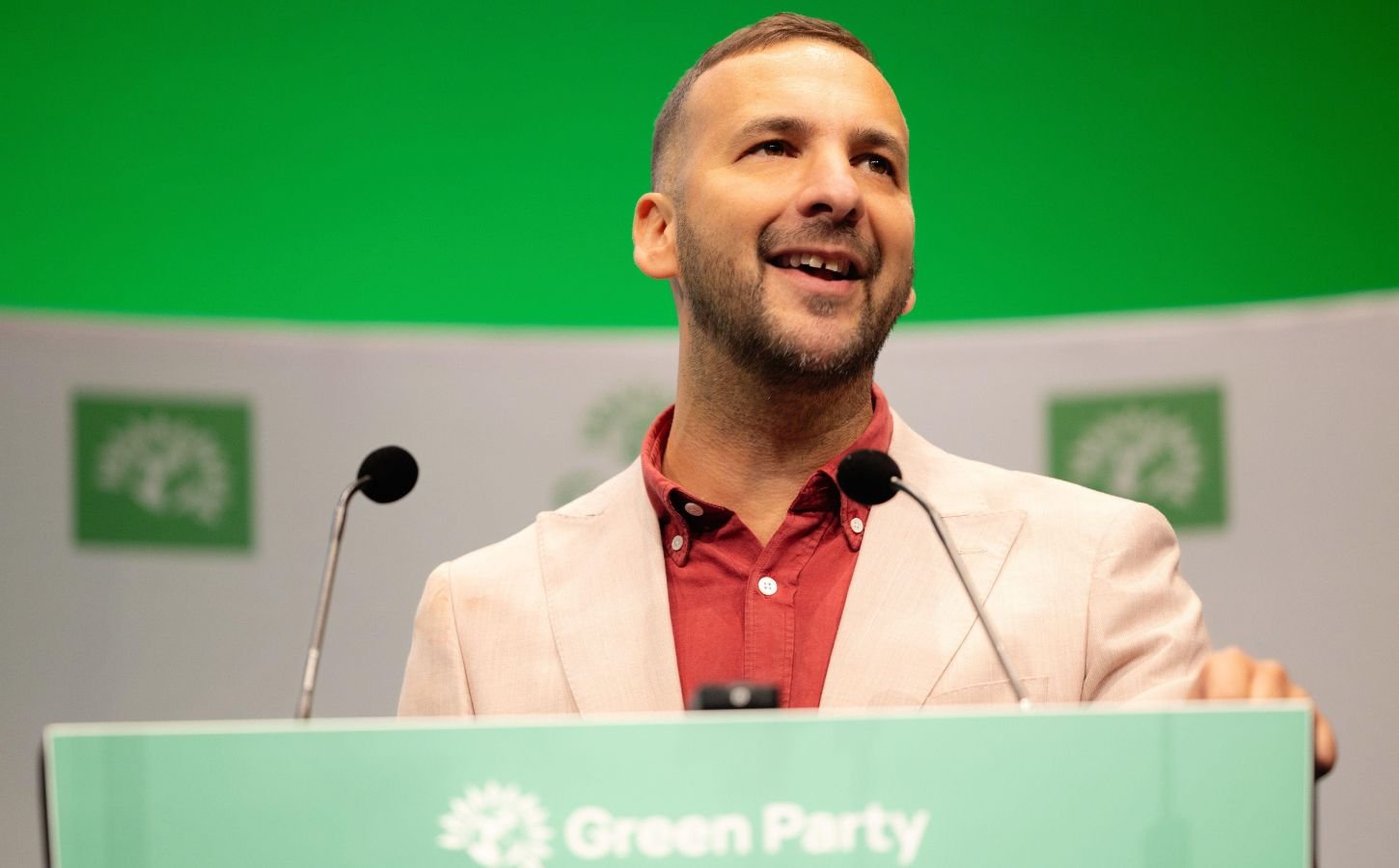
The Green Party has seen a membership boom, reaching 150,000 members for the first time ever. This near 50% growth coincides with Zack Polanski’s rise to leader of the party at the beginning of September 2025. The renewed popularity of the Greens has disrupted the status-quo at Westminster, threatening the position of Labour, Reform and the Conservatives. But should we be hopeful? Can Polanski lead a genuine left-wing alternative amidst an ominous right-wing surge?
In the past month, the Greens’ membership has eclipsed that of both the Conservatives and the Liberal Democrats, making it the third largest party in the UK. Meanwhile, Labour membership, although remaining the highest, has declined by almost 200,000 members since Starmer became party leader in 2019. However, membership popularity doesn’t necessarily translate into electoral success. In 2017, Labour membership reached an astonishing peak of 560,000 owing to a pro-Corbyn, leftist vanguard, though as we all remember, Corbyn’s Labour lost two general elections. In light of this memory, the left is understandably cautious to place their hope too hastily in Polanski’s hands.
First of all, who is Zack Polanski and what does he stand for? Polanski is a 42-year-old, former actor from Salford who, last month, was elected leader of the Greens with 85% of the vote. Polanski is also Jewish and openly gay. He promotes ‘eco-populism’, aiming to tackle the climate crisis alongside growing inequality through taxing the rich and rebuilding public services. Furthermore, he staunchly condemns the Israeli government, with the Greens being the first major UK party to recognise Israel’s military operations in Gaza as ‘genocidal’. Polanski has burst onto our screens, taking television interviews and creating sharp social media content – boosting the visibility of himself and his policies. With help from previous leaders and members over the years, what once seemed to be a single-issue, environmental party, has developed under Polanski to embrace a broader and more confrontational socialist plight. The Green Party appears renewed, from a protest vote to a potentially viable governing party with concrete policies and a strong leader.
And this is exactly what the Greens set out to do. From a so-called ‘positive alternative’ to Labour under predecessors Denyer and Ramsay, the Greens now intend to supplant Labour. New figures from a YouGov poll show that only 17% of voters would back Labour if a general election were held tomorrow. Labour are tied with the Conservatives, with Green at 16% and Reform at 27%. Together, Labour and the Conservatives hold a combined potential vote share of 34%, a striking loss from their 80% share in the 2017 election. Another YouGov poll shows that 72% of voters think Starmer is performing badly as Prime Minister. These statistics illustrate the waning two-party system, particularly a disillusionment with Labour’s leadership.
The burning question is – can the Greens us their burgeoning popularity to provide tangible change? It is early days, but with a weak Labour and the international spectre of fascism, the stage is set for the Greens to give voice to the restless left-wing electorate.
Starmer’s government has been criticised for poor communication skills, fiscal policy reversals, party scandals and a failure to deliver election promises, notably regarding the cost-of-living crisis and NHS funding. As a consequence, Labour’s electoral coalition has been eroded by Reform UK on the right, and the Greens on the left. In battling to catch as many voters as possible, Labour has relinquished its position as a transformative left-wing party, to one of austerity and restraint. This was poignantly illustrated by Rachel Reeve’s spring statement, which made no mention of the climate crisis, the poor, or growing inequality.
The rapid rise of Reform also demonstrates Labour’s failure to address key issues. In August 2025, 42% of those likely to vote in the next election would consider voting Reform. This summer saw Farage and his party’s anti-immigration rhetoric help engender right-wing protests targeted at migrants. Starmer’s response to this uproar was middling at best. He seemed unable to either challenge Reform’s fearmongering, stand-up to racism, or provide grounding leadership.
Meanwhile the Greens appear to fill the vacuum left by Labour’s move to the centre, as a genuine, progressive party. At the Green party conference on the 3rd of October, Polanski promised to achieve what Starmer hasn’t, particularly by making Britain “an affordable” place to live again. Unusually for a Green Party leader, he did not focus solely on the environment. Instead, he highlighted how battling the climate crisis was actually tied to reducing the power of wealthy elites. He plans to reverse policies of austerity and privatisation which contribute to poverty as well as environmental damage. For example, he calls for public ownership of public utilities to prevent profit motives from distorting climate resilience planning. Polanski also advocates for large-scale investment in green industries to reduce energy bills and create jobs. He aims to finance this green transition, as well as broader welfare expansions such as universal free childcare, without placing a financial burden on the working-class. Instead, Polanski argues for higher taxes for the UK’s richest 1%, as well as more stringent regulations for private corporations to fund public service improvements.
But is it too good to be true? Some commentators warn that Polanski’s populist rhetoric lacks a coherent policy programme beyond snappy soundbites. Is he relying too heavily on his charisma and social media savvy? These are the exact concerns raised across the Atlantic, for New York City mayoral candidate and Democrat – Zohran Mamdani. Both of these new, left-wing politicians have seen a surge in popularity and enthusiasm for their campaigns, notably their calls for wealth redistribution. Both countries have seen the far-right manifest, whether through ultra-conservative Trump and his MAGA cult, or Reforms ‘patriotic’ anti-migrant riots.
Despair in our political system is the norm. Therefore, I would argue that Polanski and Mamdani are exactly what we need – authentic leaders putting people before profits. Political leaders who represent communities over big corporations, political leaders who we can trust, political leaders that offer a better future.
As next May’s local elections draw closer, we will have to wait patiently to see if the Greens can sew these seeds of hope into winning votes.
.svg)
.svg)
.svg)
.jpg)