

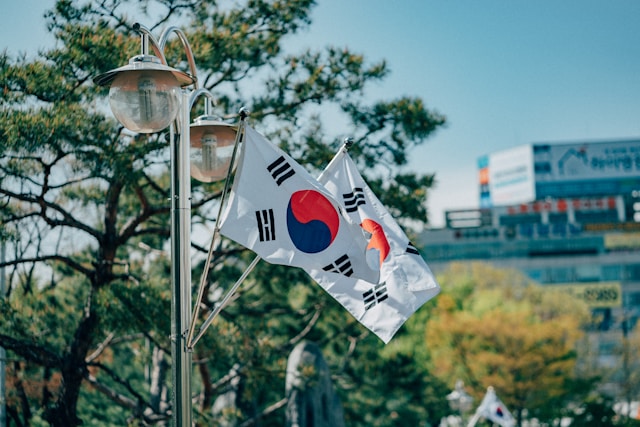
Image - Daniel Bernard
South Korea is currently in the midst of an unprecedented demographic transformation. Whilst South Korean political discourse is often concentrated on scandals of corruption and political exploitation among elites, or geographical tensions, most notably with North Korea, there is a quieter, more pressing revolution unfolding in the voter booth. The surge of a powerful “Grey Wave” has begun to redraw the country’s political landscape, making older voters the most decisive electoral force in the country. And as parties scramble to secure their loyalty, the concerns of the younger generations are increasingly pushed to the periphery, with their political weight being diluted by the sheer force of demographic reality.
The United Nations classifies any country with more than 20% of the population aged 65 or older as a “super-aged” society, and South Korea has now decisively crossed that threshold, aging at a speed unmatched in modern history. This demographic shift is not just asocial or economic concern; it is a deeply political one. As the elderly population grows and consistently turns out to vote at higher rates than the youth, South Korea edges close to becoming a ‘silver democracy’, a system in which older citizens hold a disproportionate degree of influence in the political process. In such a system, the political agenda inevitably tilts towards those who have already lived through most of their working lives, prioritising policies that leave younger generations on the margins and at risk of deeper hardships.
This demographic reality has already changed how power is pursued in Seoul. For example, in the 2025 South Korean presidential election, the frontrunner candidate, and now president, Lee Jae Myung, did much to tailor his campaign in a way that would appeal to elderly voters. For instance, one of Lee’s key campaign pledges was to raise the retirement age to 65, a proposal meant to address the issue of delayed pension payouts.
Raising the retirement age has been argued to be essential in a “super-aged” society like South Korea, as it could potentially bridge the gap between retirement and pension eligibility. But this would be at the expense of young Koreans’ employability. If the retirement age is raised to 65, it could further shrink the job market for those in their twenties and exacerbate existing concerns around job insecurity and general stability. If that wasn’t controversial enough, Lee also promised a “state responsibility system of care”, expanding community-based elderly care. Here, Lee is trying to frame elder care as a kind of societal duty, an idea that has been very poorly received by young Koreans, who see it as a cynical attempt to shift the financial burden of an aging society onto successive generations already disadvantaged by the state.
Thus, entering an era of an aged electorate has reshaped South Korea’s political agenda in ways that are difficult to ignore. Demographic pressure is now a political force of its own, pushing government officials to campaign in ways less focused on the future and more on the immediate needs of the nation’s oldest voters. Election after election, healthcare subsidies and retirement protections dominate political discourse because attending to these issues is the most dependable way of securing the votes of the country’s most consistent voters. This demographic shift does more than skew policy priorities; it also deepens South Korea’s population paradox. The nation is growing older at unprecedented speed whilst its birth rates sink to the lowest in the world, a pattern likely to worse if the “grey vote” remains the priority. It is no surprise that Koreans in their mid-twenties are so uncertain and insecure about their futures. The government appears willing to sacrifice the needs of the generation that is supposed to help build the future of the nation to support an aged electorate in a short-sighted pursuit of power.
The decision to appease the older generations has led young people to adopt a weary scepticism, rooted in resentment and frustration towards a government they see as indifferent, and towards elders who leverage their high voter turnout to secure what they want. It is in the quiet, accumulating bitterness that South Korea’s intergenerational tension intensifies.
The rise of the “Grey Wave” highlights the fundamental differences in priorities between the young and old, and how this divide has exacerbated intergenerational inequality. Younger Koreans are preoccupied with unemployment, education, childcare, and a labour market that feels more and more rigged against them. By contrast, older voters push welfare, economy, and post-retirement stability to the top of the political agenda.
For Koreans in their twenties to thirties, the struggle is obvious. South Korea’s job market has grown tight and will only grow tighter if the government decides to raise the retirement age to65. Secure positions are scarce, unemployment remains stubbornly high, leaving many feeling trapped in an economy where stable employment has become the exception rather than the norm. Paradoxically, we have seen a recent rise in job opportunities for the older generations, particularly for those in their sixties, as sectors such as construction, wholesale, and even retail increasingly limit openings to an older workforce.
Unsurprisingly, young South Koreans are deeply frustrated, and they are starting to push back against a culture of endurance and dependency. Many feel as though they are being asked to endure extreme hardships without the promise of upwards mobility that the generations before them enjoyed. If anything, they feel their efforts are only dragging them further down, preventing them from advancing to any substantial degree. They are questioning why they should endure poor working conditions and environments, accept precarious work, and passively watch as the state limits their prospects for a good and stable future all while pouring the budget into new pension schemes, healthcare for the elderly, and retirement benefits.
This push-back goes much beyond policy; it challenges longstanding cultural expectations. South Korea remains a society heavily shaped by Confucian norms, where children are expected to support and respect their elders, but this cultural standard only makes people feel doubly burdened. People are expected to carry the weight of their elders whilst simultaneously being denied the economic foundation and opportunities needed to uphold it. This helps explain the growing number of youth groups staging public demonstrations that criticise senior-heavy welfare budgets and the rising political unrest around intergenerational equity.
South Korea now stands at across roads, pulled between the political power of an aging majority and the rising disillusionment of a younger generation that feels increasingly written out of the nation’s future. The challenge for South Korea is to avoid becoming a country governed by the past at the expense of the future. A democracy cannot be sustained when one age group dominates the political agenda while the other loses faith in the system altogether. One can only hope that South Korea finds a way to break free from this cycle of demographic determinism and govern with genuine regard for the nation’s long-term future.
.svg)
.svg)



.svg)
.svg)
.jpg)