

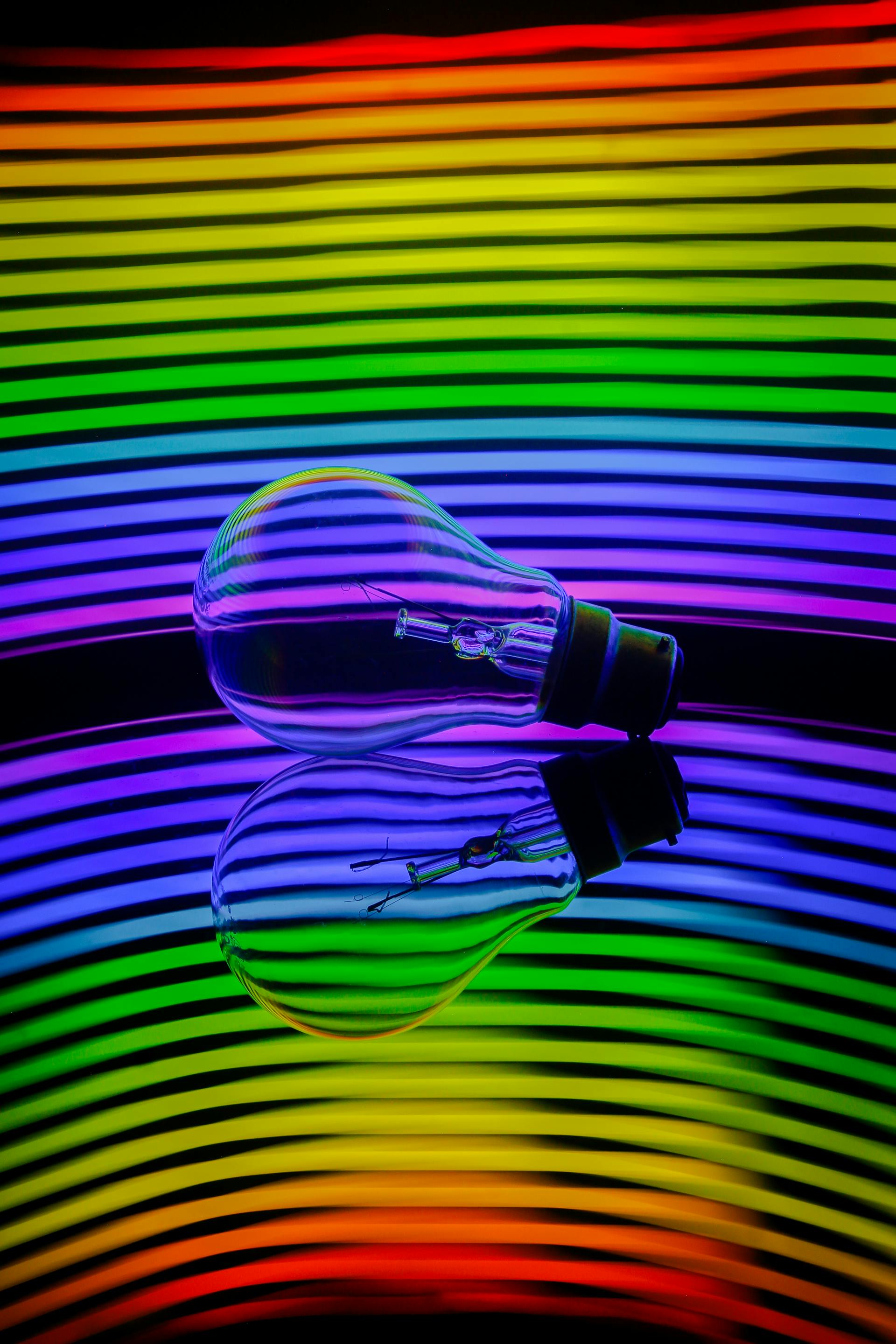
Conventionally, the political spectrum is viewed as ranging from the radical left to the far right, and we interpret neurodevelopmental conditions (for instance autism) as being on a spectrum that ranges from ‘needing support’ to ‘needing very substantial support’. With support for SEND/neurodivergent students being a hot topic in policy circles, and Farage’s comments on children with special needs being “over diagnosed” sparking considerable backlash, the word spectrum shapes modern discourse in different ways, exposing the politicisation of something most manifestos claim to champion.
The Cambridge Dictionary defines a spectrum as “a range of different positions, opinions, etc. between two extreme points”. Spectrums are seen as continuous, varied, and not easily divided, rather than a blanket categorisation of several subcategories. The Brain Charity sets out the seven main neurodivergent conditions – Autism Spectrum Condition, Attention Deficit (Hyperactivity) Disorder, dyslexia, dyscalculia, dysgraphia, Developmental Coordination Disorder (DCD), and Tourette Syndrome (TD); but there is no fixed, or exhaustive number of conditions, and neuroscience and psychology continue to develop. Scientific evidence shows that neurodivergent conditions are distinguishable from learning disabilities such as Down Syndrome, and no two neurodivergent individuals are copies of one another; yet the system – designed for a majority, neurotypical population – does not make exceptions and has us comparing a middle-aged woman with Inattentive-type ADHD to a primary school boy with combined/hyperactive presentation.
The evolving, continuous spectrum of neurodiversity contrasts with modern-day political discourse; thriving on categories, it simplifies for both clarity and persuasion, whilst demanding clear alignment and commitment to a ‘side’. Political rhetoric has long been shaped by divisive rhetoric, such as left vs right, laissez-faire vs Marxism-Leninism, us vs them. And today, with several groups calling for electoral reform to fit an increasingly multi-party system, the problem begins when concepts built on nuance are forced into a system that depends on simplification: both when it comes to neurodiversity, and first-past-the-post voting – a topic undergoing lots of debate.
Compared to overt discrimination of neurodivergent individuals, the flattening of the spectrum presents its own risks. Political narratives often compress complex conditions into digestible, ideological versions. ADHD, occurring in an estimated 2.5 million UK residents, has long been framed as a disciplinary issue or referred to as “general behavioural difficulties” . On the other hand, some see it as a ‘quirky superpower’; whilst the National Autistic Society has said that politicians should “...stop looking to the autistic community as a political football”, emphasising the difficulties that come with ASC including challenges individuals with autism face in everyday life. In the media, autism is often portrayed negatively , whilst pop culture utilises the “autism savant” trope creating misconceptions around the condition; subsequently generating rhetoric around what acceptable autism is (supposedly a high functioning, 2e individual), versus ‘unacceptable’ autism – when it causes others ‘excessive’ disruption or inconvenience. The problem isn’t that one side is right and the other wrong; but instead, the lack of realisation that both sides are incomplete. Autism and ADHD can have long-lasting impacts on people’s lives, and can at the same time be seen as a gift (I came up with this brilliant article idea at 11am, when I function best) – and real experiences of neurodiversity are reduced to slogans, trends and moral signals. Instead of expanding understanding, politicisation often selects the version of neurodiversity that best fits an existing narrative, and when complexity is reduced, misunderstanding doesn’t disappear – it changes form.
We’ve moved from old stigma to new stigma. Before, there was shame, silence and lack of awareness. Today, seeping into the landscape we have trivialisation, stereotyping in “positive” ways, as well as the reduction of ADHD, autism and other conditions into quirky personality traits. Social media feeds us unverified ‘tests’ for neurodiversity, often designed to attract attention and encourage visits to specific sites or pages, whilst neurodivergent content creators can appear relatable to many people including neurotypicals – raising important awareness, but simultaneously creating a new narrative of what neurodiversity is.
Awareness doesn’t necessarily equate to understanding; and neurodivergent people that don’t conform to popular narratives of what it’s like to be autistic/have ADHD can often feel invalidated if their experiences aren’t ‘relatable’ enough. When conditions are made more socially acceptable, they are often also made more socially convenient. ADHD and autism still have significant impacts on people’s lives beyond losing keys or disliking clothing labels; people are still misunderstood, but differently.
At the end of the day the question arises of who gets to speak for neurodivergent communities, and there’s no clear answer.
Even amongst neurodivergent communities, there’s disagreement – and disagreement showcases different perspectives, experiences and livelihoods. Lived experience can often be undermined by public discourse, and there is no single ‘correct’ perspective no matter who that view comes from; a young neurodivergent person, or someone with a doctorate degree in educational psychology. A spectrum includes disagreement and difference – but political discourse often erases it. In misunderstanding neurodiversity, appropriate support becomes harder to access, whilst oversimplification leads to poor policy and solutions. Individuals shouldn’t feel like they’re shouting into a void, yet this is the reality facing many across the country. Workplace expectations, educational systems and social situations can be absolute minefields to navigate without proper adjustment that stems from cohesive understanding. Misunderstanding the problem isn’t just a matter of getting something wrong – it’s excluding people from the support they deserve.
A spectrum isn’t meant to be divided into sides. It’s meant to reflect variation. The more we force neurodiversity into political frameworks, the less we truly understand it. As a progressive society, understanding begins where simplification ends, and a spectrum cannot be reduced to side without erasing what makes it a spectrum.
.svg)
Yunshu is a student with an interest in geopolitics, international relations, political economy and humanitarian affairs. She hopes to study PPE at university and is interested by a wide range of disciplines that lie under the politics and policy umbrella. She is especially interested in relations between China and Western democracies as well as UK party politics and behavorial economics.
.svg)




.svg)
.svg)
.jpg)