
.svg)
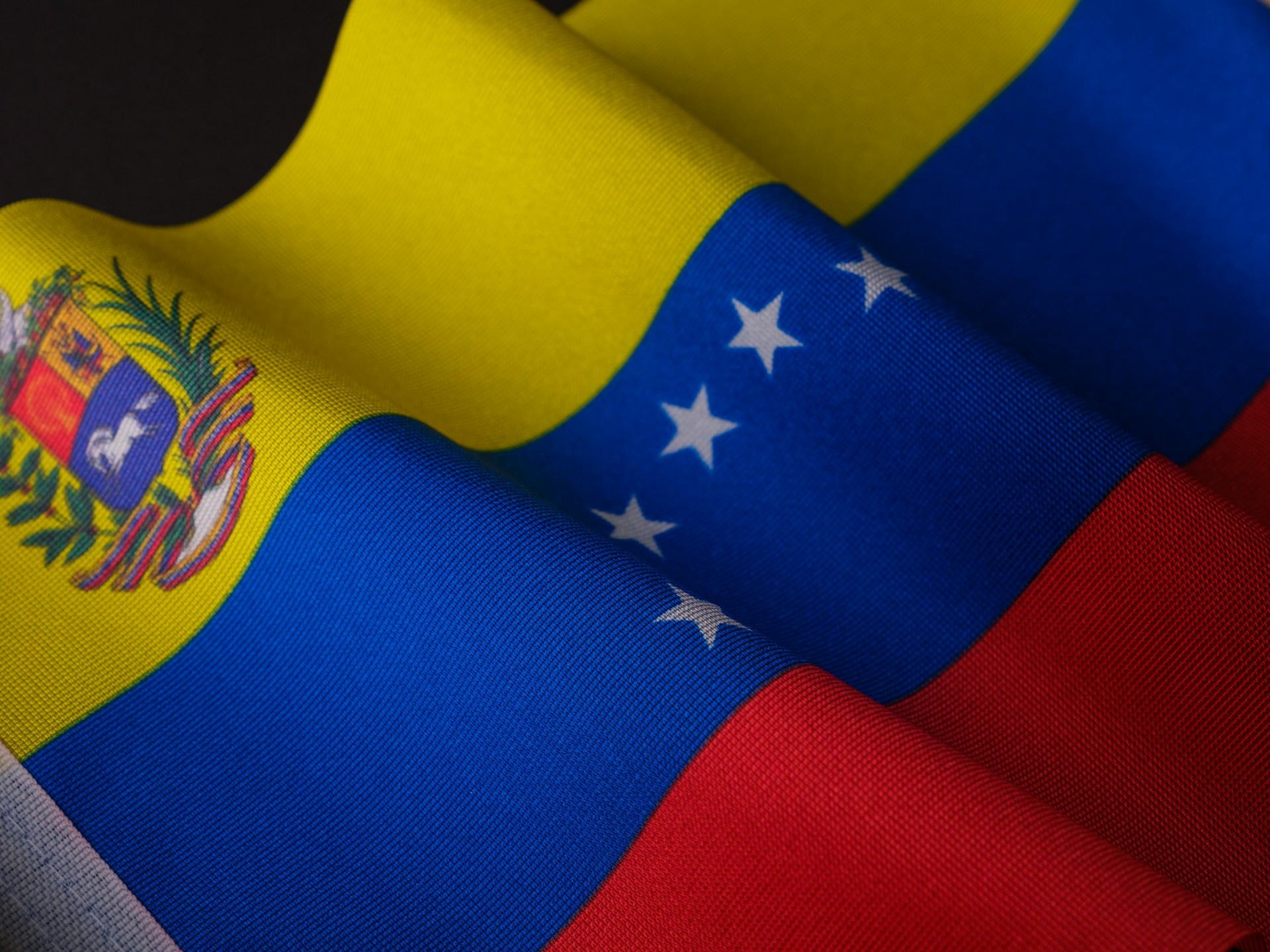
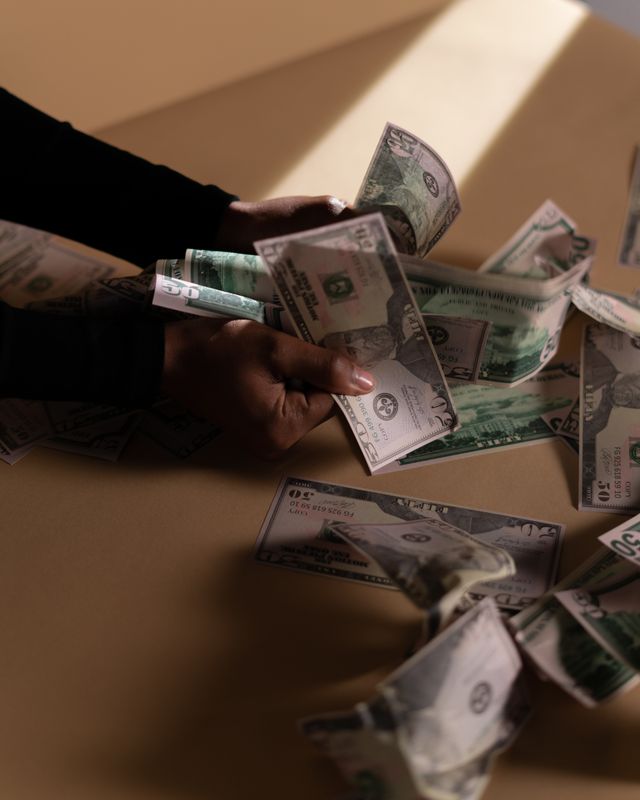
Image - Engin Akyurt
The United States launched military strikes on Venezuela, in the early hours of January 3rd, and extracted President Nicolás Maduro and his wife to the US. This didn’t just violate international law, it exposed the myth inherent to the rules based international order. This followed escalating tensions between the two states. Such as the Trump administration’s extensive striking of alleged drug smuggling boats, despite experts on drugs and Venezuela claiming the country plays a minor role in trafficking to the US, as well as the seizing of oil tankers, all employed through far reaching executive orders.
The administration’s actions were posited as a response to an existential threat to the US, intersecting with their mass deportation policies. This included the deportation of 238 Venezuelans, without due process, to a maximum security prison in El Salvador despite weak claims of affiliation with Venezuelan gang Tren de Aragua. The Administration’s revoking of temporary protected status for 600,000 Venezuelans remains difficult to reconcile with the narrative of democratic and humanitarian concern. While claims of stifling ‘narco-terrorism’ and corruption ring hollow following the pardoning of Honduran President Juan Orlando Hernandez who was convicted for trafficking tons of Cocaine into the US.
In the hours since the attack, the rhetoric of Venezuela as an existential threat to the US began to unravel. Trump openly stated that the US will ‘run the country until such time as we can do a safe, proper and judicious transition’, citing the implementation of US oil companies into Venezuela to ‘fix the badly broken infrastructure’.
Venezuela hosts the world’s largest proven oil reserves, yet years of over reliance upon oil as the state’s primary commodity, subject to declining prices in the global economy, politicisation of the state owned oil company PDVSA affecting expertise in its management and severe under investment and infrastructural decay emptied out the country’s productive output. While international sanctions isolated Venezuela from international markets, exacerbating the economic crisis further.
Despite lacking congressional approval, Trump made sure to speak to oil companies before the attack, and, subsequently, the administration has openly declared that Venezuela must follow US interest to sell its oil. Venezuela’s heavy crude oil would require extensive investment to improve its infrastructure and years to restore it to its full productive capacity, however its potential as of now remains hardwired under US control.
The US’ intervention and control over Venezuelan oil suggests concern of neo-colonial practices pertaining to resource extraction to create capital accumulation for US companies, such as major Trump donor Paul Singer. Meanwhile the seizing of Maduro eerily echoes the US’ imperial history of intervention and swift regime changes in Latin America to expand US influence. Depending on the diaspora in the US comparatively to those residing within Venezuela, there is significant division between optimism and opposition toward the external ousting of their President, widely declared illegitimate while repressively consolidating power, and its viability as a legitimate or sustainable solution.. The US’ framing of their intervention in Venezuela as a matter of ‘liberation’ echoes the illiberal paradox of the liberal order and its history of intervention, especially between the US and Latin America. Where intervention often serving as a vehicle of liberation is inherently tied to illiberal coercion within the subsequent regime change.
The seizing of Venezuela and its oil productive capacities also reflects wider geopolitical implications. Venezuela grew heavily reliant on selling oil to China which accounted for about 80 percent of the country’s oil exports. The country had also removed itself from the US dollar, pricing oil in Yuan, and therefore served as a component in China’s broader effort to challenge the dominance of the US dollar and its institutions such as the IMF and World Bank. The US’ intervention in Venezuela, and its continued coercion of compliance, has therefore disrupted China’s relationship with the state and perhaps serves as a wider bid in dominating the US’ surrounding trade routes.
The UN Secretary General released a statement that the US’ military action constitutes a ‘dangerous precedent’ of defying international law by infringing upon the sovereignty of another nation. Yet such a precedent of defying the ‘rules’ of the rules based order is hardly new, rather Trump’s complete lack of pretense is. The rules based international order pertains to the laws, norms and institutions created to govern state interactions ensuring adherence to shared liberal principles and security. This multilateral framework and architecture of International Law, however, is fundamentally indebted to the US as its chief hegemonic power to enforce its rules. The US, therefore, wields the capital to selectively enforce legality, bypassing international law when it sits in contrast to its interest. Where, despite Israel’s violation of international law, the US continues its unconditional support.
Trump’s right wing nationalistic conservatism suggests the order to be driving toward realism as the primary explanation of our growingly multipolar world order. John Mearsheimer’s argument for offensive realism cites that there is no ‘rule based order’, rather the anarchy of the international order causes great powers to act purely in self interest to maximise their power and achieve regional hegemony. Trump appears uninterested in dressing up this agenda in legality. His National Security Strategy, explicitly asserted an America First foreign policy that denied ‘non-Hemispheric competitors’ owning or controlling strategically vital assets in the American hemisphere. Therefore, by subjecting international law to the moral authority of a superpower, Trump’s actions may have just incited legitimacy upon China’s claims to Taiwan as well as Russia’s invasion of Ukraine.
The European leader’s misaligned response, in the condemnation upon the lawlessness of the operation on Venezuela, serves to expose the weak structural foundations of the liberal order. Italian Prime Minister Giorgia Meloni deemed the strike as legitimate, the UK’s Keir Starmer stood on the sidelines withholding judgement, while the Spanish Prime Minister condemned Trump. This inconsistency is a symptom of the order as one dictated by Western interests and its dependence on its hegemonic leader for security, where the borders and sovereignty in Gaza are a political and material tool subject to negotiation comparatively to the solidarity granted to Ukrainian sovereignty. Trump’s latest political stunt, threatening the sovereignty of Greenland, a US ally and NATO member, reveals the costs of Europe selectively enforcing the rules of the liberal order while also displaying the difference in condemnation when the threat is turned back toward them.
The US’ selective enforcement of a rule based order is a characteristic trait of American hegemony. However, the ‘America First’ rejection of the US’ role in the maintenance of liberal institutions, that monopolise US influence, and alliances, signals a rejection of the classic maintenance of unipolarity. Rather, the move in Venezuela, the rhetoric posited toward Greenland and the potential vulnerability of Cuba, suggest the potential of an order based on spheres of influence, amongst China and Russia’s aims of greater multipolarity.
Trump seems unbothered by the appearance of legality or rule based legitimacy. Rather, his statements signal an open declaration toward realist power politics. As a result, the US centric interest fundamentally underpinning the liberal rule based order, and the myth of its ‘rules’, are too revealed.
Harry Gillingham, Second Year Politics and International Relations student at the University of Bristol. Interested in analysis of international affairs and the application of political theory in contemporary politics.
.svg)


.svg)
.svg)