

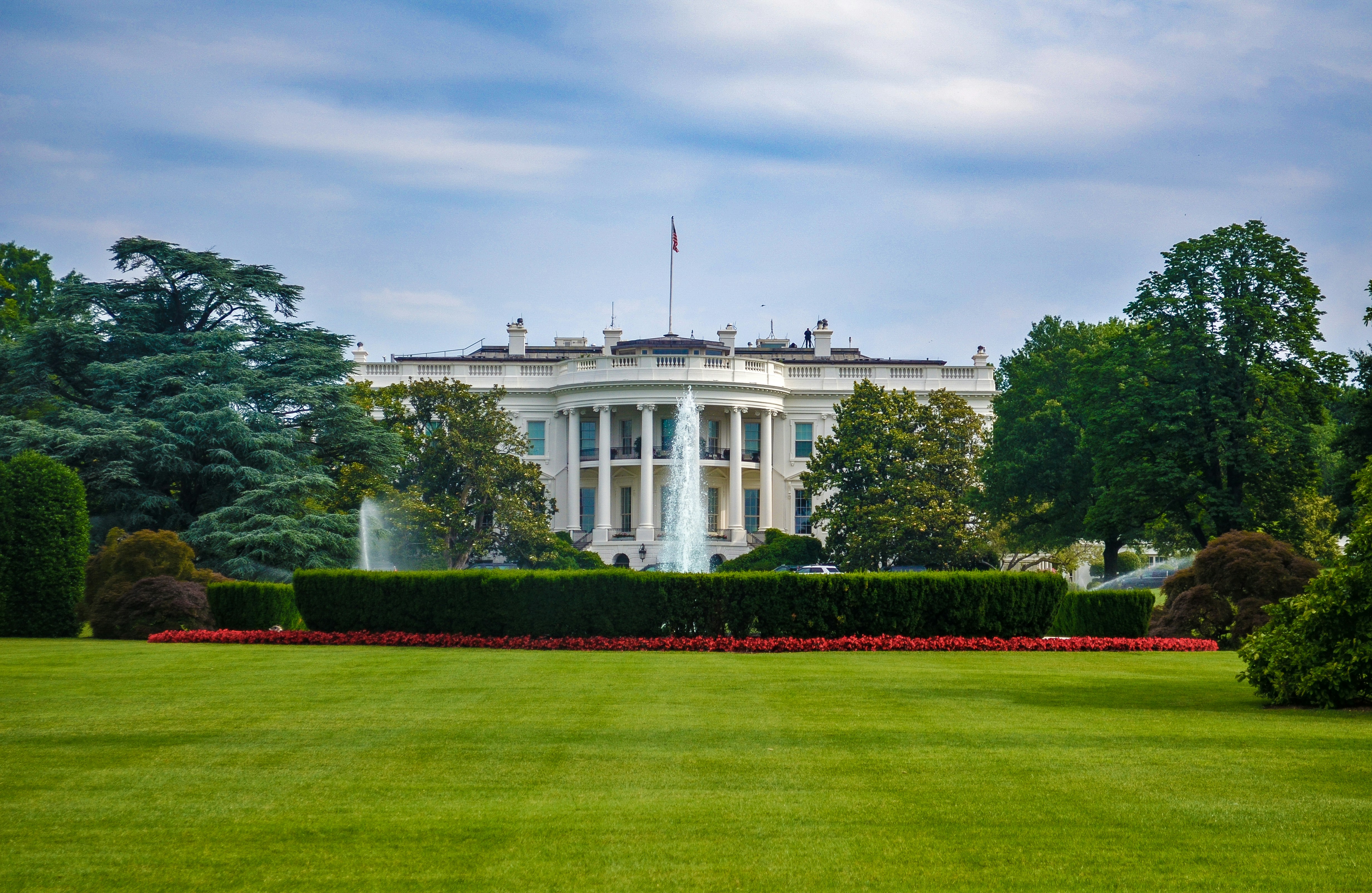
Image - David Everett Strickler
Here we are; the end of 2025 is upon us. It has been an eventful year in US politics and we over here at yPolitics have been covering it with our own thoughts and assessments.
At the start of 2025, Trump was inaugurated for his second term as president of the US having defeated Kamala Harris with a firm majority of the popular vote, the first win of its kind for the Republicans in over twenty years.
However, the big US stories of the year didn’t end in January. 2025 hasn’t been a quiet year; assassinations, scandals, and crises have been common features of the headlines. Let’s see what our writers discussed this year.
At the start of the year, Georgia Dix asked “Is Trump a Fascist?”. She argued that “it becomes increasingly difficult to ignore the parallels between Trump’s rhetoric, policies, and tactics and the hallmarks of fascism.”
This assessment was later supported by Rosie Addecott who turned to Laurence W. Britt’s understanding of fascism to prove it, a piece which reminds me of Umberto Eco’s fourteen points on fascism.
Zachary Chen had a more optimist assessment of Trump arguing “[w]hether his agenda is good is a separate question–Trump does what he thinks is best for him and the country” and that “[p]erhaps Trump’s adversarial style is what gets things done.”
It will be interesting to see how the popular and academic perception of Trump develops over the next year, but it's unlikely Trump will improve his image or be able to uphold his claim that he is a "president of peace" if he decides to acts more aggressively in his foreign policy.
Following Trump’s inauguration, Ivor Starkey discussed what Trump had been up to in his first few days, claiming that “[t]he façade of peace and global prosperity maintained since the end of the Cold War is at an end.”
Trump’s foreign policy made an appearance in Ben Candia’s article discussing the dispute between the US and Venezuela and a potential invasion. Candia argued that “[w]hilst toppling Maduro would be seen as a victory by many, there remains the dangerous possibility of a swing toward dictatorship on the opposite side of the political spectrum.”
Ellen Paterson focused on Trump’s cognitive decline, citing rambling speeches and “unhinged […] behaviour”. Adding to this, she argued that “[t]he media is so desensitised to the chaos of the current White House that rhetorical blunders or distracted behaviour are simply too subtle to be picked up on.”
Tom Elkeles argued that western political discourse had “taken a dark turn” with it being fuelled in part by the quality of life of Americans. He stated that “[t]he spending power of the average America voter is at an a post-war low, the people feel disenfranchised and unempowered, promising a continuation of the socio-economic status quo was not going to win majority support. [sic]”
Tom Teale was concerned about right-wing populism undermining climate change policy, stating the “[b]y prioritising nationalism, short-term economic interests, and cultural resistance over scientific consensus and global cooperation, these movements have slowed the momentum needed to address climate change effectively.”
Linking to this, Cathryn Bowron, criticised America-centric beliefs which led to Trump leaving the WHO and the Paris Climate Agreement.
As seems to tragically be the case in every year of US politics, shootings were a large part of the news this year. Rosie Addecott discussed the Minneapolis shooting with killed two children and injured seventeen other people, asking whether the US will ever get rid of its guns.
A fortnight later, Charlie Kirk was assassinated at a university campus in Utah. Reuben Sas argued that the behaviour of the killer was typical of the ironic and extremist views found in radical right-wing circles.
In October, in a change from the usual discussions found in student politics papers, Piedade Neves brought the politics of sports to yPolitics. He argued that the NBA’s success “is tied to its subtle embrace of socialist principles regarding wealth and talent distribution, employee empowerment and spending restrictions to ensure parity.”
Trump wasn’t the only populist figure this year to snatch the headlines. In November, Zohran Mamdani won the New York mayoral race. Dylan Chivers followed the campaign and the aftermath of the election.
Chivers underlined the significance of a Mamdani victory, “[n]ot only would he become the youngest mayor of New York in a century, but also the first South-Asian and the first Muslim to hold the office.”
In light of Mamdani’s victory, Chivers claimed that “[i]t is indisputable that Mamdani is one of the best communicators in politics. He, with a talented team that matched his vision, overcame every hurdle in his path. He remained focused on his agenda, maintaining his appeal amidst a tirade of anti-Muslim dog-whistling.”
It has been an excellent first year for yPolitics and it has been a pleasure to work with all the writers who have contributed. I would like to apologise if your work wasn’t included in this summary of the year. There was a lot of stuff to go through and it could have been five times as long. All the articles referenced are available on the site if you are interested in any of the pieces discussed.
By the very nature of this paper, it would be difficult to expect that all elements of the news coming out of the US would be covered. However, I would like to see even more people write for the site and provide their opinions on current affairs, that is the purpose of this place after all. If you are interested in writing, you can join via the “join the team” page.
2026 will be an interesting year as we see a continuation of many of the issues from this year: a potential invasion of Venezuela; the Trump presidency in its entirety; and the Epstein files slowly trickling out.
The latter is of particular interest. If anyone in interested in sifting through them with me and writing some articles, I would be happy to work on it with you.
The UK section have been writing articles and doing interviews with figures such as the heads of university party societies. It would be great to expand into reporting the news as it happens as much as writing about it post facto.
US news is an all-consuming beast in political media. Whether you like it or not, almost every issue will link to the US in some fashion. That is the side effect of it being the most powerful country to ever exist. This demonstrates the necessity for the coverage of US news; it affects everyone and will influence decisions taken in the UK and Europe.
It also conveys the need for young voices in political discussions. The impact of decisions taken by the US will echo long into the future and will influence the choices made by the next generation of political actors. This is why we cannot afford to look away now.
It’s impossible to predict the future, but I’m confident that 2026 will be as action-packed and noteworthy as this year has been. I look forward to seeing what all the writers will have to say about these issues. Hopefully, the monkey’s paw does not curl and make me regret saying that.
On behalf of yPolitics’ US Editorial Section, I would like to wish everyone a very merry Christmas and a happy new year as well as happy holidays to those who don’t celebrate.
.svg)
Leon is a student in MA International Relations at Queen's University Belfast having previously studied BSc Politics and International Relations at the University of Bristol.
.svg)
.svg)
.svg)
.jpg)