

.svg)
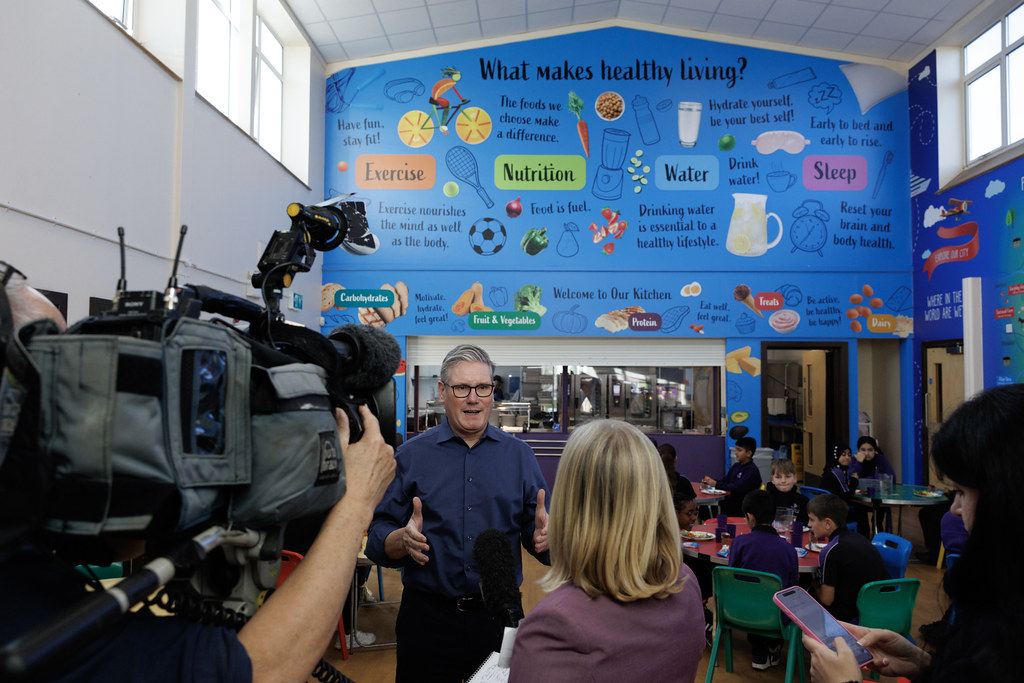
If this Labour government has a vision for Britain, they’ve failed to let anyone know about it. The party finds itself on the path to being wiped out at the next election, and if Starmer is to win back voters he must learn that communication is essential to governing and embrace social media.
So far, the communication strategy of Downing Street has followed orthodox methods, seeking to dominate headlines in traditional news sources and avoid sparking controversy in interviews and statements. Take Rachel Reeves press conference last month; through a convoluted mess of language, she tells the public what to expect from the budget without actually saying what to expect because that will be announced at the budget. And when calling upon the press she seeks to evade all questions and stick to her lines. It’s difficult to see the benefit of this circus like affair.
This method of sticking to your lines and escaping controversy, which has epitomised government communication since the new Labour years, is no longer suitable in the contemporary world. It frustrates the public and media alike who are provided with no answers from their representatives and creates more politicians fearful of saying the wrong thing rather than ones seeking to make the argument. Post budget this strategy has continued. Starmer and Reeves have been doing the traditional media rounds competing for who can repeat the line ‘we accept the challenge that we are asking people to contribute more’ the most and supplying this with weak arguments as to why.
And the government has been consistently failing to make their arguments. On welfare cuts, winter fuel payments and ID cards, public support for each has plummeted after the government has made an announcement on it. ID cards in particular, a relatively popular idea, was quickly vilified as an attack on civil liberties and subject to online conspiracy theories. Clearly the old ways of communication strategy are no longer working. The savviest of political communicators have already departed from these ideas, instead seeking to “flood the online zone.”
So who is doing this that Starmer can look to for inspiration? Whilst his Education Secretary, Bridget Phillipson might not know much about Zohran Mamdani, he is perhaps the perfect example of how a modern-day politician should look to engage with the electorate. Mamdani’s campaign for Mayor of New York put social media front and centre, seeking to meet voters where they lived online. Producing unique content, whilst being unapologetically himself and collaborating with various influencers with millions of followers, Mamdani built a platform to reach unengaged and undecided voters as opposed to relying on traditional canvassing and tv appearances.
But it’s not just about churning out videos for all to see. Throughout, Mamdani has continued the focus of cost-of-living policies, engaging people on the issues that affect them on the day-to-day. Zack Polanski in the UK has adopted a similar approach, producing viral, hard-hitting videos oncost-of-living and his appearance on Channel 4’s ‘The Last Leg’ saw him effortlessly blend political vision with comedy. In essence, Mamdani and Polanski represent a new mode of communication strategy which seeks to overwhelm the electorate with content, placing their policy at the core of what they do and constantly seeking to reach new audiences in the online space.
Whilst Starmer certainly shouldn’t look to copy word for word the techniques of Mamdani or Polanski (frankly the thought of the PM dancing on a Channel 4 chat show is painful), an effort to embrace various newforms of communication shouldn’t be too much of an ask. Starmer’s recent message to his son, released on social media accounts, does suggest a recognition within Downing Street of the importance of utilising these devices. What’s missing is the focus on policy. Darren Jones, the Chief Secretary to the PM, has been providing explanation videos on government policies on Labour social media accounts. If these two ideas can be blended and put out at a higher quantity then the government, and Starmer, could still turn this sinking ship around.
Moving forward, if the government is to integrate the personal into their communication strategy, they must understand that the personal is political and constantly apply policy to their content.
And there is opportunity on the horizon. The Home Secretary Shabanna Mahmood’s recently announced bold reforms to the asylum system has garnered plenty of support from those to the right of the political spectrum, but likely sits uncomfortably with Labour backbenchers. If the government is to avoid the sort of rebellion seen on welfare cuts earlier this year, then it must now seek to make the big argument. Effective use of social media and constant promotion of the policies benefits can help garner a level of public support that deters backbenchers from rebellion.
Additionally, the budget, which has seen the PM and his Chancellor emerge relatively unscathed, provides an opportunity. Already, the announcement that Reeves will impose a train fare freeze for the first time in thirty years, a policy Andy Burnham recently suggested, and the abolishment of the two-child benefit cap, are policies worth shouting about. Transitioning from the doom and gloom of ‘tough choices’ to communicating the positive impacts this government can make is essential.
Whilst results won’t be perfect, embracing social media and ‘flooding the zone’ can be Starmer’s path out of historic unpopularity and bring Labour’s vision to the forefront of political discourse. If not, then Starmer and co may as well hand over the keys to Downing Street now. Opponents on the left and the right have already seized the opportunities social media presents, but if the government change now, they can still win.
Cormac is a 3rd year Politics and International Relations student at the University of Surrey. His main interests are in the politics of China and the UK. He also heads up our research work.
.svg)


.svg)
.svg)
.jpg)