

At the 2024 General Election, Reform UK won 5 seats and secured 14.3% of the vote, and the fringe party dominated the conversation during the election. Reform UK made sweeping promises of radical change to and through governance.
Now the party may seem to be ready for power. They have set up a team led by former Conservative Danny Kruger to prepare for government and they have lined up several former Conservative MPs and ministers to ensure that they can deliver the promises they made. One can plausibly say that if Reform take office, they have the personnel ready to help them navigate the corridors of power.
Since 2024, the number of MPs they have in Parliament has grown from the original 5 to 8, which suggests that they may be a party that is gaining more popularity and power. However, is Reform UK a party for power or protest? To answer that question, one must examine their electoral successes since 2024, their performance in local government, party policies on individual issues, and overall party structure and unity. Upon examining those, the conclusion that becomes apparent is that Reform UK is not much more than a protest movement.
Reform UK have captured the imagination of the electorate of this country. They are committed to eradicating the hold that Labour and the Conservatives have had on power over the years, and most of Reform’s success can be attributed to Nigel Farage’s charismatic personality and social media presence, which has attracted much of the older population, but also swatches of young men in the UK.
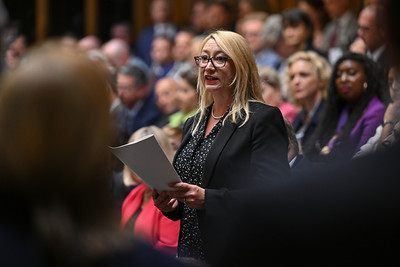
Reform’s popularity was best tested in the recent by-elections in Runcorn and Helsby, as well as Gorton and Denton. Reform UK’s Sarah Pochin won the Runcorn by-election, albeit by a very slim margin, whereas Reform’s Matt Goodwin lost the Gorton and Denton by-election by a significant margin to the Green Party candidate. Clearly, one can observe that they are enjoying quite a lot of attention from the British public; however, popularity most certainly does not translate to good governance.
Reform’s policy platform is one based on populism and proposes radical change to the institutions that have generations of history and responsibility to bear. Nigel Farage’s social media genius, Jack Anderton, proposes that the civil service must change radically, and to ensure effectiveness in governance, it must be politicised. The UK’s Civil Service has historically maintained a non-political and independent status. The essence of the Civil Service is to ensure that the legislation passed by Parliament is implemented, as well as ministers’ instructions. If Reform’s plans come to bear, the bureaucracy’s headcount would be reduced by 30%, and the senior leadership of the Civil Service would be handpicked by ministers. This would make it easier for politicians to instruct the bureaucrats due to ideological alignment it and may transform it a vehicle to dominate government departments rather than an independent, permanent body capable of delivering policy decisions. One may contend that the Civil Service has lost its effectiveness and that reform is necessary; that is true to a certain extent, but by politicising the body, Reform will be removing a layer of accountability and establishing their own control, something which is unprecedented in the UK. Though Reform’s politics may be attractive, the policies which shape their politics are extremely inefficient and unprecedented.
Reform UK have been extremely effective at rallying support across the UK, and the electoral calculations are showing that Reform does have the most amount of support, even though it has plateaued to some extent . However, winning an election and running the government are vastly different tasks and require a whole different skill set.
When running the government, the political executive has a range of powers, and those powers are constrained by a multitude of conventions, an arrangement often known as political constitutionalism. Reform desire a significant amount of change and extremely quickly, and to initiate this amount of change they may adopt the same policy as Tony Blair’s New Labour; pass enabling legislation in different areas to introduce secondary legislation . In the past this helped Blair bring about change quickly, but it damaged the reputation of New Labour as they were increasingly seen as an administration embracing a more presidential style of governance. Secondary legislation in Britain is known as ‘Henry VIII powers’, and therefore, there exists an implication that they are inherently authoritarian in nature. Senior leaders of Reform UK have mentioned that they would attempt to make changes via 'executive orders' in a similar manner to New Labour. If Reform implements a high amount of secondary legislation to spark change, it may gain the same reputation as New Labour and may lose electoral support if perceived by the electorate to be acting in a way which signals overreach. In governance, popularity is one thing, but to be a party seen as a serious and capable, Reform UK must remain transparent and accountable. If they fail to maintain that position due to the overuse of secondary legislation, they will not be perceived as such.
Being in power for 14 long years was unfavourable for the Conservative Party because such a long tenure in power led to them becoming unorganised and increased infighting. Whilst Reform is branding itself as an alternative to that, the truth of the matter is that Reform UK are also susceptible to that problem.
There has always been an active tension between the senior leadership of Reform. Rupert Lowe was suspended from the party, and following that, we saw the resignation of Ben Habib from his position as co-deputy leader over a disagreement with Nigel Farage. Furthermore, there was also a period of uncertainty over Zia Yusuf and what direction he was going to take in the future. These cases of uncertain leadership and infighting within Reform UK clearly show that this is a party which is not very effective at balancing interests whilst in opposition, and the electorate can only deduce that if they are in a tug of war whilst out of power, they will not thrive in government. This phenomenon is not something that is confined within the upper ranks of Reform UK either, but has been a persistent trend even within Reform councils, especially in Kent, where the electorate saw how the Reform councillors were quarrelling with each other, demonstrating that Reform UK is not a united political force, not at the bottom nor at the top levels of leadership.
Now the perception may be that Reform UK is the only party that could form the government after the next election, but the truth is that electoral politics in the UK is a complex machine, and a lot can change quite quickly. If the next general election is in 2029, the dynamics could be completely different. But now, between the scandals and the unviable policies, Reform UK is not a party ready for governance or power and is therefore more of a protest movement.
.svg)
.svg)




.svg)
.svg)