
Image - Jack Lee
A corner shop in a Greater London town and a Tier 2 city’s corner shop in China function under very different circumstances. One experiences inflation, the other deflation, each shaping consumer behaviour in contrasting ways, grounding economic change to lived experience and highlighting the extent to which it permeates lives across the countries.
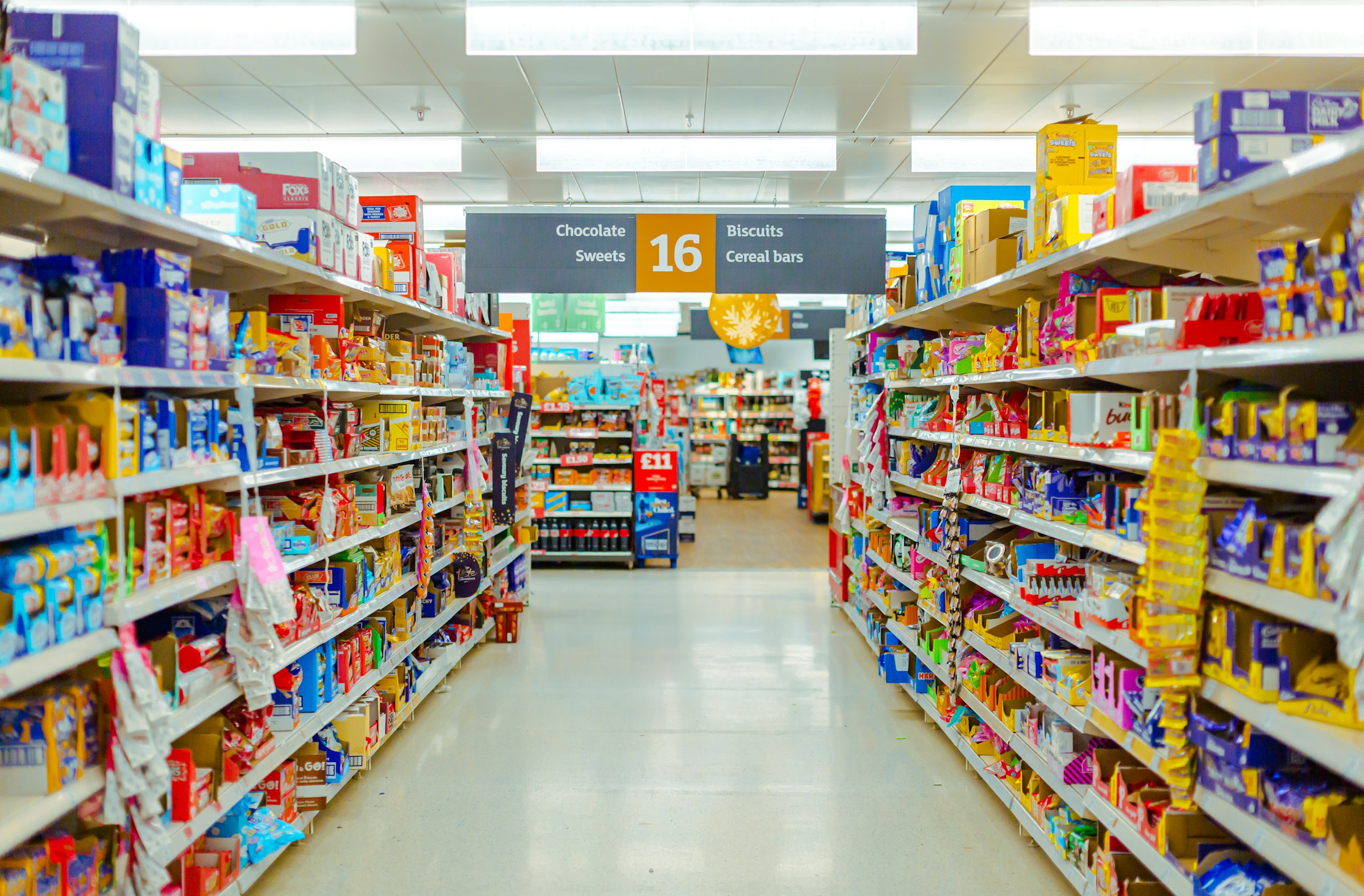
It’s seven past five in the afternoon when the train pulls into my station, a small stop along the route from Central to Greater London. After a long day, I step off, jaded, and instead of heading home, I walk a few paces once I’ve left the station, into the corner shop, heading for the shelf where they keep their fizzy laces. A longtime guilty pleasure, buying these sacred rainbow strips of sugar and dangling them in front of my face before eating, has been a part of my routine. Yet as I approach the shelf today after a while since I last visited, something feels off. Looking at the labels, I realise that the once 70p laces have increased in price; now 80p a packet, and it is uncertain that they had even the same quantity as before. I sigh, my sugar addiction wishing to be sated, and I purchase the sweets nonetheless before walking out, pausing as another customer walks through the small door and down the cramped aisle. A 10p increase is not shocking enough to complain about, but it is enough to notice, and make one hesitate.
The shop looks the same as before. The brands are similar, the layout remains the same, and shelves remain in order. But there is a lesser variety of weekly membership coupons to choose from, with the “£1 off your shop” becoming rarer and rarer, and price stickers cover old ones as multipack deals disappear. It’s still the same store and same brand, yet a difference is tangible; £3+ for a bottle of juice becomes normalised and cup noodles, a staple, become ever so expensive. I turn to the one explanation we all use for this: inflation.
Officially, inflation is tracked through the Consumer Price Index, which measures the average change in prices of a “basket” of everyday goods and services over time. This includes commodities such as food, transport, energy bills, clothes and entertainment, and works by the government recording the price of items each month which is then compared to previous years. The exact calculation is dividing the Cost of Basket in Current Year by Cost of Basket in Base Year and multiplying by 100, which produces a percentage change calculation.
But for most people, the economy isn’t merely experienced through data but through lived experience and habit. In this way, a simple corner shop reflects real economic change more than any numbers could. Shrinking chocolate bars weigh less and less as the whole store employs shrinkflation, deals becoming less generous over time; all examples of economics without graphs – simply lived experience.
Inflation feels invisible because change happens slowly and people adjust automatically. No single moment feels dramatic enough to point out, and memory becomes unreliable when one thinks they remember the old price but cannot be truly sure. Prices don’t double overnight - if they did, everyone would notice - but just like the frog in boiling water story, as change slowly creeps in, it becomes accepted, and inflation becomes a normalised aspect in our economy.
For students, corner shop spending feels like a taste of freedom and independence; choosing what we want when we want with little or no stakes, just small, casual decisions. But as prices rise, hesitation does too. Time is spent comparing options, and I find myself buying less, or less often. Conceptions of freedom become slowly constrained as inflation not only increases prices but simultaneously shapes choices. For young people, it’s part of learning financial awareness; distinguishing between being more prudent with spending, and external pressure (things simply costing more). In some cases, inflation is not a minor inconvenience, but a meaningful restriction. The shelf remains the same, the experience changes slowly, and we are forced to make that call: to buy, or not to buy.
But what if prices fell instead?
Approximately 8,000 km to the East lies an economy that consistently experiences deflating pressures; China.
Instead of increasing prices, items become cheaper. Shops compete to sell discounts to customers and attract purchases. Walking through the aisles, one tends to see labels emphasising low prices or free items to be given alongside purchases – all incentives for consumer spending. A mall is rarely quiet, but in China, even less so – with employees standing outside stores, attracting buyers with flashy sales, or megaphones playing something along the lines of “come in here, it’s cheap” on repeat, often with a cheesy tune to accompany. Brands learn quickly to go all out or go home (quite literally, as fewer and fewer people even visit stores in person).
In inflating economies, prices go up quietly and brands employ stealth. But in deflating economies, prices are visibly adjusted and changes shouted across rooftops.
Psychologically, customer behaviour differs across inflating and deflating economies. The first emphasise purchasing now rather than later in case it gets even more expensive, whilst the latter can cause consumers to refrain from spending under the assumption that items will be even cheaper if one waits. And this change in timing presents its own difficulties. Peripherally, declining prices do look appealing and on a UK salary, I’d certainly enjoy living in China and not even glancing at price tags when grocery shopping or buying bubble tea. However, if consumers continue to delay spending under the belief that prices will later be cheaper, the economy suffers from a lack of stimulus and businesses struggle whilst shops lose customers. Walking through some malls, only the food courts and restaurants are packed, and other stores – despite the noise – are in themselves rather empty, with this awkward silence that only breaks when one walks in and is greeted by overly enthusiastic employees. Whether in supermarkets, smaller stores or anywhere, I’ve always heard Chinese parents telling their children that waiting a while is wise as it will be cheaper.
Though economists measure inflation and deflation through facts, figures, charts and spreadsheets, at the end of the day, economics revolves around humans. Whether prices rise or fall, the real change isn’t just on the label but in how people respond. It’d be pessimistic to state that we are all frogs in a pot slowly boiling to death, but it’s true that subtle change is what catches even the best of us out.
Time passes, just like prices, and as someone growing up in this era after the 2008 Financial Crisis and the pandemic, childhood appears simpler; things felt cheaper, easier and more spontaneous, whilst today, the financial burden amongst the younger population weighs down on our shoulders. Growing up, inflation has become a growing marker, and one that will continue to draw lines in my life. Living across two different worlds with different cultures and economies, I now look at the price of fizzy laces in my corner shop, and realise – nothing much has changed, but my awareness has. I look at the price, more consciously, and think:
The economy doesn’t always arrive in headlines or percentages.
Sometimes, it sits quietly on a shelf – in the moment you pause before buying something that once felt automatic.
.svg)
Yunshu is a student with an interest in geopolitics, international relations, political economy and humanitarian affairs. She hopes to study PPE at university and is interested by a wide range of disciplines that lie under the politics and policy umbrella. She is especially interested in relations between China and Western democracies as well as UK party politics and behavorial economics.
.svg)



.svg)
.svg)
.jpg)