

Image - White House photographic office
When Lord Morley described the British Prime Minister as 'primus intra pares' (first among equals), he certainly did not consider that the political dynamics of British politics would change so much. Lord Morley’s attempt to perpetuate that the British Prime Minister is equal to every other frontbench minister is not the current political reality. Over the years, the attitudes have changed and there has been an Americanisation of British politics, and party leadership has become more persona driven and party policies more top down. This has lead to the presidentialisation of the head of the British Government.
Presidentialisation refers to the head of government within non-presidential systems concentrating power around them ,which leads to cabinet government becoming ineffective. This is not something new in British politics. There have been times when the Prime Minister has acted in a presidential manner across history, such as David Loyd George and Sir Winston Churchill in the past. However, in the 21st century, presidential Prime Ministers are becoming the rule rather than the exception. Both political parties, through their leadership, electoral campaigns, and policy platform, seem to be more presidential, and this has become a part of our political culture.
In the recent by-election in Makerfield, Andy Burnham ran a campaign which was centred around him and his role as the mayor of Greater Manchester. The campaign looked and felt presidential because the campaign posters featured a cartoon caricature of Andy Burham, and on the poster a statement written in bold: ‘Vote Andy for us’. This personalised campaign delivered for Labour and for Burnham himself, as he took the seat and eventually walked into 10 Downing Street. There was indeed a sense of understanding among the electorate that this was not only an election for the MP for Makerfield; people recognised that if Burnham won the election he would become the Prime Minister of the UK.
This form of presidential attitude is not constrained within the Labour Party. When attempting to reduce irregular migration via small boats, Conservative Prime Minister Rishi Sunak wanted to pass the Rwanda Plan and rather theatrically promoted the ‘Stop the Boats’ campaign. The Downing Street lectern featured the slogan of the policy campaign and spin doctors took every opportunity to display the policy.. The tactic at the time was to ensure that the policies which were being enacted by the Conservatives to reduce migration were seen to be chosen by the British public. Usually, such policies would be enacted and promoted by the Home Secretary, but the campaign was made deliberately presidential, heavily borrowing US campaigning tactics rather than sticking to the traditional British parliamentary governance.
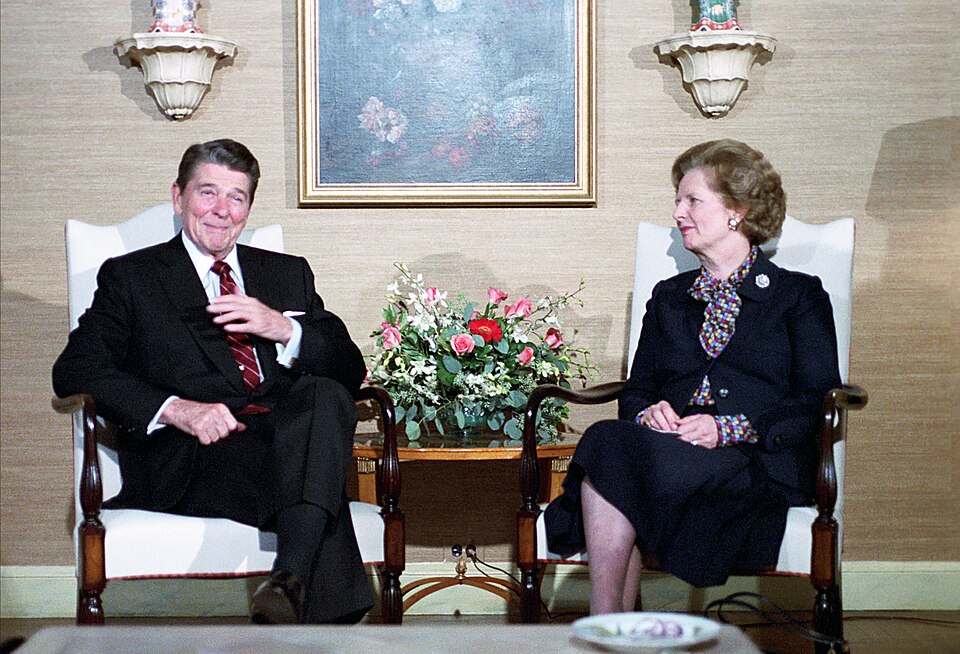
The presidential style of personalised campaigning or promoting policies may seem alien to the British public. However, presidential-style governance within our parliamentary democracy is not new. Margaret Thatcher had a streak of presidentialism in her leadership manner, often overriding the decisions of senior ministers in the Conservative cabinet and trusting her own judgement on a range of affairs. But, perhaps an even best example of presidential governance was seen during the reign of Tony Blair and New Labour. After Labour’s landslide victory in the 1997 election Tony Blair formed the cabinet, but alongside that invited many individuals to act as special advisors within many government departments. The issue was that Blair often acted upon advice from these advisors, overriding the cabinet mechanism altogether which agitated many of his cabinet colleagues, this was known as Tony Blair’s sofa government. This governing style is very presidential. Many vital decisions such as making the Bank of England independent and construction of the Millenium Dome were done in this way which agitated many of even his closest allies.
Britain’s politics has changed in the 21st century at an incredible pace and the presidentialisation of the British Prime Minister has become a cultural norm. From Magaret Thatcher to Andy Burnham there has been a clear sense of presidentialism due to their personalised electoral campaigns, policy promotion, and governance. Whether this is something that is favourable for Britain is will be judged in the future, but it is clear that this has become a feature of our political arrangement.
.svg)
.svg)




.svg)
.svg)
.jpg)