

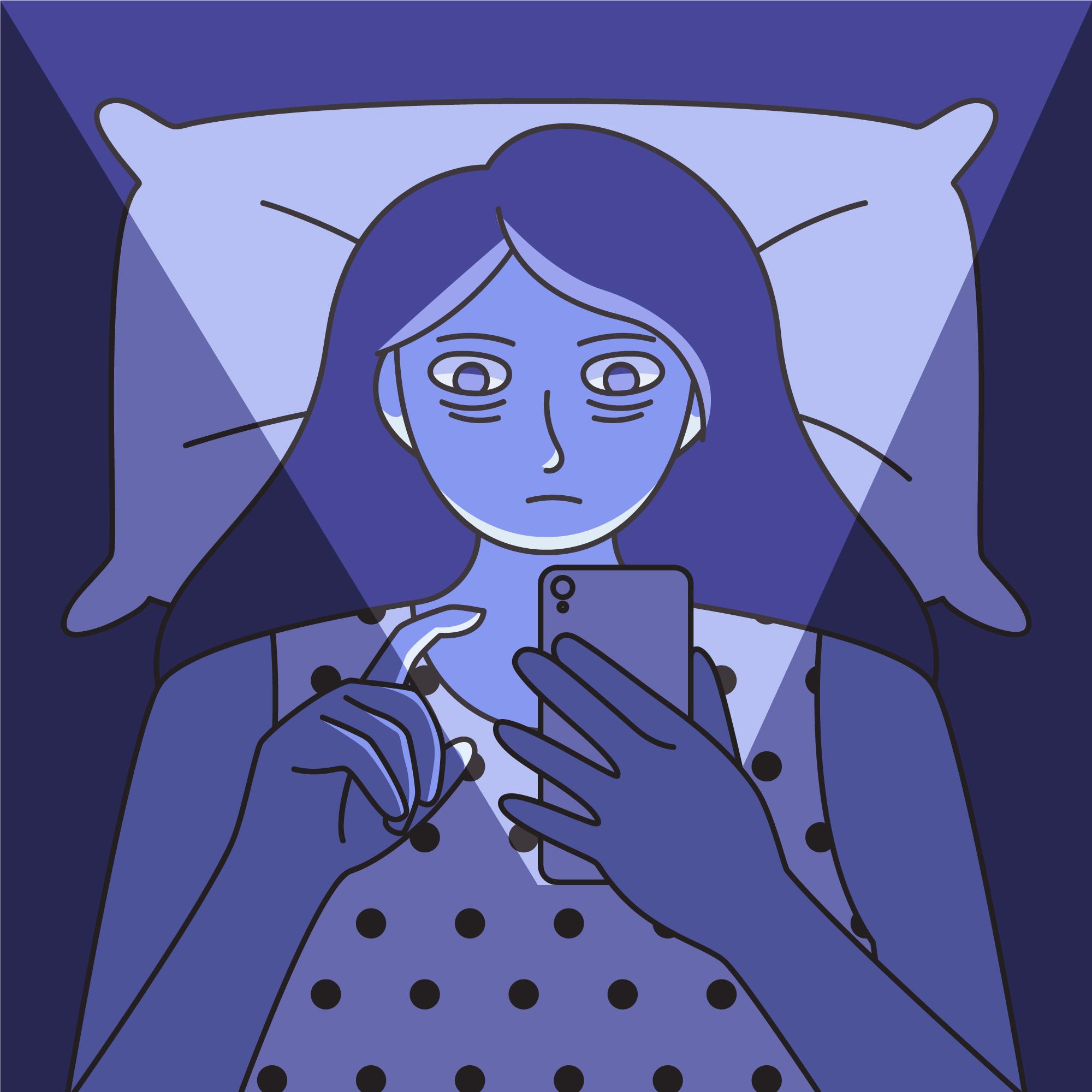
We're in the midst of a digital social crisis, and the government’s answer only covers one segment of the population.
You feel it in the guilt after a scrolling binge. You feel it in the quiet ache of comparing your life to someone's curated feed. You feel it in algorithms that flatten us into trends, erasing whatever made us distinct. Even in the conspiracy theories and AI-generated photos your dad keeps sending. As I’ll show below, the UK’s recent Online Safety Act won’t touch any of that… because it was were never built to.
To tackle concerns around children’s digital safety, the UK government announced new legislation in mid-June that will ban social media companies from providing services to under-16s. The plan is based on Australia’s approach and covers major platforms like TikTok, YouTube, Instagram, and Snapchat - but not YouTube Kids or messaging apps like WhatsApp. The protections are expected to come into force in Spring 2027, with possible additions such as default overnight curfews and breaks from infinite scrolling.
Platforms will be legally required to verify users’ ages credibly. Ofcom, the UK’s communications regulator, will enforce the rules and issue fines of up to 10% of a company’s annual revenue. That means breaking the rules could cost major companies billions - or even lead to a UK-wide ban.
As child protection policy, this is reasonable. As a response to what social media is actually doing to us, it is incomplete. Social media's harms are not confined to the malleable minds of adolescents; they extend to adults as well, and any policy that only worries about kids is missing half the problem. Tangibly reducing these harms demands a broader framework, one that acts on two fronts: restricting companies' ability to exploit users, and strengthening the mental and social well-being that makes people less susceptible to the pull of online addiction.
Why the age line doesn’t hold
A May 2026 European Parliamentary brief set out the basic economics: social media platforms' main goal is to maximise screen time, because more time means more advertising revenue. They are designed to stimulate dopamine, a chemical in the brain that signals a reward, which encourages people to keep scrolling and use these platforms longer. However, spending more than three hours a day online (often called excessive use) has been connected to worsened mental health, especially increased feelings of depression and anxiety.
This report frames this largely as a problem of adolescent vulnerability – underdeveloped impulse control, heightened social pressure, susceptibility to addiction. All true. But the underlying design of social media does not distinguish between a 14-year-old and a 40-year-old, and increasingly, the outcomes don’t either.
Recent research shows that people of all ages are spending more time on social media and facing similar mental health challenges as a result.
A 2023 study using Health Interview Survey data found a clear link between social media and severe psychological distress for older adults, highlighting the ‘urgent need to address social isolation and promote genuine social connectedness’. It identifies loneliness as a central cause and consequence of online addiction; adults turning to social media to fill a gap in genuine connection and getting worse off for it.
The study’s authors call for policies that raise awareness of the risks of overuse and actively build social support networks for adults, not just teenagers. That is a direct, evidenced case for extending protection beyond the age bracket this bill covers, and it has gone almost entirely unaddressed in the public debate around the ban.
What the ban leaves standing
Social media allows mindless consumption, so easy to surrender to. A form of escapism that has normalised the sacrifice of personhood, as we no longer choose the content that we consume and, as a result, who we become. Millions will watch the same trending 30-second clips, read the same books, buy the same clothes – which they previously had no intention of searching for. Alienating and grating work shifts leave us exhausted to the point that the trap of watching nothing feels freeing. This is not a cross born by children, but all of our impressionable and tired minds.
None of this denies that adolescent brains are more vulnerable – they are. But this framing lets policymakers treat platform design as neutral, something only dangerous in immature hands. In reality, however, features like infinite scroll, misinformation, social comparison, radicalisation and online hate harm the human brain, regardless of age.
As a consequence, the UK’s Online Safety Act does not save us from the ‘spiritual and intellectual death in short-form-ification’. We need to broaden the policy scope to hold media companies accountable whilst ensuring communities’ socio-economic welfare, thereby reducing our susceptibility to social media addiction.
What should actually happen
The first step is regulating the mechanism, not the user.
Dr Israr Khan’s research for Oxford supports this by highlighting the importance of limiting the perils of social media at the root, not trying to mitigate the consequences. He calls for legal requirements that deal with the mechanics of monetisation, including advertising, bots, profiling and algorithms. This structural regulation goes deeper than age verification or content policing, preventing platforms from engineering addictive algorithms at the development stage. This could include restrictions against companies collecting personalised data for targeted ads and content, or an advertising limit - less profiling and fewer ads served per session means less revenue tied to time-on-app, and less incentive to engineer infinite scroll in the first place.
This only works, though, if it's coordinated globally. Platforms operate across borders, and a single country's rules are easy to route around, or comply with only on paper, in the way platforms have built EU-specific loopholes for GDPR protections against data collection. Given the global aspect of the digital world, harmonised international laws and responses are crucial: enabling enforcement in domestic courts, providing the hard political and economic power of penalties that actually bite, and the soft power of setting universal norms for what acceptable platform design looks like.
Second, honest disclosures would provide a second-tier defence, working the way nutrition labelling does – a mandatory, comparable grading. A clear app store listing showing the average daily use time for apps, number of ads, and data collection statistics would not eliminate the problem but strip companies of marketing themselves as harmless hubs for socialising. Importantly, users would be empowered to make more informed decisions whilst incentivising developers financially to create healthier apps.
But regulation only removes the trap, it doesn't address why people fall into it. Splashing cash on the latest trend, getting dragged into a vitriolic comment-section argument, hours of scrolling in bed after work; these aren't really about the platforms themselves. They're what alienation looks like when it has nowhere else to go.
According to a Cambridge report, satisfaction with democracy is falling fastest among 18–34-year-olds worldwide. This is driven, researchers argue, above all by "economic exclusion": unemployment, precarity, and inequality that leave people feeling shut out of the systems meant to represent them.
Harvard researcher Elizabeth Ross found 21% of adults report serious loneliness, with 30–44-year-olds the loneliest group. Both reports highlight an underlying condition: adults feel economically stuck and isolated socially.
Social media doesn't create that alienation. It's just the nearest thing left that still feels like it's giving you something back, when work is precarious, politics feels rigged, and community spaces have shrunk. Regulating the platforms treats the symptom. Reducing alienation means investing in the offline conditions that produce it in the first place: economic security, affordable housing, and public infrastructure - libraries, green spaces, local events - that rebuild the sense of belonging the scroll only imitates.
The under-16s ban proves governments can still stand up to tech giants, but it feels misplaced. Without regulating platform design itself and addressing why people turn to it, we will all keep losing to the algorithm.
.svg)
.svg)




.svg)
.svg)
.jpg)