

My dad spent his early years under communism in Bulqize, a small mining town in the northeast of Albania. There was a stark contrast between his upbringing there and mine in London. Towards the end of year six, I mostly remember talking with my friends about SATs, or our anxieties about transitioning into secondary school.
My dad was roughly the same age when he and his friends had heard news of a condemned man in his town square. Innocently, they ventured out after school to witness who had been accused of sabotaging Albania’s totalitarian regime. The police had covered the traitor’s limp body with a threadbare, blood-stained blanket, leaving only his shaven head exposed. My dad couldn’t recall his name, but it wasn’t needed: the state’s warning was clear.
What was communism in Albania like?
Unlike its softer, more liberal, Yugoslavian neighbours, we can draw parallels between the People’s Socialist Republic of Albania (1946-1991) and North Korea today. The Republic’s leader Enver Hoxha pursued a brutish Stalinist form of Marxism-Leninism, driving Albania into a level of totalitarian isolation previously unmatched in Europe. While the Hoxhaist regime oversaw the rapid modernisation of Albania in industrialisation, urbanisation, and soaring literacy rates, these developments sadly accompanied extreme political suppression.
When Hoxha first seized power in 1946, systematic political purges swept across the nation, targeting religious figures, landowners and anyone regarded as a threat to retaining utter totalitarian control. Public dissent was viciously met with imprisonment and execution without trial. An estimated 200,000 individuals had been sentenced to political imprisonment in Albania’s barbaric labour camps - inspired by the Soviet Union’s infamous Gulags.
This fierce consolidation of Hoxha’s authority was greatly facilitated by Albania’s security, intelligence, and secret police service, commonly known as the Sigurimi. While the Sigurimi consisted of approximately 10,000 formally trained agents, its extensive informant network at every level of society had contributed to the deep mistrust and the erosion of social cohesion among Albanian citizens.
How exactly did the Sigurimi cultivate a culture of mistrust within Albanian society?
The Sigurimi’s pervasive informant network generated an epidemic of paranoia. The exact number of informants remains uncertain, but participants could have been your teachers, colleagues, neighbours, and even relatives. Citizens had to assume they were constantly being surveilled, even when they weren’t.
Albanian citizens consequently resorted to drastic measures of self-censorship, as reports of even trivial complaints, such as weekly food shortages, warranted Hoxha’s damnation. Those who spoke naively and freely were met with starvation, forced labour, and/or execution.
Hoxha’s pursuit of complete totalitarian authority also bled into family homes. The Sigurimi spewed out propaganda of the model Albanian citizen: loyal, vigilant, and ideologically adherent. Children were targeted and encouraged to report any anti-state sentiment voiced by their own parents. The state had successfully substituted genuine familial bonds and friendship for fear and wariness.
The Sigurimi had also cruelly implemented a doctrine of collective punishment in Albania. An individual’s misdeeds were not their own, but that of their entire lineage. In her book “Free,” Professor Lea Ypi outlines the significance a person’s “biography” held under Hoxha. These biographies operated as files detailing comprehensive background checks: a dossier which determined your entire existence. If you were unfortunate enough to be related to a political prisoner, a former landowner, or anyone classed as anti-communist, you too were subject to condemnation, internal exile, and imprisonment. On a lesser scale, you were barred from education and excluded from employment.
Many attempted to flee the country to escape this wrongful generational condemnation. These individuals mostly faced immediate execution at Albania’s border. Subsequently, their families bore the brunt of the Sigurimi’s relentless monitoring and psychological warfare. Their files were updated accordingly, exposing them to social and economic blacklisting, routine arrests, and forced labour. Remaining relatives were also commonly displaced to rural mountainous regions, under perpetual state surveillance. Performative hostility replaced loyalty as relatives were coerced into publicly denouncing the accused.
How does this compare to Albanian tradition prior to communism?
Before the Hoxhaist regime, the Kanun functioned as the highest authority in Albania’s highland society. Outlining various codified customary laws, its pillar of honour is most relevant here. The Kanun’s concept of Besa directly translates to a pledge of honour, ensuring collective survival and regional autonomy in the absence of a centralised state. These familial and community pacts were blood-bound to preserve loyalty, solidarity, and integrity among Albanians.
However, these deep-seated customary frameworks were inverted by the state. Hoxha institutionalised a cultural shift in which loyalty to the socialist motherland was deemed the highest honour. Whether by exposing friends, neighbours, and even family through the Sigurimi’s informant network, the communal reliance that Besa sustained for centuries had been substituted for allegiance to Hoxha’s regime.
The regime’s aggressive isolationism and heightened paranoia also twisted Besa’s virtue of hospitality into a capital offence. Harbouring or providing any aid to someone fleeing state persecution was labelled as treason, and highly condemnable as previously discussed. Combined with the Sigurimi’s doctrine of collective punishment, the cost of practising Albania’s traditional ethical code became too dangerous. Parallel structures of honour and trust outside Hoxha’s ideological authority were criminalised, replacing the tradition of Besa with a state-mandated scepticism.
To what extent has the legacy of surveillance continued to shape social relations in Albania today?
As I continue to step into adulthood, my dad constantly reminds me of where, and in whom, I can place my trust. He warns me that friendships are mostly temporary, and nowadays, love is fleeting. Everyone is inherently self-interested, especially your Albanian peers. Your co-workers are opportunistic, and every relationship you have, but one, is primarily conditional. That exemption lies in your immediate family, no one else. Maybe his cynicism is genuinely helpful, maybe it’s too bleak, or potentially both. Whatever my dad’s advice is, it’s not isolated. Instead, his distrust is perhaps a generational curse affecting Albanians worldwide.
A survey conducted by the European Commission, which measured quality of life within Europe, discovered that Albanians scored the lowest points (2.4) in response to whether “most people can be trusted,” compared to the EU average (5.2). This scepticism extended beyond interpersonal relationships, as institutional trust in Albania was also the lowest across Europe, particularly towards the country’s parliament (2.6) and the legal system (2.7).
Albania’s current emigration crisis can be greatly understood by this socio-political disillusionment. Regarding Albania’s student population; the number of Albanian students continuing their studies abroad has risen rapidly in comparison to other Western Balkan countries, despite the country’s significantly smaller population. These statistics represent a pursuit of opportunity and security which may be absent back home.
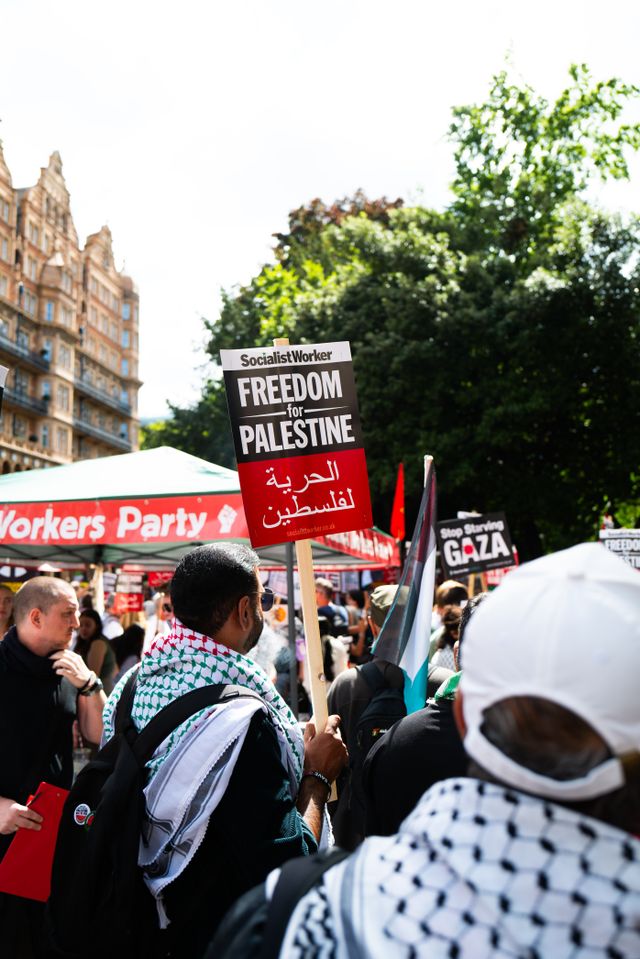
Yet despite these figures, the youth in Albania are not responding through emigration alone. Ongoing student protests have aligned with the broader Flamingo Revolution, which began earlier this year; swiftly manifesting into the largest anti-government and anti-corruption mobilisation Albania has seen since the fall of communism.
These demonstrations have fiercely renewed Albanian solidarity and resistance: a virtue abandoned under the Hoxhaist regime. Students and teachers alike continue to hurl bricks, concrete slabs, and public grievances towards a corrupt administration. As discussed, the relationships required for collective resistance had previously been fragmented by Albania’s Sigurimi and forsaken by the people. Scepticism had successfully been woven into the fabric of Albanian society with far-reaching consequences. In a country where fear once made silence necessary, perhaps speaking out as a collective is the first step to rebuilding social cohesion and trust.