

Image - Atlantic Ambience
The Far-Right Surge and EU Climate Governance
Each year, improving climate governance becomes a more pressing transnational issue to guarantee the security of our planet. However, the rise of far-right populism across Europe is dismantling the political consensus needed to effectively tackle the climate crisis. Research from The PopuList found that in 2026, almost a quarter of European voters supported a far-right populist party, with opposition to current EU climate policy being a foundational pillar of these parties. For example, parties such as Austria’s Freedom Party, Germany’s Alternative for Germany and France’s National Rally, aggressively campaign to withdraw their nations from the European Green Deal, reverse the 2035 ban on the sale of new petrol and diesel cars, as well as limiting further wind power expansion. As the far-right continues to experience notable electoral success, its growing influence over national and EU climate policymaking poses a direct challenge to the future of European climate governance.
Spain’s Shift: From Green Leader to Political Friction
For decades, memories of Spain’s fascist history helped keep the far-right in Spain on the fringe of Spanish politics. Under Prime Minister Pedro Sanchez’s left-wing coalition government, Spain positioned itself as one of the EU’s most vocal advocates for progressive climate action, playing a central role in securing support for the Green Deal. However, the breakthrough of the far-right party, Vox, directly challenges this stance. Recent opinion polls find that Vox is projected to enter a coalition government with the conservative People’s Party at the next general election due to be held in the summer of 2027. This places Spain’s climate governance in jeopardy. On par with far-right parties across Europe, Vox’s manifesto explicitly commits to repealing the EU Green Deal, reversing the ban on the sale of new petrol and diesel cars, withdrawing from the Paris Agreement and repealing the nationally binding Climate Change and Energy Transition Law. The assertive commitment to these policy platforms signals a major rupture in consensus within one of the European Union’s primary climate leaders.
Climate Obstructionism in Practice
Vox practices a political strategy known as climate obstructionism, the opposition and criticism of climate policies with the agenda of undermining EU and domestic climate-driven policies. Rather than treating global warming as a technocratic issue, Vox aggressively politicises climate policies, in hopes of discrediting the consensus towards the green transition. For example, Vox has called climate change “a scam” and pledged to stop wasting money on it. Crucially, this political rhetoric is being combined with real political action, illustrated by Vox voting against Spain’s landmark Law on Climate Change and Energy Transition in 2021.
Vox’s climate obstructionism fits within the party’s broader populist framework, framing national and EU climate legislation as undermining Spanish sovereignty and a threat to the lives of ordinary Spaniards. The party depicts EU climate mandates as elitist, serving only the “faceless bureaucrats in Brussels”, imposing, and economically threatening the lives of Spaniards, particularly those in rural communities. This narrative fuses the climate crisis with economic grievances of farmers and rural workers, fuelling the idea that they are losing control over their livelihoods as a result of EU climate directives. Vox does not need all its supporters to disbelieve climate change entirely. It functions by creating division over how the climate crisis is being managed and undermining public confidence in science-based climate mandates.
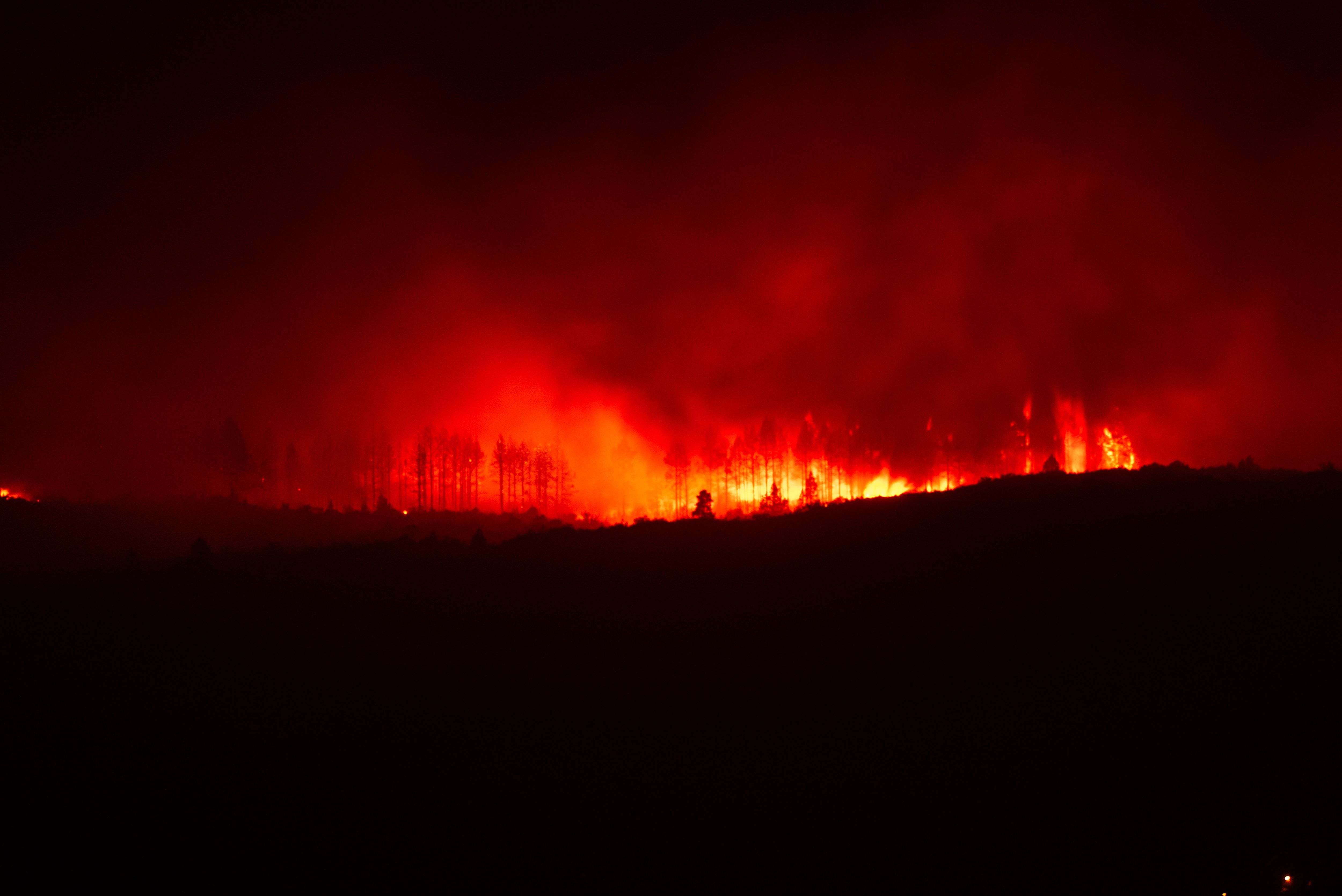
The consequences of climate obstructionism are not theoretical, they are already visible. Spain is on the frontlines of the climate crisis, experiencing record-breaking heatwaves, severe droughts, flooding and increasingly extreme wildfire seasons. The summer of 2025 was Spain’s worst wildfire season in over three decades, forcing the evacuation of 42,000 people. However, this year’s wildfires surpassed that, becoming the largest in Spanish history, displacing over 80,000 residents from their homes. Critically, the research group World Weather Attribution found that this year’s wildfires were 20 times more likely to occur in central Spain due to human-caused climate change.
In disregard of the scientific consensus, Vox maintains its position of climate denialism. Whilst fires blazed across Spain, Vox’s deputy spokesperson in the Andalusian parliament, Rodrigo Alonso, insisted that the fires had nothing to do with climate change. Instead, placing the blame on rural abandonment instead. Concurrently, Jorge Buxade, a member of the European Parliament representing Vox, went further in showcasing the party’s climate denialist agenda. On his social media, he circulated documents of temperature records from the 1950s in attempts to prove that the heat Spain is experiencing is nothing out of the ordinary, and not a consequence of a climate crisis. Whilst Spain’s meteorological office confirmed these documents were falsified, the political intent behind Buxade’s actions is crystal clear. By contesting that human activity has contributed to the severity of Spanish wildfires, Vox wishes to gain further support for its obstructionist policy agenda driven by the populist far-right playbook. Vox’s rhetoric can be seen to be influencing public opinion, with survey data illustrating that only 48.3% of Vox voters in the 2023 elections agreed that climate change exists, compared with 83.8% of all other voters. Vox’s rhetoric has not gone unchallenged, with Prime Minister Sanchez stating that denying climate reality only makes us more vulnerable. However, the party continues to push its climate obstructionist agenda.
Policy Rollbacks at the Regional Level
Due to Spain’s decentralised governance structure, Vox does not require a national majority to disrupt climate policy. In fact, it has already done so at regional level. Through past coalition governments with the People’s Party in regions of Valencia, Andalusia and Castile and Leon, Vox exerted its power to roll back regional environmental policy. For example, in Valencia, one of the first measures taken by the PP-Vox coalition was dissolving the Valencian Emergency Unit, a unit specifically created by the previous administration to respond to weather-related emergencies, which Spain needed throughout this wildfire season. Additionally, the coalition halted
the creation of a project designing new pedestrian areas and slashed the regional budget for climate action funds from 237 million euros to 148 million euros, a 37.5%
reduction. Not only do these rollbacks disrupt Spain’s ability to reach its domestic and international climate targets, but it also jeopardises the health of the Spanish public. Currently, approximately 94% of the Spanish population is exposed to air pollution levels that surpass the World Health Organisation’s recommended limits. While the EU Green Deal also mandates 2030 targets for limiting air pollution levels, Vox’s rollback of climate policies increases the difficulty for the nation to reach these goals.
The increasing presence of far-right climate obstructionism in Spain serves as a key reminder of the cruciality of a green transition, or the EU may lose one of its leading
climate advocates. More wildfires will burn whether or not Vox is in government - the priority is ensuring there is enough public trust in climate governance to sustain funding for one of Spain’s central challenges.
.svg)



.svg)
.svg)