
Image - Ralph_PH
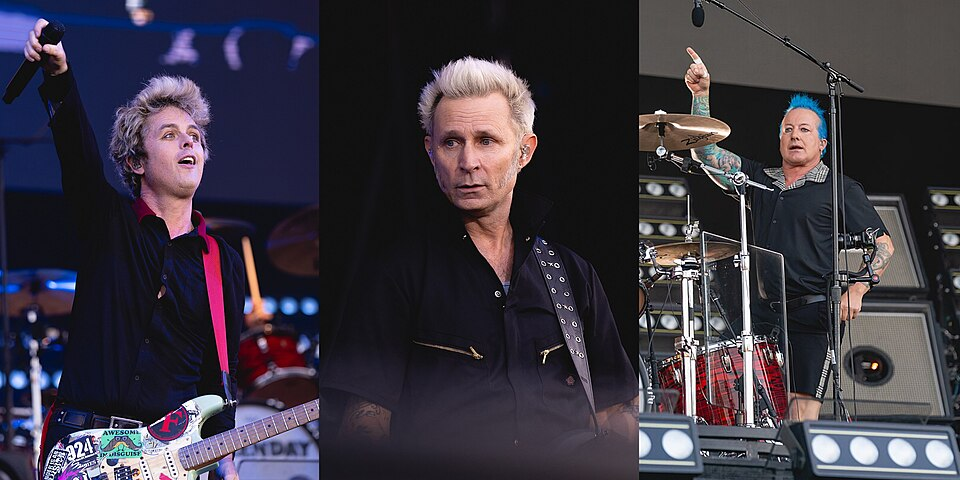
What does it mean to be politically Punk in the modern age? This is a question that many members of the infamous anti-establishment sub-culture have wrestled with since it’s downturn during the 90s. Well, Billie Joe Armstrong may just have the answer, for those of you across the pond at least, and that answer may be taking a stand against the divisive Trump administration. Whilst the group have never attempted to avoid the world of politics it does feel as though as politics has progressed throughout the 2000s, they’ve been drawn to it as moths to an ever-roaring flame.
So, let’s take a trip to see what exactly Green Day have to say and whether they really are the politicians of Punk. The group’s first truly influential dip into Politics kicked off in April, 2004 as a part of the Rock Against Bush compilation album. The effort was initially kick started by Fat Mike (of the band NOFX) with the inspiration for it stemming from the Rock Against Raegan concerts in the 1980s. Both movements attempted to mobilize the Punk and Alternative sub-cultures of the time in an effort to promote pro-peace and anti-war sentiments- with Rock Against Bush specifically speaking out against Bush’s war in Iraq and the wider war on terror.
Whilst the album did fail its goal of preventing Bush’s later re-election, it did speak to how politically geared groups such as Green Day truly are. Movements like this are key to what Punk is and has always been - it isn’t just about rejecting societal norms but rather making a stand and speaking for the many in the face of the few. This quality was later emphasised when Green Day released their 7th studio album in September of the same year entitled American idiot. Whilst it wasn’t said at the time Billie Joe Armstrong ,the band’s front man, did later reveal in a 2013 Click Hole blog that “George W. Bush was the ‘American Idiot’” citing that he did so simply because “he started a war”.
Despite the more subtle critique of former-President George W. Bush there are much more overt references to other elements of the American response to the Iraq war, for example as the album’s name sake track cries out “One nation controlled by the media” it is specifically making reference to misinformation on the war and its justifications by legacy American media outlets. This really reveals something about Punkrockers that I often feel isn’t discussed nearly enough. Their intelligence. Look, I realise that when the Sex Pistols called for “Anarchy in the UK” and labelled a constitutional monarchy “a fascist regime” it wasn’t the most precise political commentary that’s ever been made; but its changed since then.
With bands like Green Day we’ve seen a renaissance of fresh-political commentary that has become intertwined with counter and youth culture, giving those that feel society at large has abandoned them an opportunity to express that whether it be through fashion, music, or any other which way they choose. So, what have learnt? Green Day aren’t exactly keen on Republican administrations in that sense, which has been perfectly illustrated by the band’s tenuous relations with President Donald Trump over the last 9 years. During a performance of the band’s 2016 track “Bang Bang” at the American Music Awards Billie Joe Armstrong broke out into shouts of “No Trump! No KKK! No Fascist USA!”- seemingly in response to the turn out of the 2016 US election. To be entirely clear, Trump wasn’t a fascist in 2016 and hasn’t become one since. The fundamental nature of fascism is militant, ultra-nationalism placing the nation sovereign
to anything else with absolute certainty. Yeah, we can absolutely observe themes of fascism within Trump’s administrations, that doesn’t mean they can be given the title of fascist. To really put that into context, that’s the equivalent of calling Keir Starmer a Marxist. Whilst I understand that Green Day couldn’t have stood on stage and delivered a meaningful political commentary - I do think that these statements are best not to make as it erodes the meaning of these statements and socialises the incorrect use of political terminology.
However, “No KKK!” is a much more pertinent statement with a considerable amount of controversy within it. Roughly 3 weeks before the AMAs and in the days leading up to the final 2016 election a publication named “The Crusader” (known for publishing ideas associated with Neo-Nazism and being directly connected to the KKK) endorsed the 2016Trump presidential campaign. Whilst the campaign did denounce the publication in a letter to CNN, referring to it as “repulsive”, this really isn’t the only time that Trump has been caught up in a KKK-centred scandal. David Duke (the Neo-Nazi former self-proclaimed “grand wizard” of the KKK) has generally shown support for Trump’s political endeavours, having offered support for his presidential candidacy and labelling his 2016 electoral win a great victory for “our people” in a tweet that has since been deleted. When Green Day made this comment, yes it did push thoughtless popular rhetoric by suggesting that Trump was a fascist, but it also brought to the minds of Americans profound, genuine, and honestly alarming political controversy. But this wasn’t the last swipe that Armstrong and co took at Trump. During their 2025 Coachella set Green Day swapped out one of the elementary lyrics of “American idiot” from “not apart of a redneck agenda” to “not apart of the MAGA agenda”.
The term redneck, as used in the lyrics, is to some level attempting to poke fun at, what the band seems to perceive as, an uneducated, Republican sub-culture. Carrying this definition forward he’s effectively applying those connotations to the MAGA movement. This perfectly recalls a key element of Green Day’s reputation as a part of the wider US counter-culture. As MAGA have quickly become more and more mainstream bands and artists like Green Day, Foo Fighters, and Olivia Rodrigo have quickly positioned themselves asset apart from that culture, in essence forming a new counter-culture. This entirely ties into the wider political characteristics of punk that we’ve observed, with bands like the Clash writing songs such as “This is England” to suggest that the mainstream political movement of time (that being neoliberalism and Thatcherism) were eroding the well-being of their community.
In the same way that Green Day have they positioned themselves as the cultural opposition to a New Right political movement. So, are Green Day the politicians of Punk? I’d say the answer is no. Whilst Green Day have proven themselves to be committed to counter-cultural politics and outspoken on what they think is right, this is just what makes Punk Rock what it is. There seems to be some misconception that somehow Punk hasn’t ever been political, but there is literally nothing that could be said which is further from the truth. Whether it be the Clash, the Ramones, the Stiff Little Fingers, or Iggy & the Stooges, they’re all defined by their staunch opinions and politically charged anthems.
What is interesting about Green Day is how involved they’ve been in countering the MAGA culture. In a space where a new breed of ethnically and theologically charged American nationalism has come down from the top, artists like Green Day, the Foo Fighters, Olivia Rodrigo, Chappell Roan, Bruce Springsteen, and so many others are using their platforms to take on the spirit of Punk and speak out for what they think is right. So in that regard, Green Day aren’t political leaders of the Punk and wider Alternative sub-cultures, but rather committed disciples who’ve reflected on what has made these movements culturally rich and used that to counter a new breed of a corrosive mainstream mindset.
.svg)
.svg)


.svg)
.svg)