
.svg)
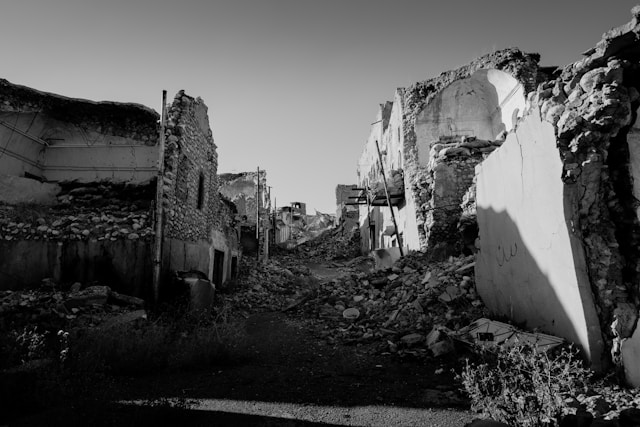
Image - Levi Mair Clancy
Every year, the Economist publishes its ‘World Ahead’ issue, a magazine focusing on what the next 12 months may have in store for politics, economics and culture. This year’s edition features a piece on conflict, detailing both active disagreements that played out over the past year, as well as potential regional flashpoints. Obvious focuses were Russia’s continued offensive on Ukraine, Israel’s genocide in Gaza and tensions between the US and Venezuela, all conflicts that have enjoyed extensive media coverage. What struck me however was the sheer amount of concrete and potential disputes that I was unaware of or knew very little about. For example, 2020’s ethnic and territorial conflict between Armenia and Azerbaijan could be reignited in 2026,as well as disagreements between Honduras and El Salvador, Ethiopia and Eritrea and Morocco and Western Sahara.
While a lack of media coverage is excusable in these cases – why report on something that hasn’t happened yet? – the lack of focus on active wars by Western media is significant. 2025 saw escalation of civil war within Sudan, constituting one of the world’s greatest humanitarian crises, as well as fighting between the DRC and Rwanda, leaving thousands displaced.
There are clear reasons as to why these wars haven’t received the attention they deserve, as they have a negligible effect on Western economies and domestic politics, especially in contrast to, for example, the war in Ukraine. However, I believe regardless of domestic implications, these conflicts are still failing to receive coverage proportional to their significance and global impact. I argue this is directly related to the concept of narrative, something that shapes almost all of the media we consume. This article outlines three key narrative features that, in their absence, limit what stories we are made aware of, and what conflicts are seen as ‘important’.
The first key characteristic that determines widespread coverage is comprehension – how easy a conflict is to understand. In the case of Ukraine, the situation is clear, fitting neatly into our conventional view of what a war looks like. Territorial disputes, troops on the ground, missiles and tank warfare all contribute to a picture publics can easily relate to and ultimately comprehend. This sense of understanding is limited within other conflicts, such as that of the DRC and Rwanda. Military offensives against Congo, such as the invasion of the city of Goma this year, have been conducted by paramilitary group M23, backed by Rwanda’s dictator Paul Kagame. This more complicated dynamic means audiences are less likely to engage with media reporting, a point exacerbated by the fact many people are unable to find either nation on a map. If stories require a level of effort before they can be understood by the wider public, they are simply less impactful.
Another key feature that directly shapes how impactful coverage is the ability of conflicts to be framed around an overarching narrative. Humans look for clear-cut, good versus evil dynamics, preferring to choose sides instead of embracing nuance. Again, Russia’s invasion of Ukraine exemplifies this, with Russia cast as the clear aggressor and Ukraine the obvious victim. Other modern-day conflicts are nowhere near as clear cut, such as the current civil war in Sudan, seeing two paramilitary groups, the SAF and RSF locked in a power struggle. The SAF and RSF were initially allies, in the aftermath of a coup in 2019, and both lack significant popular support within Sudan, meaning neither stands as an obvious ‘good guy’. LSE scholar Christopher Zambakari demonstrates this dynamic particularly well, arguing ‘the international community, rather than choosing sides to support, should form a rock-solid alliance in opposition to the war’. This is a conflict where choosing sides, and consequently following a clear narrative, doesn’t apply.
A final key feature that defines media representation of conflict is the existence of biases – entrenched assumptions that shape how we think about particular regions or actors. A 2025 study by the University of Bath found people in both the US and the UK tended to view Africa as prone to ‘corruption, instability and poverty’, a contrast to perceptions of Europe as ‘modern, stable and prosperous’. Naturally, the conflict in Ukraine as well as Israel’s offensive in Gaza, are seen to be occurring in places where war isn’t the norm. Israel is treated as an almost Western country through its close connections to the US, making its state of warfare far more significant. If audiences constantly assume Africa is a lawless continent, the presence of war there is seen as less unprecedented. Treating war, famine and violence as a fact of life directly affects how much attention is paid to them.
In a world where the media moves fast and our attention spans are getting shorter, it's understandable some stories slip through the cracks. But the neglect of humanitarian disasters such as the conflict in Sudan, a war with regional and possibly global repercussions, should be condemned. Just because a conflict can’t be packaged into a simple good vs bad, hero vs villain story, shouldn’t mean it gets ignored. Compounded by internalised biases and deficits in access to education, conflict coverage is a serious issue.
As Trump’s new imperial pursuits have already dominated the headlines of 2026, it is vital we seek stories beyond the immediate headlines, regardless of their subjects, story or seeming significance.
.svg)



.svg)
.svg)