
.svg)
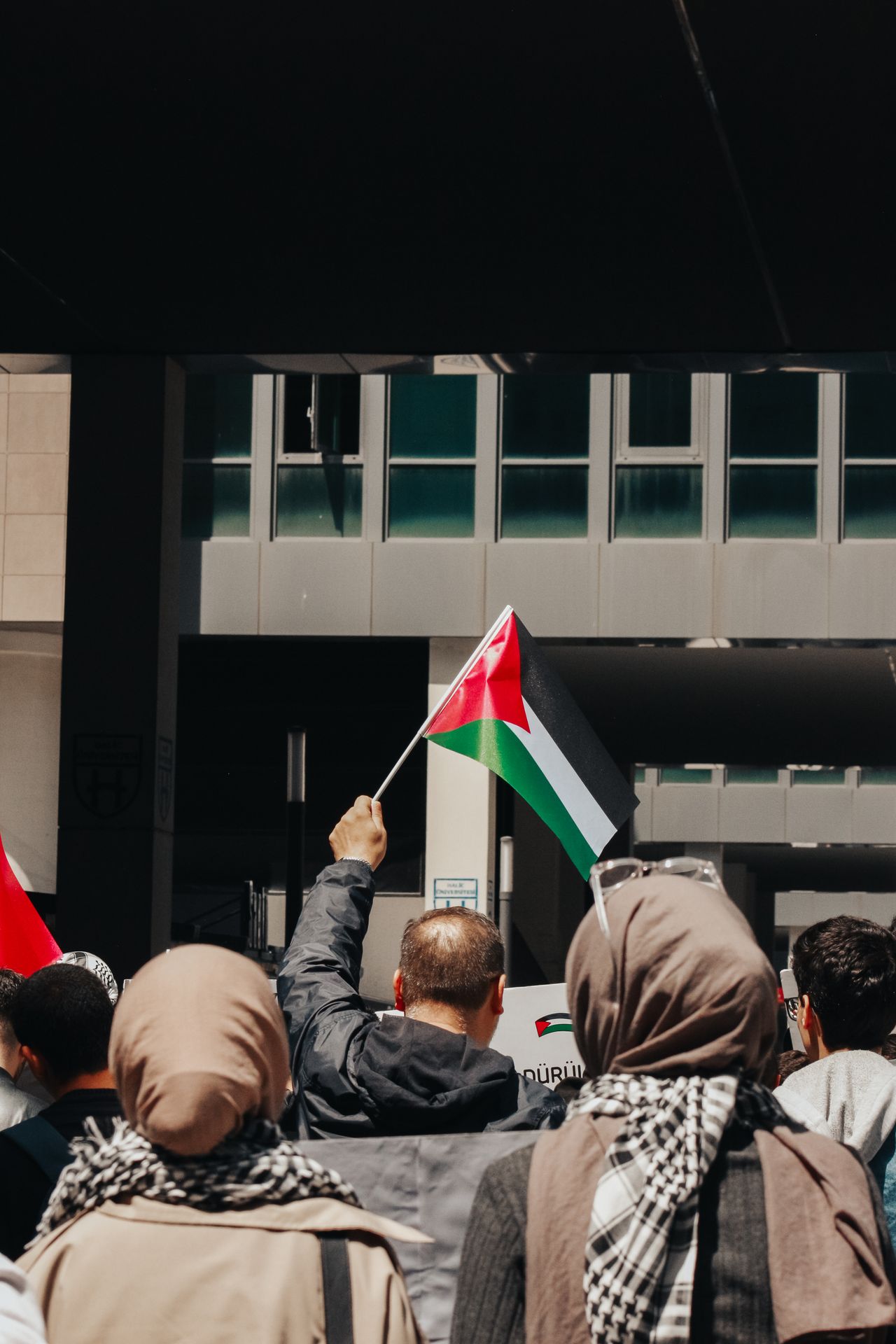
In August 2025, an 83-year-old retired priest sat in a camping chair in Parliament Square holding a handwritten placard that read, "I oppose genocide; I support Palestine Action.” Under the Terrorism Act 2000, the same legislation used against al-Qaeda, those words carried a maximum sentence of 14 years in prison.
By the time police made mass arrests outside Westminster Magistrates’ Court this July, more than 3,500 people had been detained on suspicion of the same offence: expressing support for a group that, weeks earlier, had spray-painted two military aircraft. Among those arrested since are war veterans, clergymen, and the grandchildren of Holocaust survivors.
This isn’t a recount about the lives of one protest group, but more so a story about how thin the ice is beneath British civil liberties and about a constitutional design that leaves almost nothing to stop it from cracking.
What happened?
In June 2025, Palestine Action members broke into RAF Brize Norton and damaged two military aircraft with red paint, causing an estimated £7 million in damage. Weeks later, the then-Home Secretary used a power created under the Terrorism Act 2000 to proscribe the group entirely. This action placed a domestic protest organisation, whose signature tactic is property damage rather than violence against people, in the same legal category as Islamic State and Boko Haram. From that moment, expression of any support for Palestine Action, in speech or on a t-shirt, became a criminal offence.
The courts have disagreed among themselves. In February 2026, the High Court sided with campaigners, ruling the ban a disproportionate interference with freedom of expression and assembly and noting that only a handful of the group’s “hundreds” of actions met the legal definition of terrorism at all. Four months later, the Court of Appeal reversed that finding entirely, describing the group as a “covert organisation operating with secret cells” and declaring the ban lawful. The case has now been raised to the Supreme Court, expected to rule by the end of the year. Until then, the ban remains, and prosecutions sit in limbo.
It’s tempting to read this as one government overreaching and to trust the system to correct itself. That instinct is exactly the problem.
The structural point
Britain has no codified constitution and no entrenched bill of rights. Furthermore, Parliament is sovereign, meaning no Parliament can bind its successors, and no court can strike down an Act of Parliament for violating a fundamental right. The Human Rights Act allows judges to declare legislation incompatible with the European Convention; it does not permit them to delete it. A government with a Commons majority can, in principle, redraw the line around “extremism” as fast as it can lay a statutory instrument. Lord Hailsham described it as an “elective dictatorship” back in 1976, in which a majority government faces alarmingly few hard checks between elections.
The Palestine Action saga is that structure in practice. A statute built to fight terrorist violence has been turned against a protest group whose core offence was criminal damage, one which ordinary law was already equipped to punish. The Terrorism Act’s text didn’t change. The issue here was how a minister chose to exert a power Parliament had already handed her and the political weather surrounding Gaza. That’s where it gets tricky: not that any single decision is fascistic, but the only thing separating "unpopular protest” from “terrorism” is executive discretion and judicial review, two things that pointed in opposite directions only within the same year.In fairness
The system hasn’t been static, as judges pushed back in February. Also, a change of prime minister this July, with Andy Burnham replacing Keir Starmer after publicly admitting Labour “didn’t get it right” on Gaza, shows politics can self-correct without any constitutional entrenchment at all. The Supreme Court may still strike this down, and that possibility alone matters.
As much as we can safeguard the outcome of a court session through the right judges, the right minister, and the right political mood, we mustn't forget that these factors will not always guarantee the favoured ruling – it's all a matter of luck. A codified constitution wouldn’t have stopped the Brize Norton break-in or the argument about how to answer it. What would’ve happened is the fate of the 83-year-old with the placard wouldn’t lie in the hands of the judges chosen for the panel on that particular day. Britain doesn’t need to turn to authoritarianism for that gap to count for something. It just needs to keep discovering exactly how much of “free speech” was only ever a convention.
.svg)

.svg)
.svg)